- Buy seafood downstairs, take it upstairs to be cooked.
- The restaurant charges a separate cooking fee and often a cover.
- Prices are negotiable, but only if you know the going rate.

Who this is for
- Anyone who wants to try the fish market but can’t picture where to order what
- People who’d rather not be surprised at the bill
- Anyone unsure how much two people should actually buy
Seoul’s fish market is a tourist stop and a working wholesale market at the same time. Traders in the early morning, everyone else from midday on.
The system is unusual. Here’s the thing: you buy seafood at a stall on the ground floor, carry it upstairs, and a restaurant cooks it in front of you.
“So where do I order what?” Without knowing the flow, you end up standing in the aisle. Here it is in order—let’s get into it.
Walk the Whole Floor First! Buying Downstairs
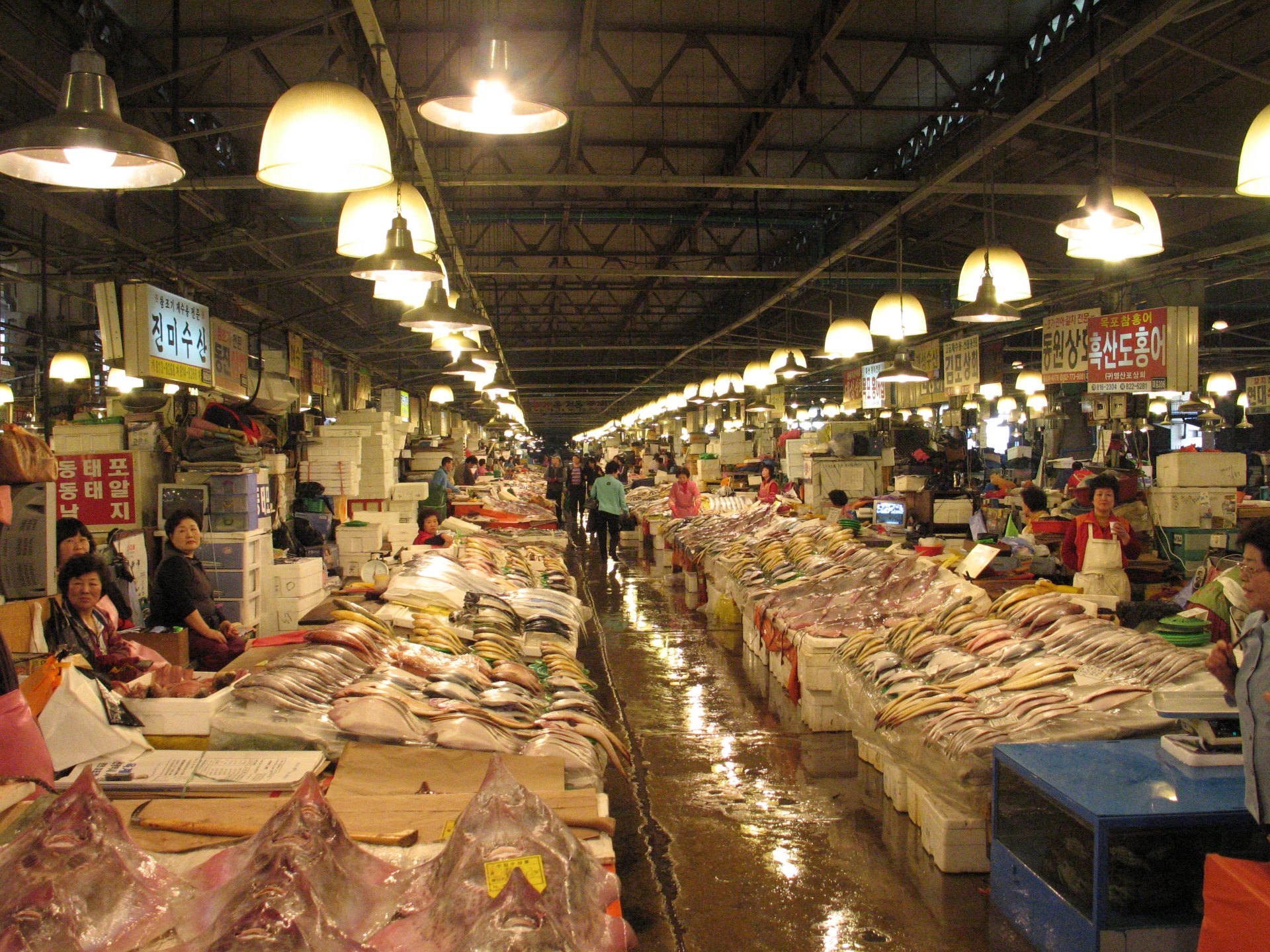
✔ Walk the whole floor before deciding
The same species sits at several stalls at different prices.
You’ll be called over. Walking on is fine, and coming back on a second lap is normal.
Prices can be negotiated, but not usefully if you have no reference. Ask at a few stalls and the day’s level becomes clear.
Portions come out larger than expected. For two people, order less than feels right. Buying more than you can eat is the most common mistake here.
| Item | Detail |
|---|---|
| The seafood | Negotiated downstairs |
| Cooking fee | Charged upstairs |
| Cover and side dishes | Some restaurants add this |
| Rice or noodles | Ordered separately |
| Drinks | Separate |
| Rough total | Around 1.5x the seafood price |
✔ There’s another way to do this. Read it against “The Gwangjang Market Method” and you’ll see which fits you.
Confirm the Cooking Fee Before You Sit! Eating Upstairs
✔ Any of the restaurants will cook it
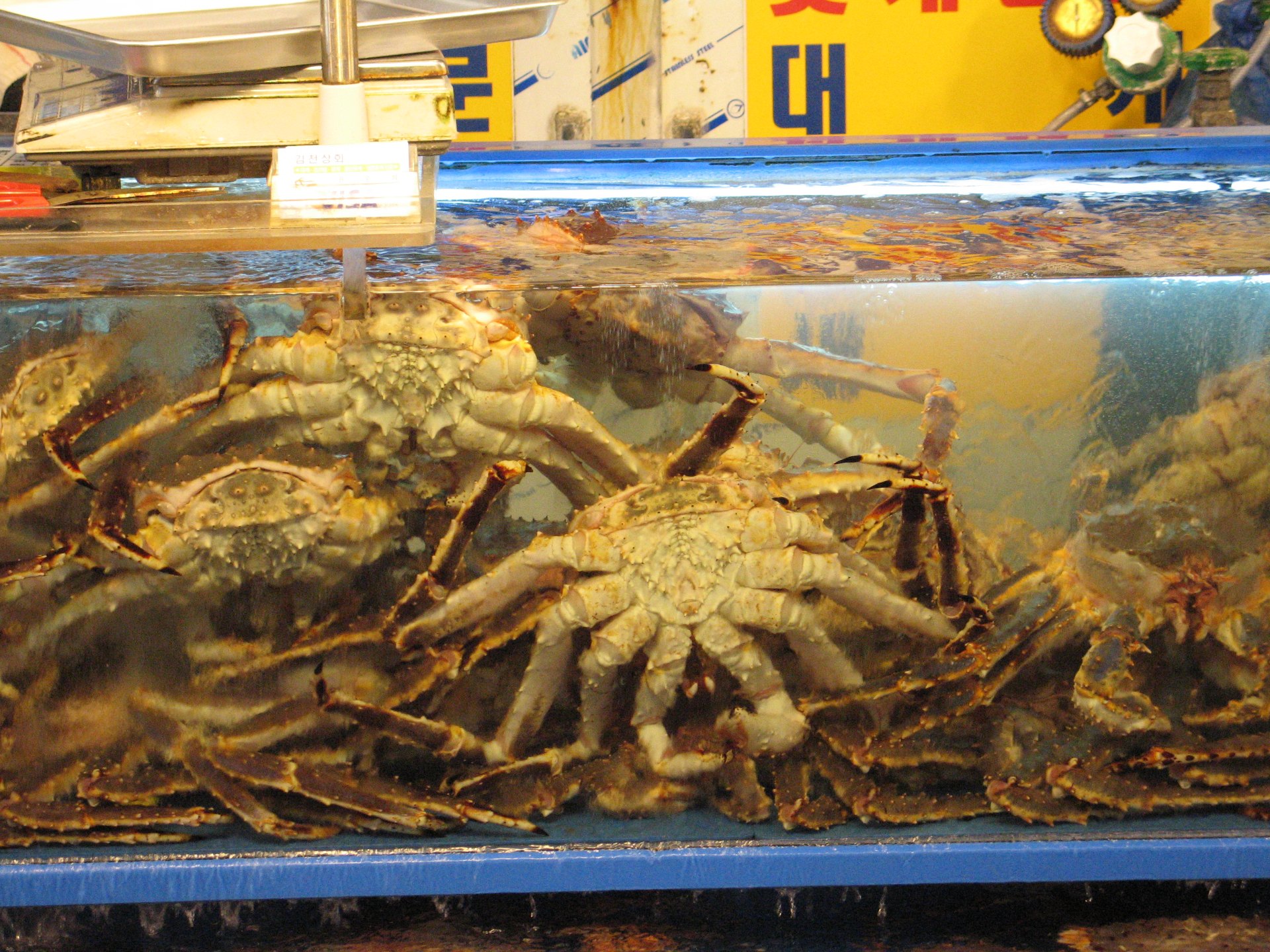
Carry your purchase up and restaurant staff will approach you.
The cooking fee depends on the species and the method—raw, steamed, or in a stew.
Some places add a cover charge or charge for side dishes. Confirm the full cost before you sit down. Skipping that step is how people get surprised at the bill.
Rice, noodles, and drinks are extra.
Weekday Early Evening Wins! Timing and Crowds
✔ Early morning belongs to the trade
It’s lively but not aimed at visitors.
Early afternoon to early evening is the calmest stretch. Nights get busy.
Weekend evenings mean waiting. A weekday early evening is the best balance.
The floor is wet throughout, so wear shoes with grip. The smell stays on clothes.
Ask for the Price per Kilo and the Weight! How Not to Get Caught Out
✔ Settle the price before anything else
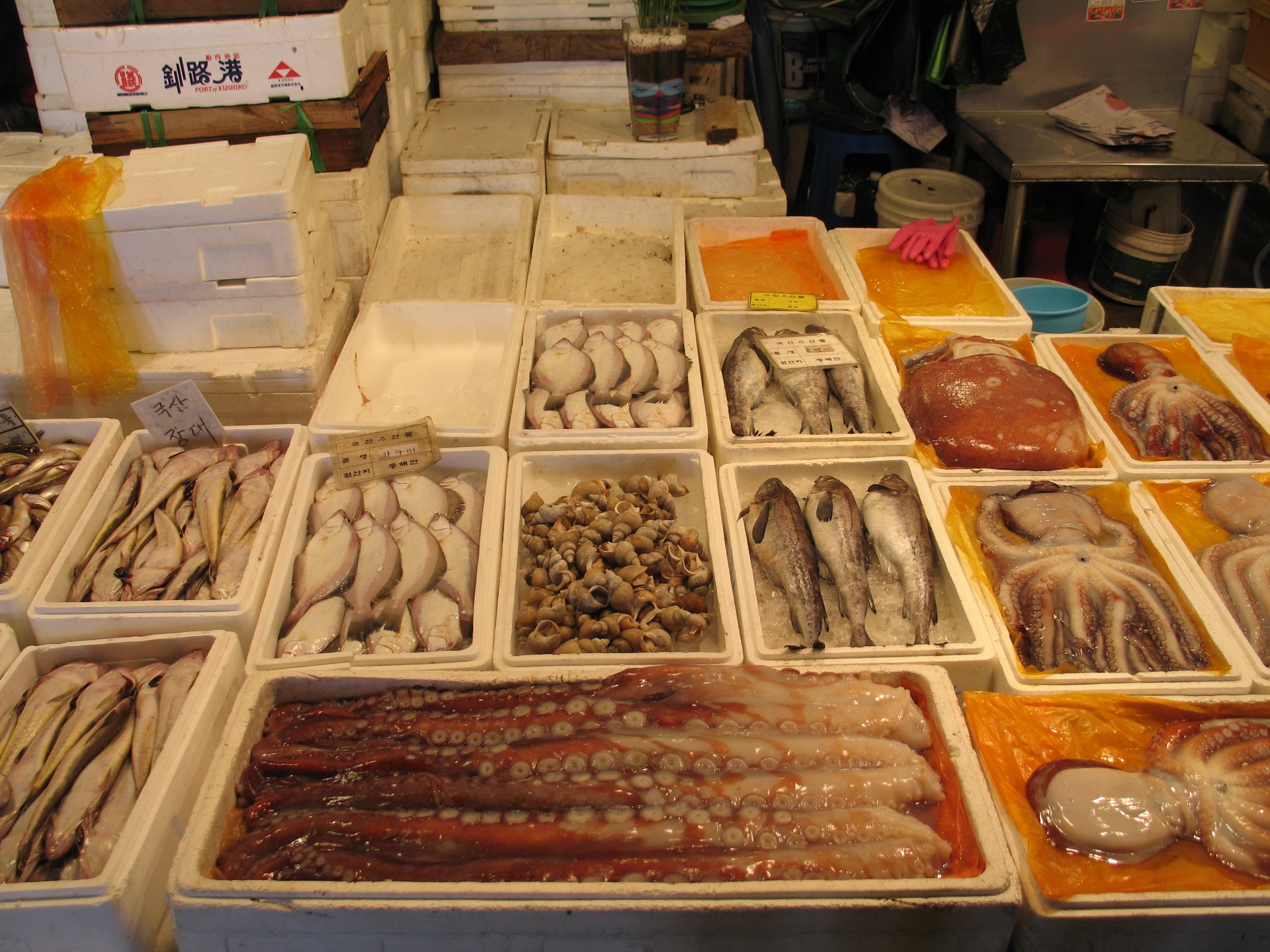
Most stalls sell by weight, so ask to see the price per kilo and the actual weight.
Second, buy what you can finish. There’ll be pressure to add more; declining is fine.
Third, ask the cooking fee before sitting. This is where disputes usually start.
Consider your stomach as well. A large plate of unfamiliar raw seafood on your last night is a gamble when you fly the next day.
Cards are increasingly accepted, but cash sometimes helps when negotiating. Carry a little. Walk the floor, ask, buy less than you think—and the market becomes the fun it should be.
FAQ
Do I have to haggle?
Not necessarily, but asking at several stalls tells you the going rate.
How much is the cooking fee?
It depends on the species and method. Confirm before sitting down.
How much should two people buy?
Less than you think. Portions run large.
Are cards accepted?
Increasingly yes, though some cash is useful.
When should I go?
Weekday early evening is calmest; weekend nights are busiest.