- Vegetable dishes often carry anchovy or beef stock, or salted shrimp.
- Temple cuisine is a complete tradition built without animal ingredients.
- Having one prepared sentence in Korean saves a long conversation.

Who this is for
- Anyone who assumed seasoned greens and pancakes were safe
- People who want halal options locked in before the trip, not found by luck
- Anyone who’d burn out trying to solve every meal in a restaurant
Korean food looks vegetable-heavy: seasoned greens, pancakes, tofu dishes. In practice, stocks are often made from dried anchovy or beef bone, and kimchi usually contains salted shrimp.
Which means appearance decides nothing. Here’s the thing: you have to ask.
“So what do I ask, and how?” The good news is that options keep growing. Here’s how to find them and how to ask—let’s get into it.
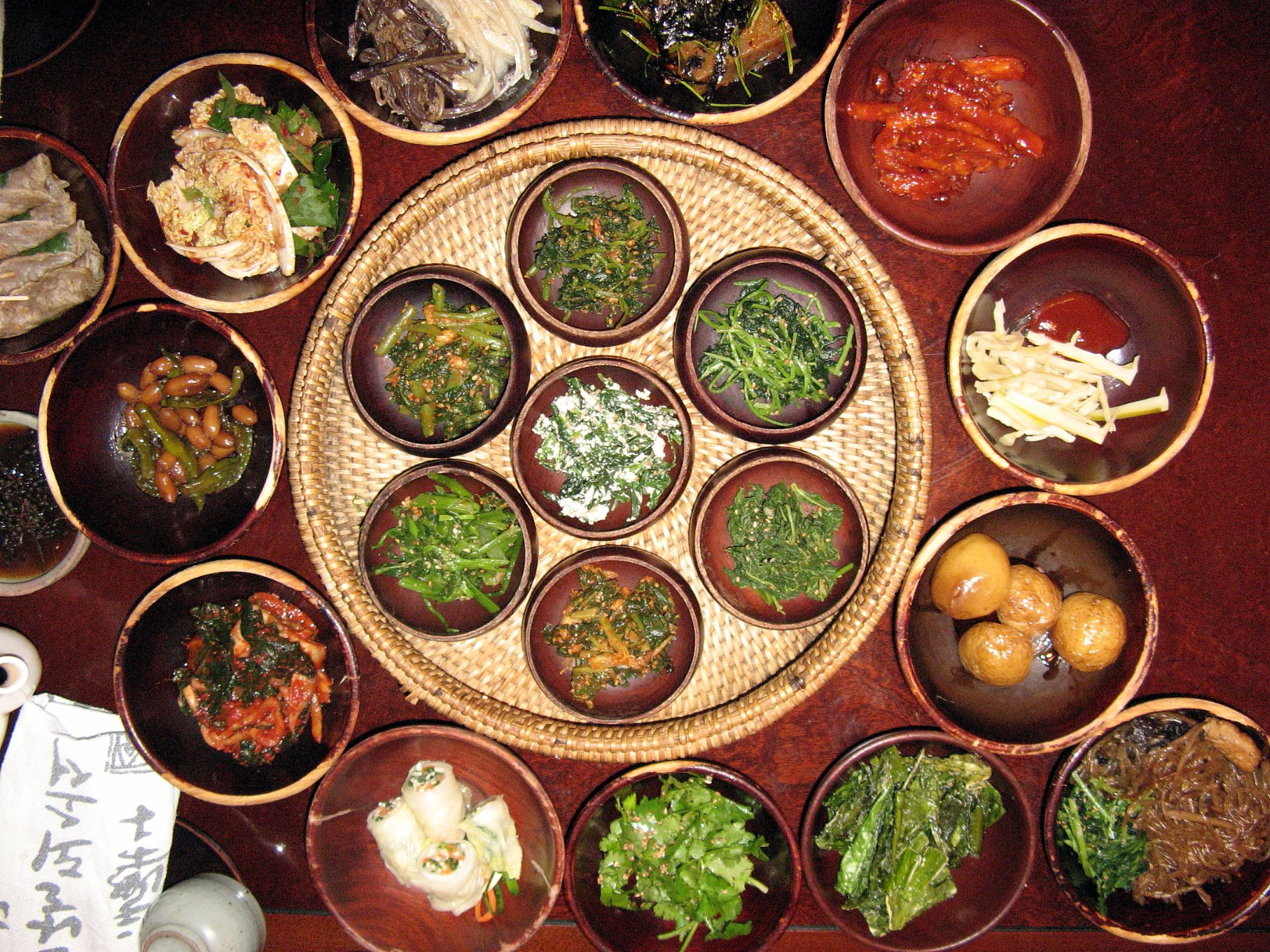
A Whole Tradition Without Animal Ingredients! Temple Cuisine as an Option
✔ Korean temple cuisine excludes animal ingredients entirely
It also avoids pungent vegetables. It’s a fully developed tradition rather than a substitution.
Dedicated restaurants serve it, usually as a set menu. It costs more than an ordinary meal, but the cooking is refined enough that the meal becomes the outing.
Most require booking, so call the day before.
Some temples also offer it as part of a visitor programme.
| Dish | Commonly contains |
|---|---|
| Kimchi | Salted shrimp, fish sauce |
| Soups | Dried anchovy, beef bone, chicken |
| Seasoned greens | Stock-based seasoning |
| Savoury pancakes | Egg, seafood |
| Tteokbokki | Fish cake, stock |
| Bibimbap | Minced meat, egg |
✔ This one comes first, in order. Skim “Korean Restaurant Etiquette—10 First-Timer Surprises” and the rest of this page lands better.
Bibimbap Without Meat or Egg? Ordering in Ordinary Restaurants
✔ Tofu, seasoned vegetables and rice porridge are the easier choices
With the stock caveat above, that is.
Bibimbap can often be made without meat or egg. Note that some chilli pastes contain animal-derived ingredients, so ask if you’re strict.
For halal, pork and alcohol are the main issues. Cooking wine is common in Korean kitchens and pork-bone stock is standard.
Dedicated restaurants are the safer route. There are districts where Muslim-friendly restaurants cluster, and some display certification.
Text Beats Speech! Prepare the Sentence in Advance
✔ A short prepared line moves much faster
Explaining on the spot takes a long time.
Be specific about which of meat, fish, egg, and dairy you avoid. Listing everything at once causes confusion; lead with what matters most.
Showing a translation app screen is the most reliable method. Text beats speech for avoiding misunderstanding.
Rather than asking whether something is in a dish, asking which dishes don’t contain it is often easier for staff to answer.
Don’t Chase Perfection! Convenience Stores and Cooking as the Practical Answer
✔ Trying to solve every meal in a restaurant is exhausting
Convenience stores stock fruit, nuts, soy milk, salads, and some rice items where the label answers the question.
Markets sell vegetables and fruit directly. If your accommodation has a kitchen, cooking one meal yourself takes the pressure off.
Cafes are an option too. Bread and cakes contain egg and dairy, which is usually fine for vegetarians.
And don’t chase perfection. Knowing every ingredient while travelling isn’t realistic. Setting priorities and enjoying what fits within them is what makes the trip sustainable. Get your sentence ready, and go eat.
FAQ
Are there many vegetarian restaurants?
More every year. Map apps will find them.
Are there certified halal restaurants?
Some display certification, and there are districts where Muslim-friendly restaurants cluster.
Can I eat kimchi?
Most contains salted shrimp or fish sauce, but vegan versions exist.
Does temple cuisine need booking?
Usually yes. Call the day before.
What can I buy at a convenience store?
Fruit, nuts, and soy milk are easy to verify from the label.
Information as of 2026-09-15 (official listings and Google Maps as shown at publication). Updated when things change.