- Similar bowls can differ tenfold between mass-produced and studio work.
- Paper goods are light and unbreakable, which makes them the easy souvenir.
- Have breakables wrapped in the shop and carry them on board.

Who this is for
- Anyone who wants a ceramic or paper souvenir but is thrown by the price range
- People who’d like to know how to get a bowl home unbroken before they buy it
- Anyone with limited time deciding which of the two districts to hit
Two districts anchor craft shopping in Seoul. One is a street lined with shops; the other has small shops scattered along a hill.
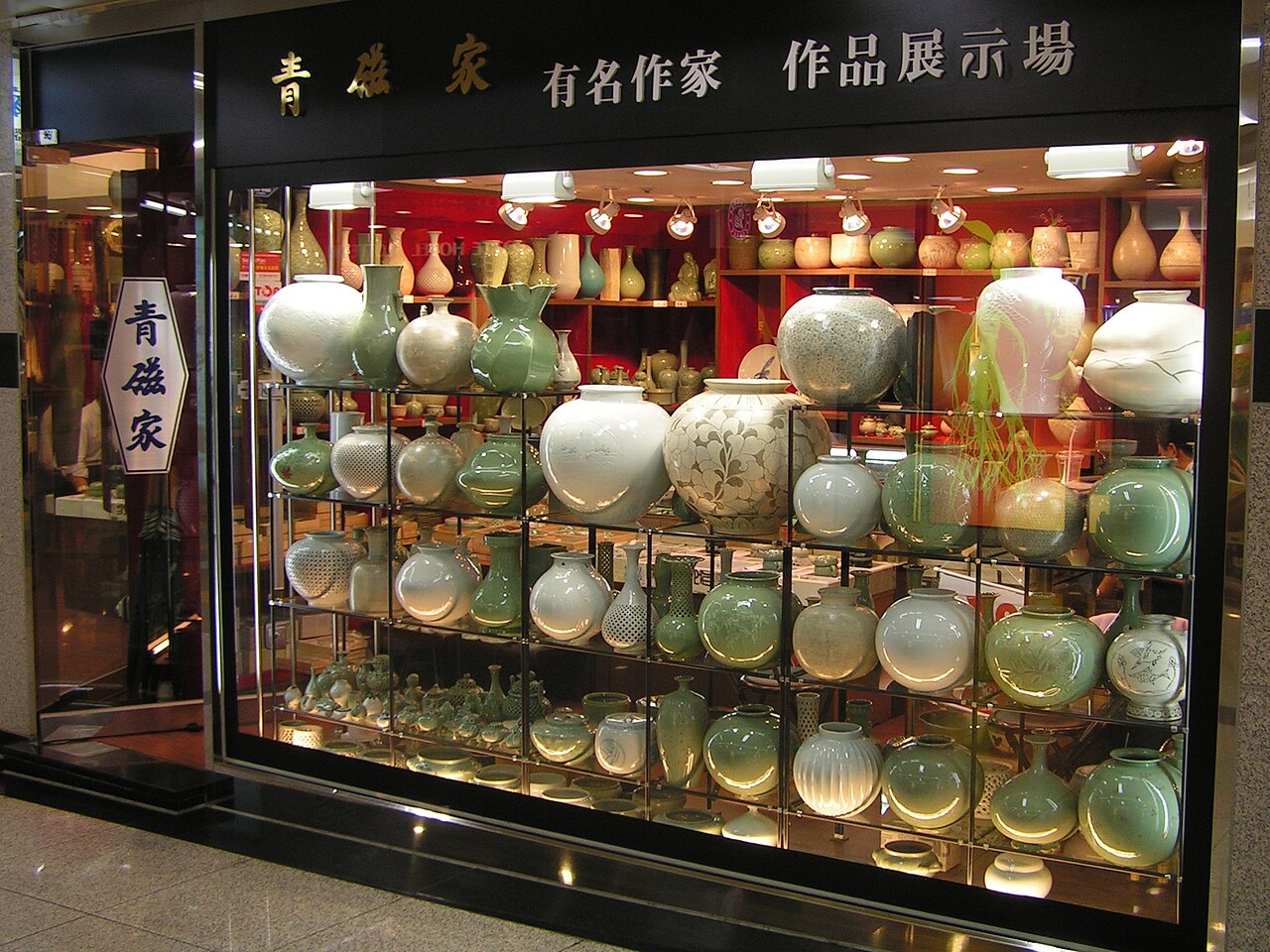
Both sell ceramics, paper, brass, and textiles. But the price range is enormous. Here’s the thing: pieces that look alike can differ several times over between factory production and studio work.
“So how do I tell them apart?” Understanding that difference before you buy is what makes the purchase feel right afterwards. Let’s get into it.
Short on Time, Take the Street; Free Afternoon, Take the Hill! How the Two Districts Differ
✔ The street-lined district is easy to walk and has the widest range
From souvenir trinkets to serious craft. It’s busy, which also makes comparing prices simple.
The hillside district has smaller shops, sometimes run by the maker. There’s more walking, but it’s quiet and you can take your time.
With limited time, start with the first. With a free afternoon, start with the second.
| Type | Why prices vary |
|---|---|
| Ceramics | Mass-produced or studio-made, and by whom |
| Paper | Hand-formed or machine-made |
| Brass | Thickness and finishing labour |
| Textiles | Natural or chemical dyes |
| Woodwork | Material and finish |
| Small items | Souvenir line or maker’s work |
✔ Here’s the question that comes next. “Korean Souvenirs Are 90% About Where You Buy” picks up right where this leaves off.
Check the Base for a Maker’s Mark! Reading the Price
✔ Factory pieces start in the low thousands of won; studio work runs into the hundreds of thousands
Appearance alone won’t always tell you which.
There are clues. A maker’s mark on the base, several identical pieces stacked together, whether the shopkeeper can talk about who made it.
Cheap isn’t bad. For everyday use, factory pieces are entirely fine. The point is knowing what you’re buying.
Haggling sometimes works on souvenir items. On studio work it can come across badly.
Light, Unbreakable, Easy! Paper as the Easy Answer
✔ Traditional Korean paper is light, unbreakable, and takes up almost no space
As souvenirs go, it’s the practical choice.
You’ll find it worked into notebooks, writing paper, lamp shades, and boxes. Hand-formed sheets feel noticeably different in weight and texture.
It doesn’t like damp, so bag it and keep it out of the rain on the way home.
Calligraphy brushes and ink are sold in the same districts and are equally light.
Anything Valuable Goes in the Cabin Bag! Getting Breakables Home
✔ Ask the shop to wrap ceramics
Craft shops do this constantly and are good at it.
If it goes in a suitcase, pack it inside clothing at the centre. But hold luggage gets thrown around, so anything valuable belongs in your cabin bag.
Nothing here counts as liquid, so carry-on is fine, though large pieces may not fit under the seat.
Above a spending threshold, participating shops can process a tax refund. Bring your passport when you go shopping.
One more approach: leave the shopping to the second half of the trip and the luggage problem largely solves itself. Know what you’re buying, then pick the piece you love.
FAQ
Can I haggle?
Sometimes on souvenir items. Better not to on studio work.
Are cards accepted?
In most shops. Very small ones may be cash only.
Can I claim a tax refund?
At participating shops above a spending threshold. Bring your passport.
Can ceramics go in hand luggage?
Yes, nothing is liquid. Check the size fits.
Which district is better?
The street district if time is short; the hillside if you want to browse.
Information as of 2026-09-15 (official listings and Google Maps as shown at publication). Updated when things change.