- Three Seoul Hiking Tourism Centers — at Bukhansan Ui Station, Gwanaksan Station and on Samcheong-ro — lend boots and clothing, store luggage and give multilingual route advice. In 2025, 60 percent of users at the Bukhansan center were foreign.
- Baegundae on Bukhansan (836 m) is about 1.9 km and 2 hours; Gwanaksan Course A is 4 km and 2 hours 40 minutes; Bugaksan follows the Joseon-era city wall. Every trailhead is a 5–15 minute walk from a subway exit.
- Bukhansan sees an average of 4,015 foreign visitors a day. Leaves turn from mid-October and peak in late October; September to November is the best window.
Who this is for
- Anyone who left the hiking boots at home but still wants a Seoul summit
- People wondering when to climb Bukhansan for foliage without the queue
- Anyone planning a morning on a mountain and an afternoon in a Samcheong-dong café
Hiking in Seoul sounds grand until you do it: you step off the subway, walk five minutes, and you’re at the trailhead. Bukhansan, Bugaksan, Gwanaksan—peaks of 600 to 800 meters ring the city, and from the top the skyline and the Han River fit in one frame.
Foreigners have found these city mountains fast. According to the Seoul Tourism Organization, 60 percent of 2025 users at the hiking center beside Bukhansan Ui Station were foreign, and the Gwanaksan center drew the most visitors of the three. Daily foreign foot traffic averages 4,015 on Bukhansan, 2,169 on Bugaksan and 1,192 on Gwanaksan. Korean media have moved past “K-hiking” to a new coinage, “S-hiking,” for Seoul.
“Can I do it without gear?” Here are the three routes with times, how to rent gear at the centers, what to eat when you come down, and when the leaves turn—arranged so a first-timer can do it all by subway. Let’s get into it.
You Need Nothing! Why Hike in Seoul—Five Minutes From the Station, Gear at the Center
✔ It comes down to needing nothing
The three Seoul Hiking Tourism Centers lend hiking boots, hiking clothes, trekking poles and, in winter, crampons; they have lockers and a lounge, and the Bukhansan center adds showers and changing rooms. Route advice comes in English, Chinese and Japanese, and rentals are reserved in advance on Klook. For now the gear is free, with only a laundry fee planned.
The other reason is the season. The heat breaks in September, Bukhansan’s leaves begin to turn in mid-October and peak in late October, and through early November the air is dry and the views run far. Snowy Baegundae is popular in winter too, but you’ll need crampons.
| Center | Address · nearest station | Closed | Sample route | Afterwards |
|---|---|---|---|---|
| Bukhansan (opened 2022) | 5F Gwanglim Bldg, 52 Samyang-ro 173-gil, Gangbuk-gu · Ui-Sinseol Line, Bukhansan Ui Station exit 2, 5-min walk | Mondays | Baegundae, about 1.9 km · 2 hours | Tofu stew, acorn jelly, pajeon in Ui-dong |
| Bugaksan (opened 2023) | 1F, 88 Samcheong-ro, Jongno-gu · bus or walk from Anguk or Gyeongbokgung Station | Tuesdays | City wall, Sukjeongmun to Changuimun, 2–3 hours | Samcheong-dong café street |
| Gwanaksan (opened Nov 2024) | B1, 23 Sillim-ro, Gwanak-gu (inside Gwanaksan Station, Sillim Line) exit 1 | Wednesdays | Course A 4 km · 2 h 40 min / Course B 9.4 km · 4 h 30 min | Sillim sundae town |
✔ There’s another way to do this. Read it against “The Seoul City Wall Trail” and you’ll see which fits you.
Seoul’s Highest Mountain! Bukhansan—Up to Baegundae (836 m), Two Hours From Ui Station
✔ The main peak, Baegundae, stands at 836 meters
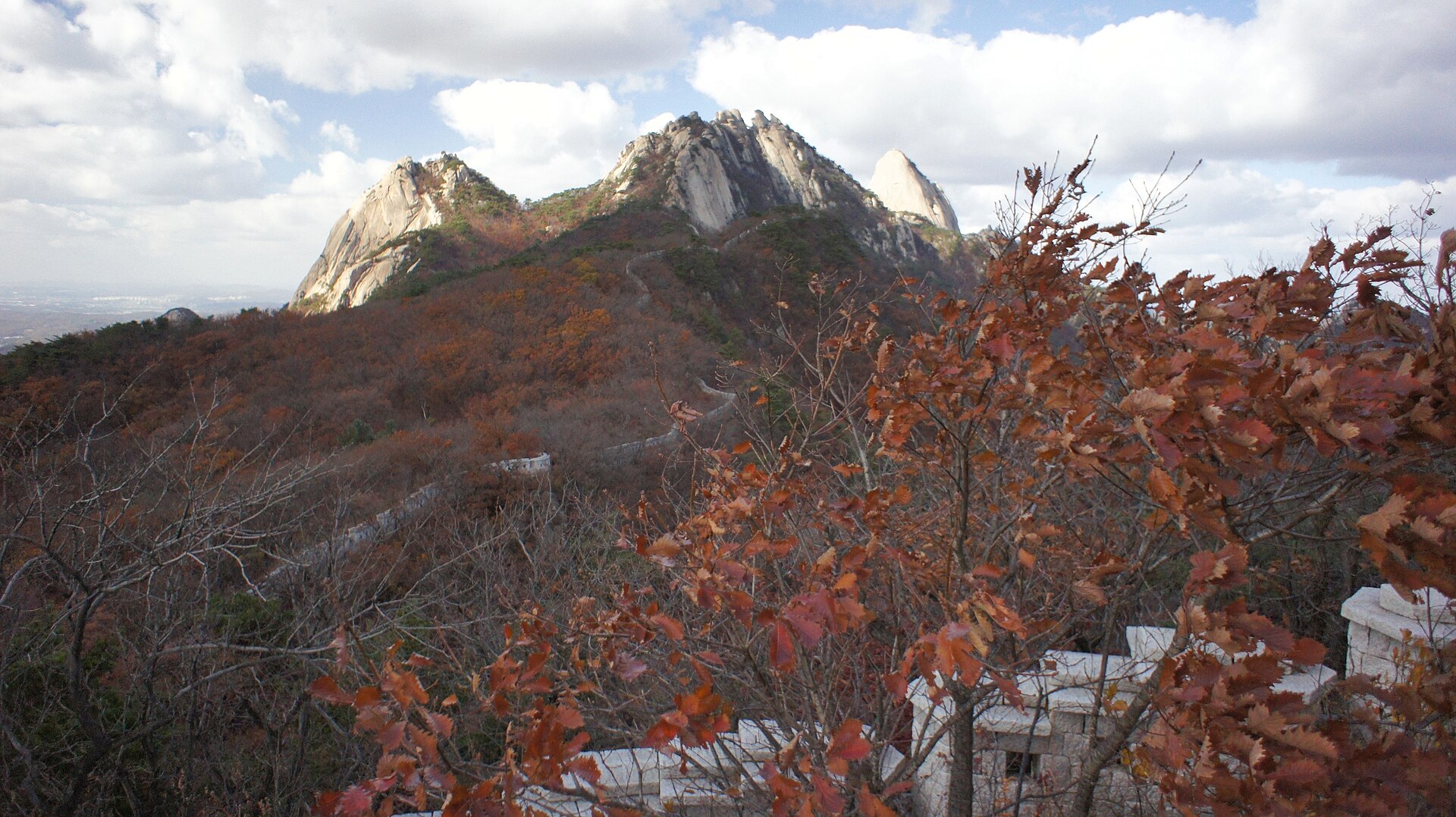
Bukhansan is Seoul’s highest mountain. Leave exit 2 of Bukhansan Ui Station on the Ui-Sinseol Line, kit up at the center and head up toward Doseonsa temple. The final stretch to Baegundae is a steep scramble with steel handrails bolted to the rock, about 1.9 km and around two hours. Standing on the summit rock you get the granite face of Insubong, the whole city and, on a clear day, the Han River in a single frame.
Short on time? The out-and-back to Haruje pass already delivers the view. On the way down, the restaurants lining the Ui-dong trailhead serve the Korean hiker’s standard: sundubu tofu stew, dotorimuk acorn jelly, pajeon and makgeolli.
A Stroll or a Scramble? Bugaksan and Gwanaksan—the Wall Walk, and a Hermitage on a Cliff
✔ Bugaksan (342 m) is less a hike than a walk
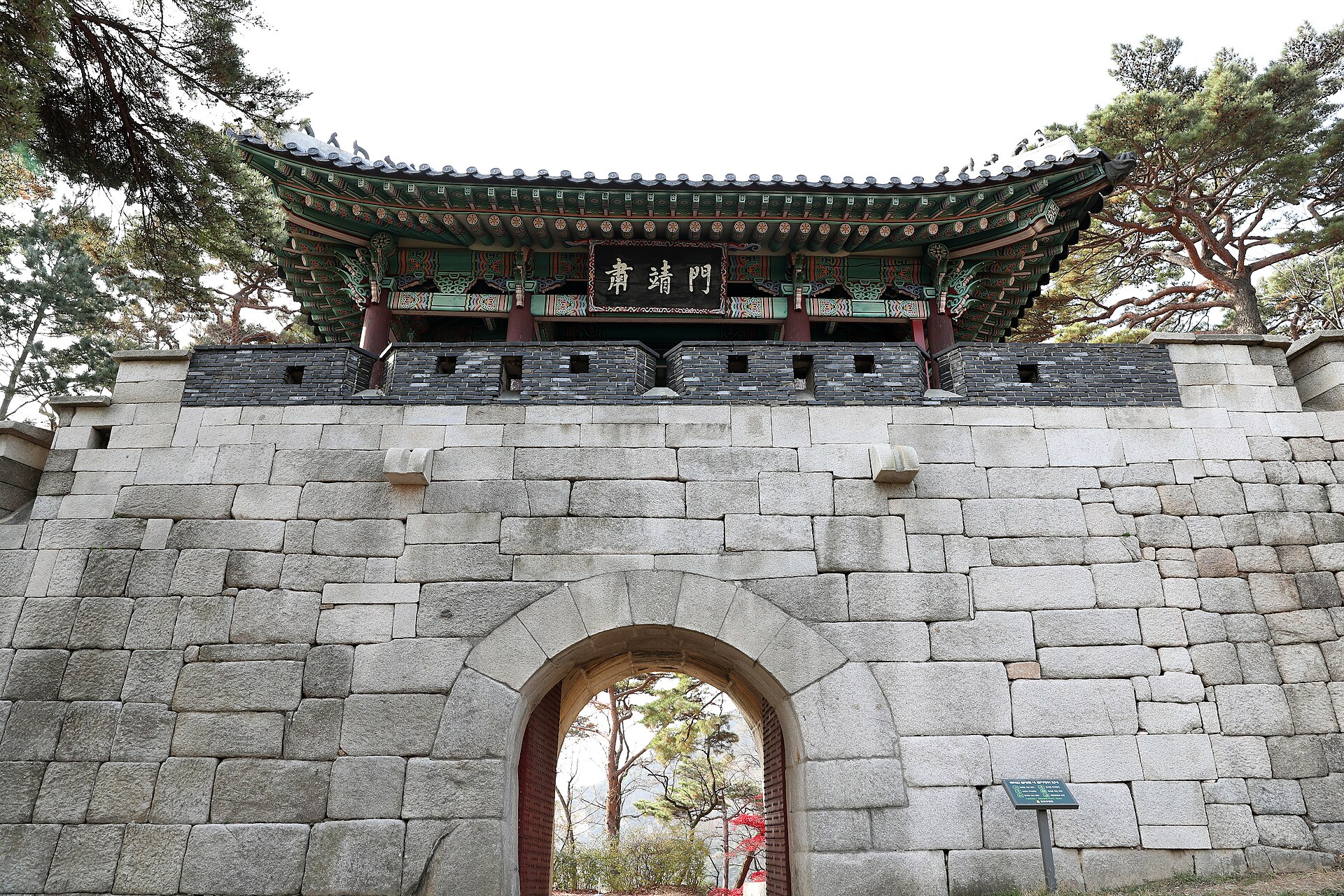
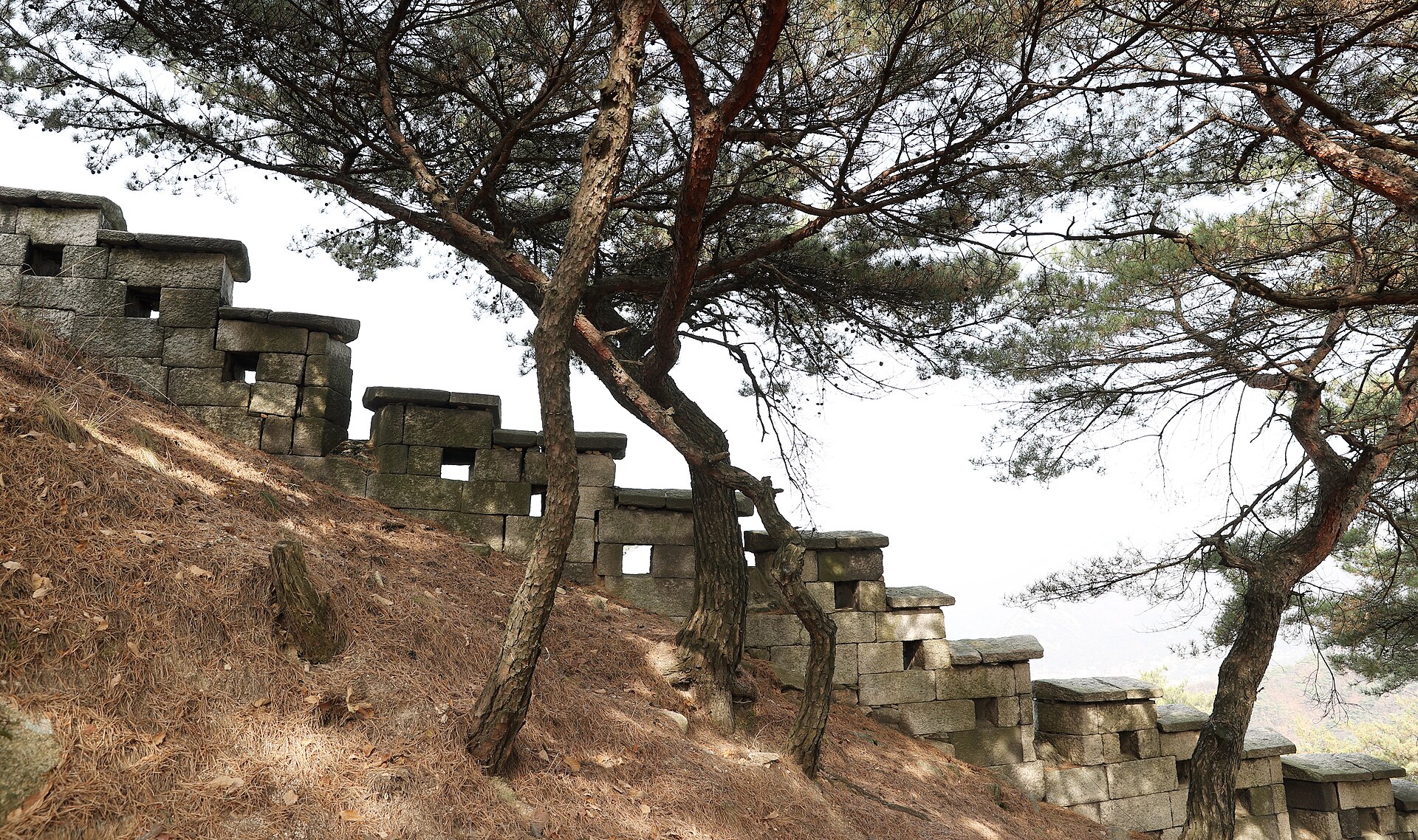
It follows the fortress wall of the Joseon capital. Starting from the Bugaksan center at 88 Samcheong-ro, you follow the inside of the wall from Sukjeongmun to Changuimun. This stretch was closed for decades on security grounds; today anyone can walk the ridge behind Gyeongbokgung and the former presidential Blue House. You come down into Samcheong-dong’s café street, so a morning climb pairs naturally with an afternoon in town.
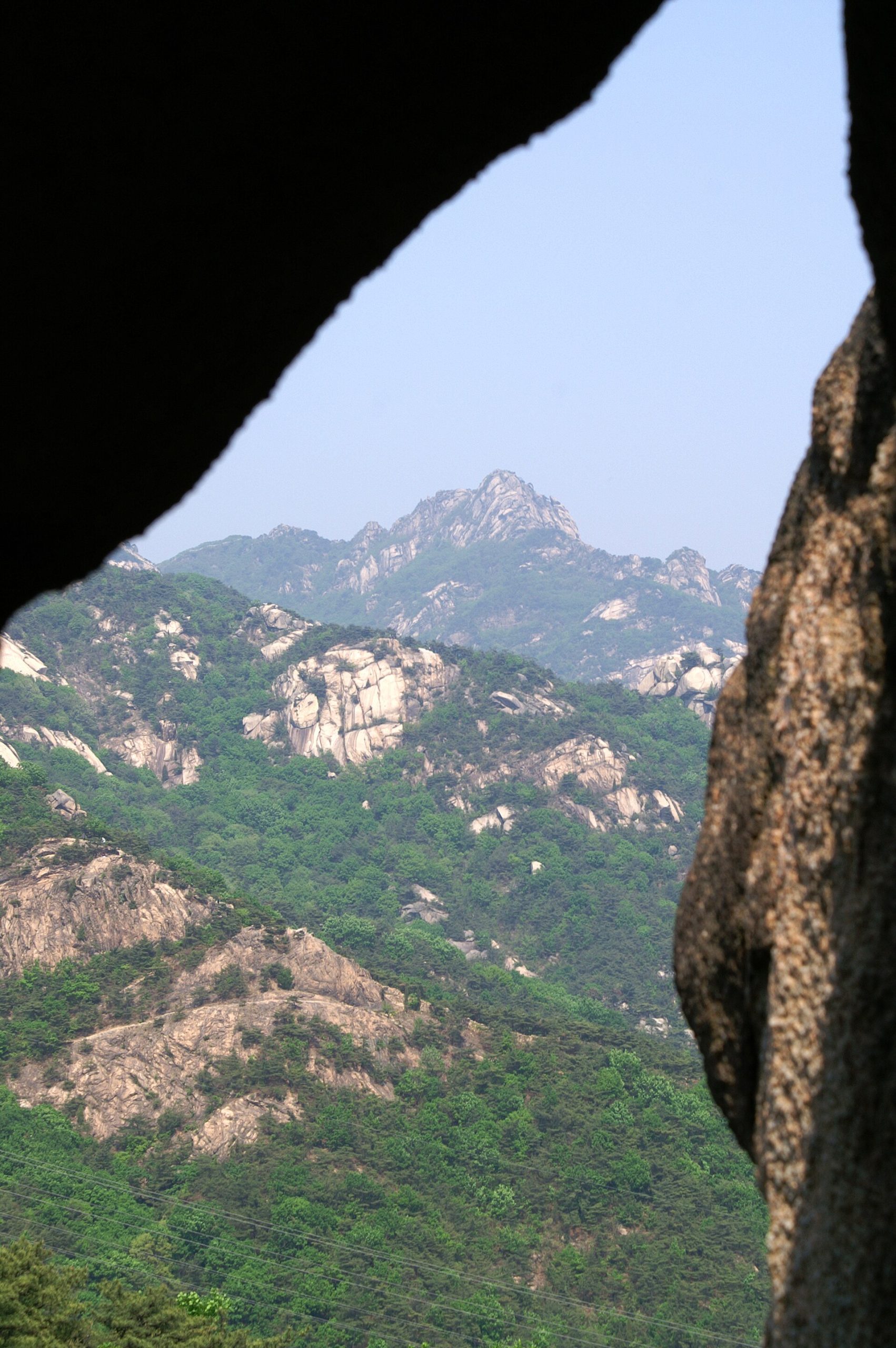
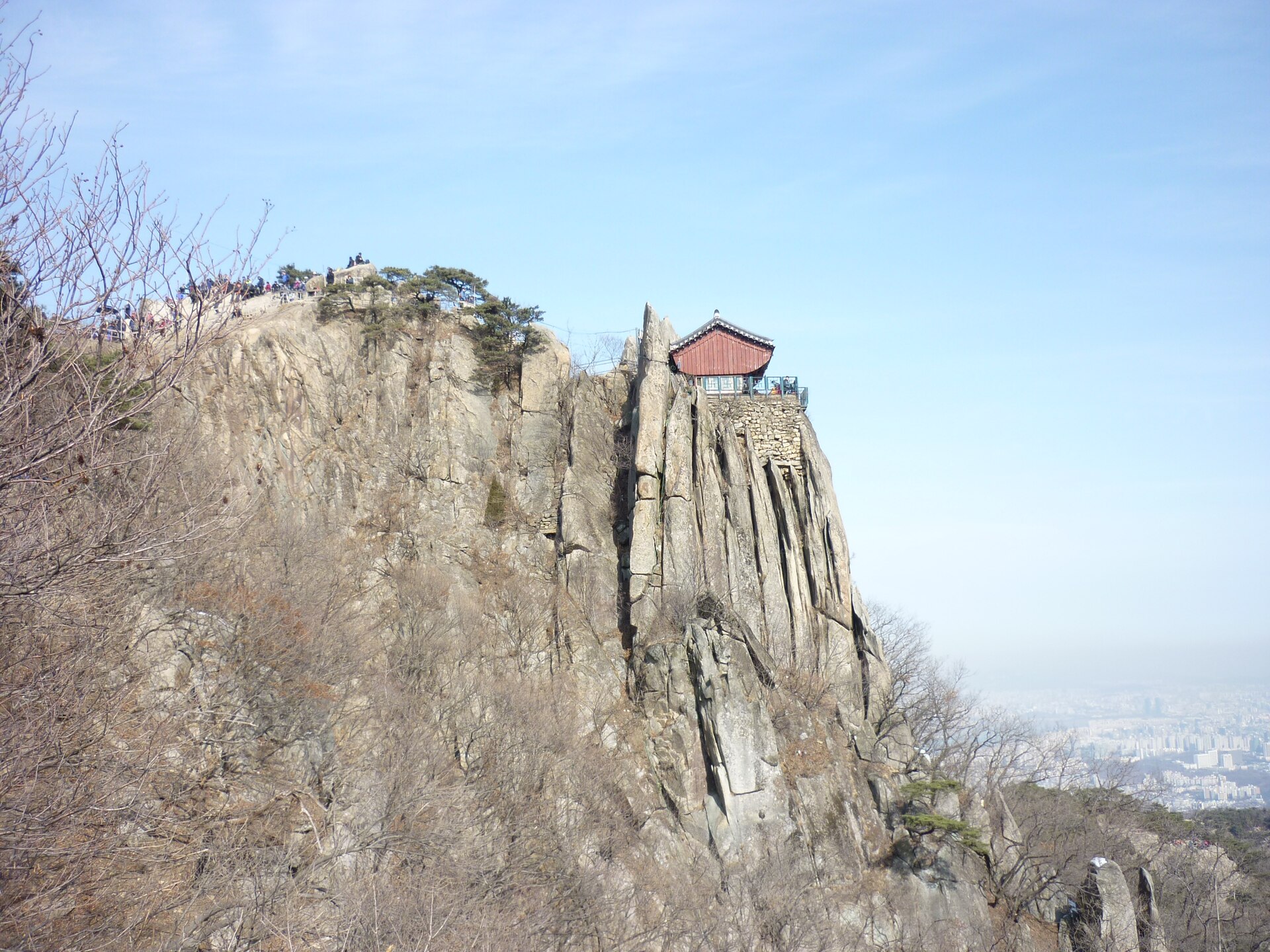
Gwanaksan (629 m) is a mountain of rock. The center sits on B1 inside Gwanaksan Station on the Sillim Line, exit 1, and the trail climbs beside a stream. Course A runs 4 km and 2 hours 40 minutes to Yeonjudae; Course B is a 9.4 km, 4-hour-30-minute loop. The mountain’s emblem is Eungjinjeon, a tiny hermitage perched on the Yeonjudae cliff, with Seoul National University’s campus and the southern districts spread below. Afterwards, Sillim’s sundae town by the station does the classic pan-fried white sundae.
The Centers Close on Different Days! Preparation and Pacing—Rental, What to Carry, the Drink at the Bottom
✔ Bring four things of your own
Borrow the gear at the center; bring a liter of water, snacks, a hat and a light windbreaker. Korean trails are well maintained with English on the signposts, but the Baegundae scramble and Gwanaksan’s ridge are slippery, so wear proper boots. The centers’ lockers take suitcases, which means you can check out of your hotel and go straight to the mountain.
As a pace guide: Bukhansan or Gwanaksan in the morning for three to four hours, Bugaksan in the afternoon for an hour and a half. Doing two in one day depends on your legs, but Bugaksan plus Samcheong-dong fits into half a day. The centers close on different days—Monday (Bukhansan), Tuesday (Bugaksan), Wednesday (Gwanaksan)—so check the weekday before you plan.
Peak foliage is late October, when weekend queues form at the Baegundae approach. Go on a weekday morning, or aim for late September to early October before the color arrives, and you get the same views without the crowd. Book the boots on Klook and head for Ui Station exit 2!
On the map — recommended places and Google ratings
Ratings and review counts were checked on Google Maps on September 4, 2026. They change, so tap through for the latest before you go.
- Seoul Hiking Tourism Center, Bukhansan — Google ★4.8 (77 reviews)
- Seoul Hiking Tourism Center, Bugaksan — Google ★5.0 (21 reviews)
- Seoul Hiking Tourism Center, Gwanaksan — Google ★5.0 (13 reviews)
Series: Things worth doing in Korea
1 K-glasses tour · 2 K-scrub and head spa · 3 Personal color and K-makeup · 4 PC bang and esports · 5 Market street food · 6 Myeongdong K-pharmacy · 7 K-hiking by subway · 8 Care-cation · 9 Jjimjilbang full course · 10 K-dermatology · 11 KBO baseball night · 12 Hanbok and palace nights · 13 K-hair salon · 14 Saju and tarot café · 15 Daiso and convenience store · 16 Han River evening · 17 Templestay · 18 Kimjang · 19 DMZ tour · 20 LASIK and SMILE · 21 Escape rooms · 22 Screen golf · 23 Seongsu pop-ups · 24 Self photo studios · 25 Running in Seoul
FAQ
Can I do this without hiking experience?
The Bugaksan wall walk and Gwanaksan Course A are beginner-friendly. Baegundae on Bukhansan ends in a steep rock scramble, but with rented boots and poles and a slow pace it is fine.
How much does gear rental cost?
Boots and clothing at the Seoul Hiking Tourism Centers are currently free, with only a laundry fee planned. Reserve in advance on Klook. The centers close Monday (Bukhansan), Tuesday (Bugaksan) and Wednesday (Gwanaksan).
Can I store luggage or a suitcase?
All three centers have coin lockers, and the Bukhansan center adds free luggage storage, showers and changing rooms.
When do the leaves turn?
On Bukhansan the color starts in mid-October and peaks in late October. Late September to early November is the best hiking season.
Is there an entrance fee or a reservation?
National park entry is free and needs no booking. The Bugaksan wall section is open as well. Only the gear rental at the centers requires a reservation.
- 서울 도심등산관광센터 공식(센터 주소·휴무·대여)
- 서울시 내 손안에 서울: 도심등산관광센터 안내
- 서울신문: 외국인 사로잡은 S등산(2026.3)
- 외국인도 흠뻑 빠진 서울 등산코스 4선(2026.3)
- 서울관광재단: 관악산 도심등산관광센터 개관(2024.11)
- 나스미디어: K-웰니스 여행(북한산 외국인 유동인구)
How this was checked: official listings for each shop or facility and Google Maps ratings were verified online (2026-09-05). The author lives in Seoul and folds in what was seen on the ground; the piece is updated when things change.