Who’ll get the most from this
- You want to buy hanwoo at butcher prices instead of off a barbecue restaurant menu
- You’ve never done the market-barbecue routine of buying meat and grilling it one floor up
- You first want to know where Majang-dong is and which exit to walk from
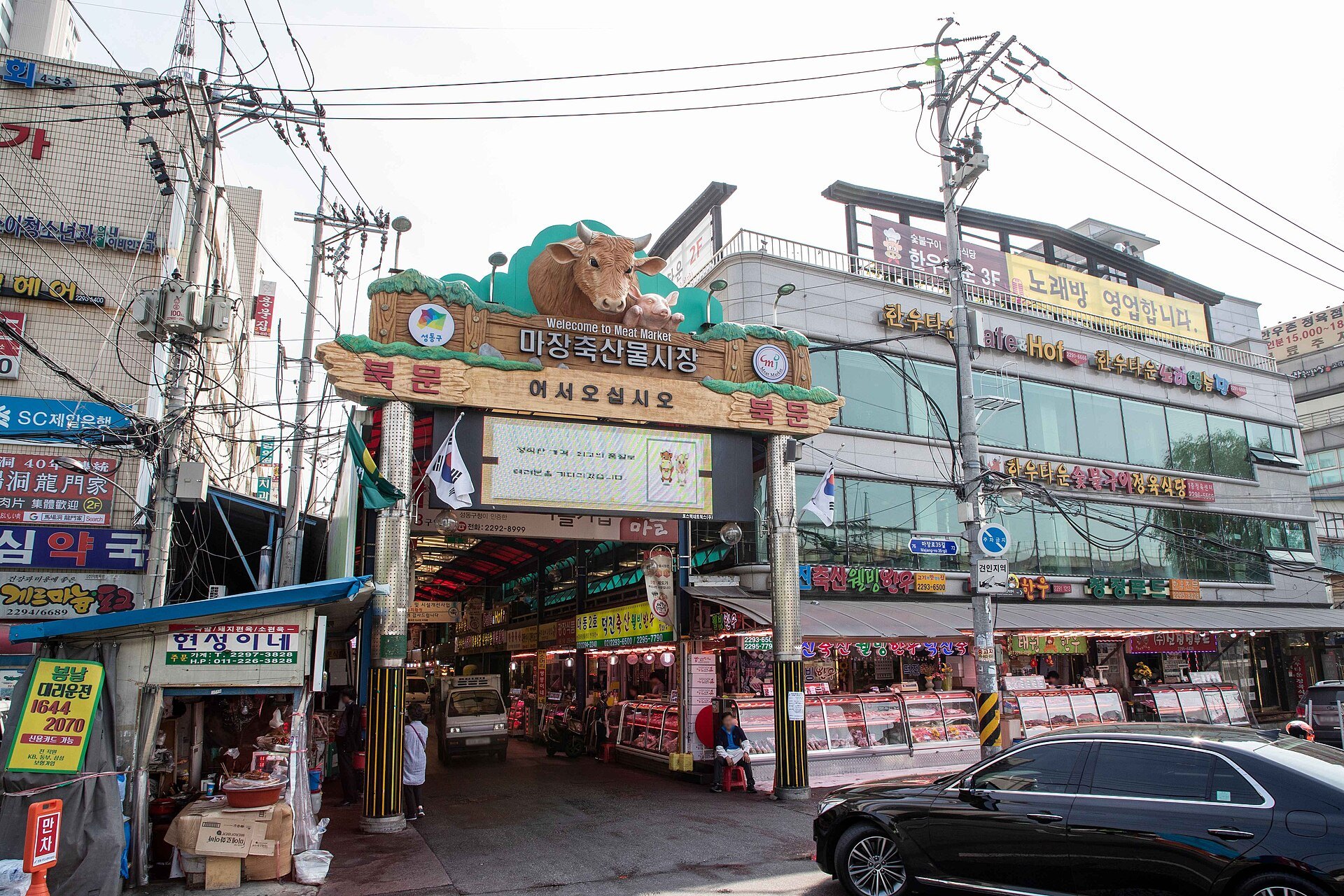
Majang Livestock Market is a place that sells meat, and it’s also the place where you carry what you just bought upstairs and grill it in the same building. Seongdong-gu Office calls it Korea’s largest livestock market, with 2,500 shops and 2 million visitors a year.
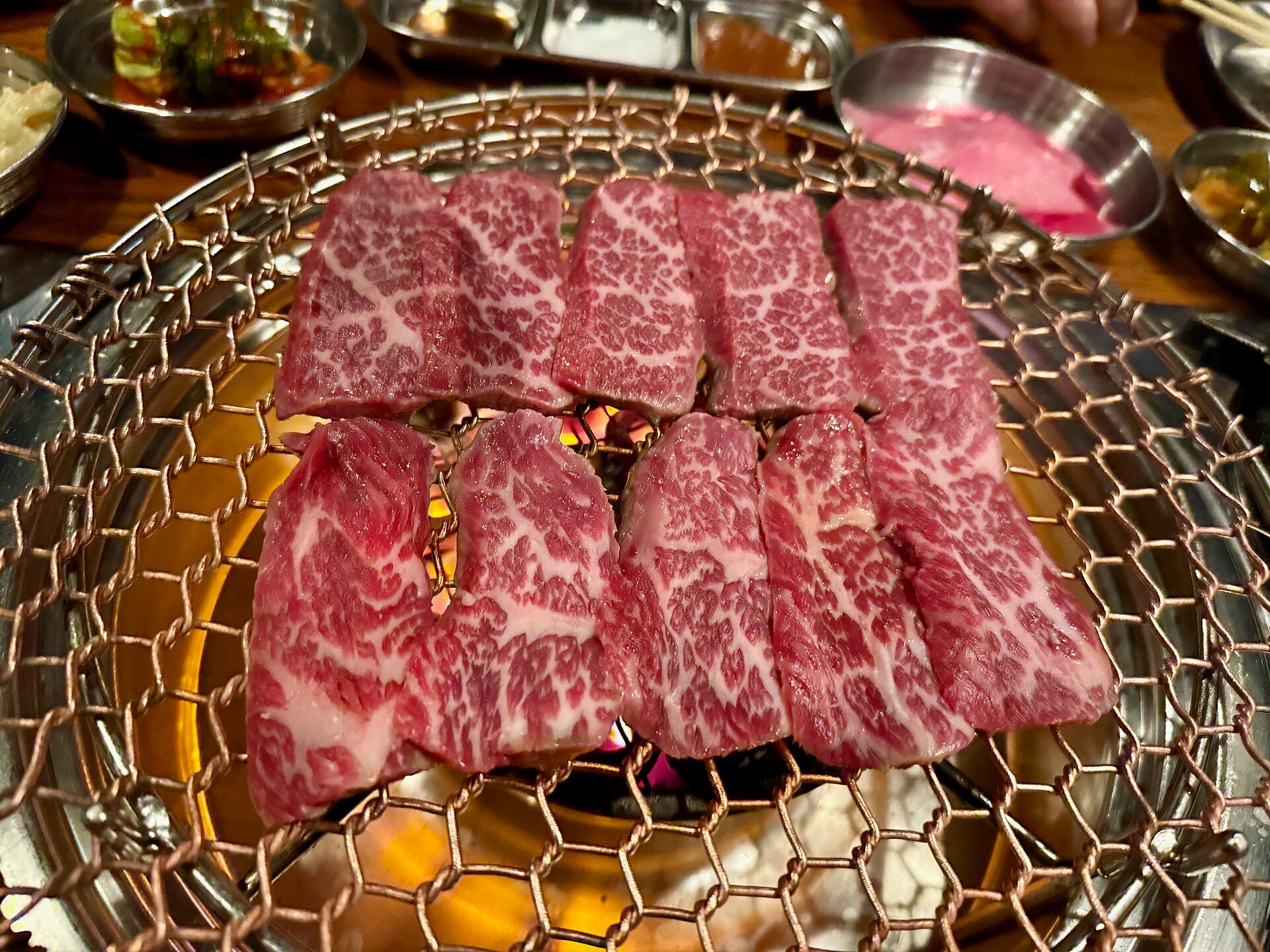
The system is simple. You buy meat off a butcher’s price tag on the ground floor, take it up to a restaurant, pay the sangcharim fee and grill it over charcoal. Paying butcher prices for the meat is the big difference from an ordinary barbecue place, right?
So where do first-timers get stuck? Which exit, what the table fee runs, how to pick a shop. We put the things worth knowing before you go in order. Skip to whichever part you need.
- Seongdong-gu Office describes it as Korea’s biggest livestock market, with 2,500 shops and 2 million visitors a year. A full 60–70% of the capital region’s meat passes through it.
- You buy meat from a ground-floor butcher, then pay a sangcharim (table) fee at a restaurant on the 2nd or 3rd floor and grill it. A 2022 Seoul City feature put it at 6,000 won per adult.
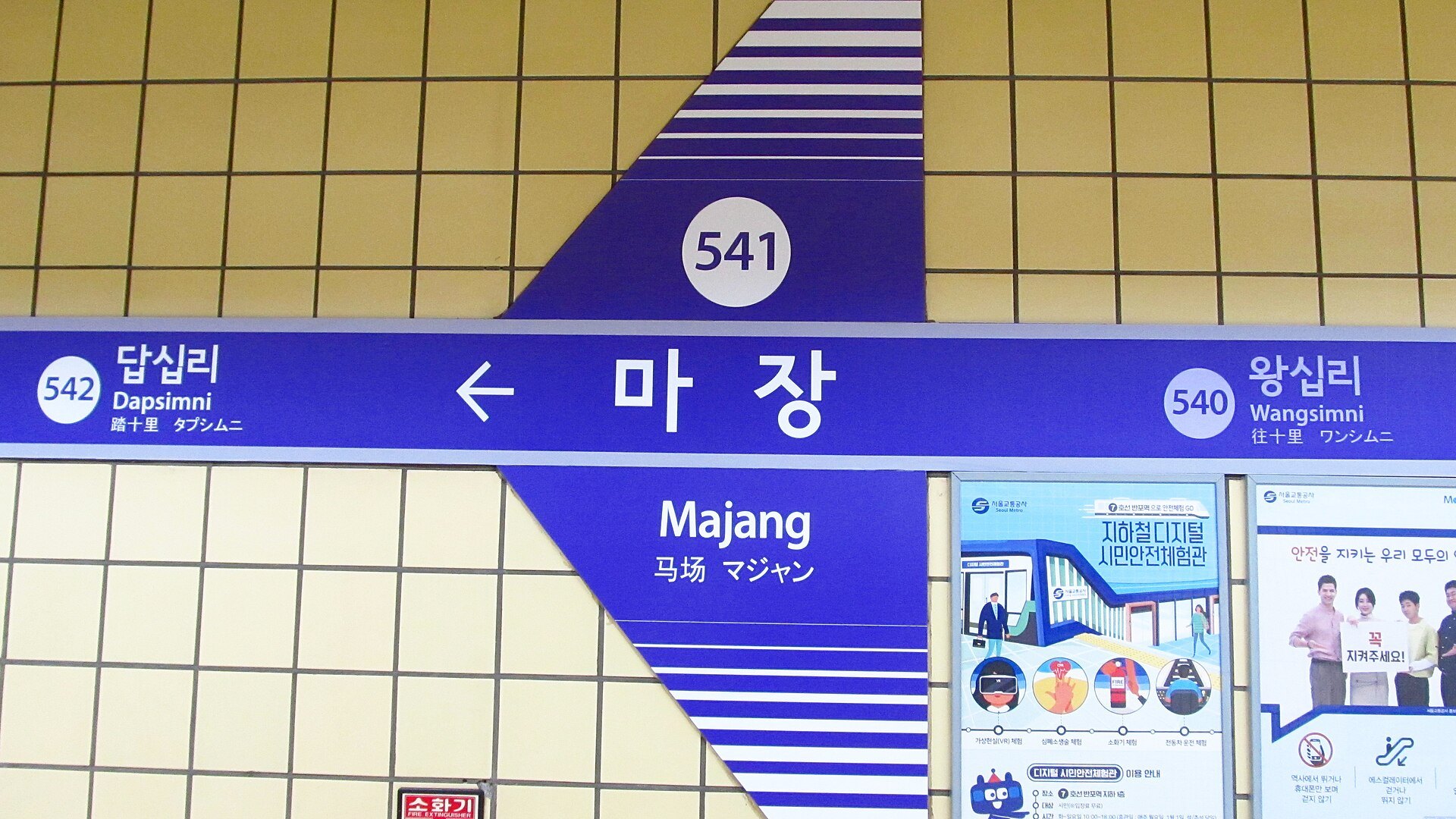
- It’s a 10-minute walk from Yongdu Station (Line 2) Exit 4 or Majang Station (Line 5) Exit 1. Google Maps lists 8:30 am (7 am on Saturdays) to 9 pm.
Does 60–70% of the region’s meat really pass through here?
This guide was put together before our own visit, from Seongdong-gu Office’s information page, Seoul City’s Seoul Sarang magazine and Google Maps listings (checked 19 October 2026). We’ll update it with our own photos and real prices after we go.
✔ It started as a cattle market next to a slaughterhouse
According to Seongdong-gu Office, a slaughterhouse opened here in 1963, a cattle market grew up around it, and after the slaughterhouse moved away for redevelopment in 1998, the area settled into the livestock market you see today. Seoul Sarang dates the start even earlier, to 1958, when an 8,000-pyeong cattle market opened beside Cheonggyecheon. Whichever year you pick, it has been feeding Seoul for more than 60 years.
The scale only lands when you see the numbers. Seongdong-gu Office says the market handles 60–70% of the capital region’s livestock distribution, and Seoul City puts its area at more than 110,000 m². Shop counts vary by source, 2,500 from the district and 3,000-plus from Seoul Sarang, but either way you won’t walk the whole thing in one lap. In 2013 the entire market was named a Seoul Future Heritage site.
| Item | Details |
|---|---|
| Location | Around 40 Majang-ro 31-gil, Seongdong-gu, Seoul (Seongdong-gu Office) |
| Nearest stations | Yongdu Station (Line 2) Exit 4 or Majang Station (Line 5) Exit 1, 10 minutes’ walk each |
| Hours | Mon–Fri and Sun 8:30 am–9 pm, Sat 7 am–9 pm (Google Maps listing; shops vary) |
| Sangcharim fee | Gogi Ikneun Maeul, West Gate 3F: 6,000 won per adult, 3,000 won for ages 5–10 (September 2022) |
| Contact | Majang Livestock Market Merchants’ Association, 02-2281-4446 |
| Google rating | ★4.1 (1,981 reviews, checked 2026-10-19). Below our usual bar of ★4.5 with 100+ reviews |
Buy it on the ground floor, grill it on the second!
✔ Butchers and restaurants are split by floor
Seoul Sarang lays out the routine like this: you buy meat from a hanwoo shop on the ground floor, then head up to a restaurant on the 2nd or 3rd floor, pay the sangcharim fee and grill it. The fee covers condiments and charcoal, and the 2022 feature listed Gogi Ikneun Maeul on the 3rd floor at the West Gate at 6,000 won per adult and 3,000 won for kids aged 5 to 10.
Rice, stew and drinks are paid separately at menu prices. Reportedly, the butcher you bought from will sometimes walk you to a restaurant. The fee can go up year to year, so ask what it is per person before you sit down and the bill won’t surprise you.
You can also skip the butcher entirely. There’s a 40-year-old food alley in front of the north gate where you just order at the restaurant. If you want the basics of ordering at a Korean barbecue place first, our samgyeopsal ordering guide covers it.
✔ Read first
The buy-downstairs, eat-upstairs system is the same one Noryangjin Fish Market runs. The seafood version is in “Noryangjin Fish Market”.
First time? Here’s what to look at before you buy
✔ Start with the price tags and the grade label
Each butcher posts prices by cut. For hanwoo, check the grade first, 1++, 1+ or 1, then tell them how many people are eating and they’ll cut to match. As at other wholesale markets you can ask for a little off, and some shops reportedly throw in extra.
Don’t rush the choice. Instead of walking into the first shop by the entrance, compare the same cut at two or three places and you’ll have a baseline. With 2,500 shops, there’s no shortage of comparisons.
✔ What to expect so nothing throws you
Google Maps reviews keep mentioning pushy touts and a smell of blood. Some floors are wet, which is why people advise against brand-new white sneakers. If touts bother you, decide on a shop in advance and walk straight there.
Which exit gets you there without getting lost?
✔ Line 2 is Yongdu Exit 4, Line 5 is Majang Exit 1
Per Seongdong-gu Office, it’s a 10-minute walk from Yongdu Station Exit 4 on Line 2 and from Majang Station Exit 1 on Line 5. Trunk buses 141, 145, 148 and 421 and branch buses 2015 and 2222 run toward the market. If you drive, there are public car parks at the West Gate and the North Gate, and Google Maps lists the West Gate one as open 24 hours.
✔ Where to walk it off
Cheonggyecheon runs right beside the market, and about 500 m along the stream you reach Majang-dong’s blue-crab street, lined with crab-stew and steamed-crab places. Walking the stream to crab street after the meat makes an easy loop.
Map and getting there
Majang Livestock Market · Around 40 Majang-ro 31-gil, Seongdong-gu, Seoul (Seongdong-gu Office) · 10 minutes’ walk from Yongdu Station (Line 2) Exit 4 or Majang Station (Line 5) Exit 1 · Google Maps: Mon–Fri and Sun 8:30 am–9 pm, Sat 7 am–9 pm · Merchants’ Association 02-2281-4446
FAQ
What time does Majang Meat Market open?
Google Maps (checked 2026-10-19) lists 8:30 am to 9 pm Monday to Friday and Sunday, and 7 am to 9 pm on Saturday. Some wholesale-focused shops open as early as 3 am, so hours differ by shop.
How much is the sangcharim (table) fee?
A September 2022 Seoul Sarang feature listed Gogi Ikneun Maeul on the 3rd floor at the West Gate at 6,000 won per adult and 3,000 won for ages 5 to 10. It varies by restaurant and can rise each year, so ask before you sit down.
Can I just eat at a restaurant without buying meat first?
Yes. Restaurants like those in the food alley in front of the north gate take orders directly. Buying at a butcher and going upstairs differs only in that you pay butcher prices for the meat.
Is it open on Sundays?
Google Maps lists Sunday as 8:30 am to 9 pm too. Days off differ by shop, so if you have a particular one in mind, check with the Merchants’ Association (02-2281-4446) or the shop itself.
What is the nearest subway station?
Yongdu Station Exit 4 on Line 2 and Majang Station Exit 1 on Line 5. Per Seongdong-gu Office, both are a 10-minute walk.
- Seongdong-gu Office, Majang Livestock Market page (last updated 2026-08-06: location, shops, history, transport)
- Seoul Sarang, September 2022: Majang Livestock Market (area, history, table fee, food alley, crab street)
- Google Maps, Majang Livestock Market (hours, rating, parking; checked 2026-10-19)
- ivisitkorea, Majang Meat Market (bargaining, extras, footwear advice; updated 2026-06-30)
- Creatrip, Best Place for Hanwoo in Seoul (butchers walking customers to restaurants; 2020-02-18)
Information as of 2026-10-19 (official pages and Google Maps listings at the time of writing). Compiled before our visit; we’ll update with photos and real prices after we go. We revise this when details shift.