- 231-16 Gungpyeong-ri, Cheongsan-myeon, Yeoncheon-gun, Gyeonggi-do. Open daily 10:00~20:00, with a budget of around 10,000 won per person.
- It opened in 1968 outside the army base in Gungpyeong-ri, and the name was chosen by the founder’s mother to hold the longing of people who lost their home towns in the Korean War.
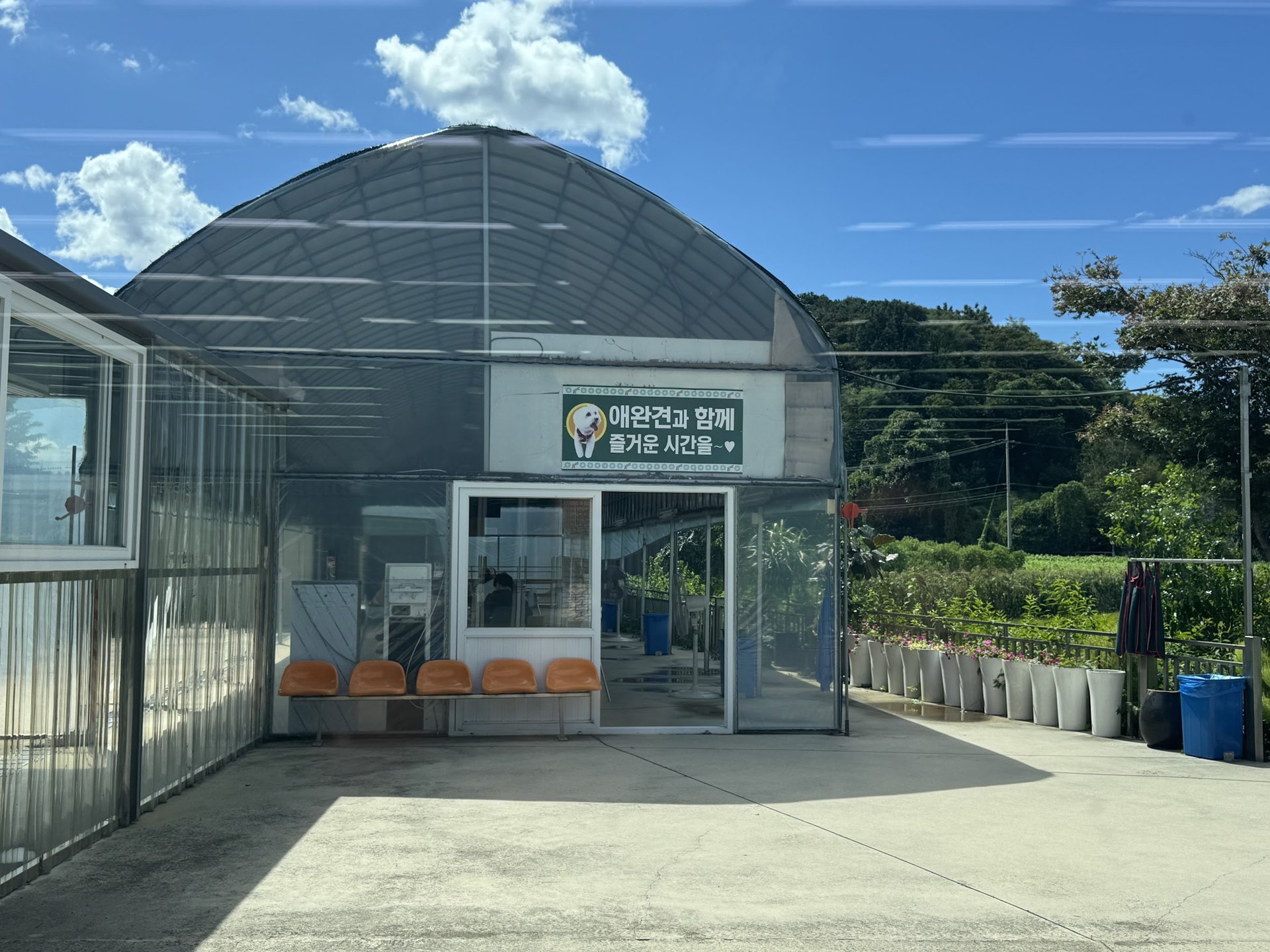
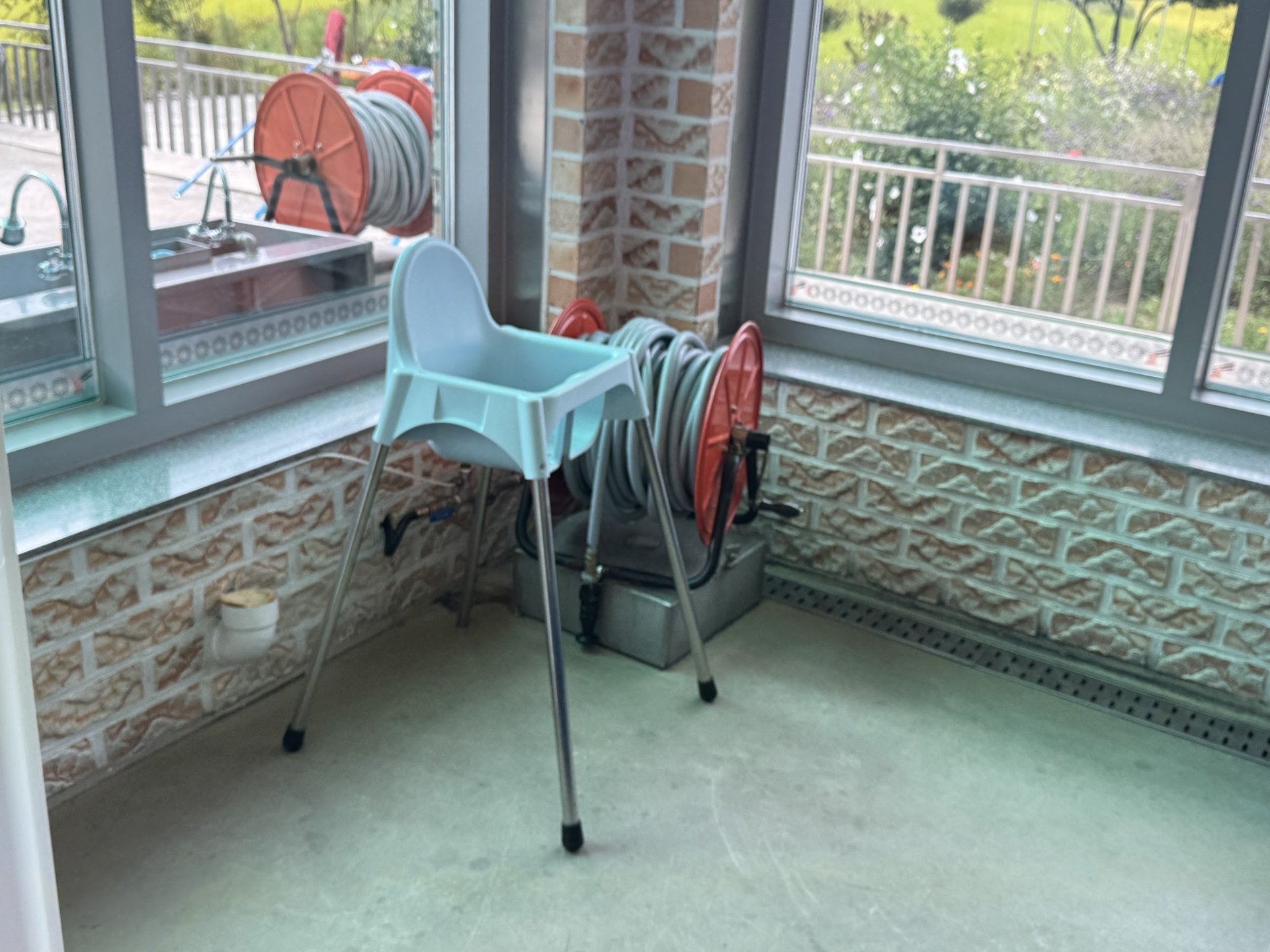
- There is a separate dog-friendly room and high chairs are provided. Google Maps shows ★4.1 from 4,076 reviews — plenty of reviews, but the rating falls short of this site’s standard of ★4.5.
Who wrote this
- Visited the Manghyang Bibim Guksu main store in Cheongsan-myeon, Yeoncheon-gun in September 2026; every photograph here was taken on site.
- Prices and opening hours were checked on Google Maps on 2026-09-19, and the founding year and origin of the name were confirmed against Visit Korea (Korea Tourism Organization) and a Kyeonggi Ilbo interview of 2022-02-06.
- The Google Maps rating of ★4.1 from 4,076 reviews is below this site’s ★4.5 standard, and the piece says so plainly.
Drive an hour and a half north of Seoul and you reach Yeoncheon. At the end of the road that curves along the Hantan River, in a village called Gungpyeong-ri, there is a noodle house.
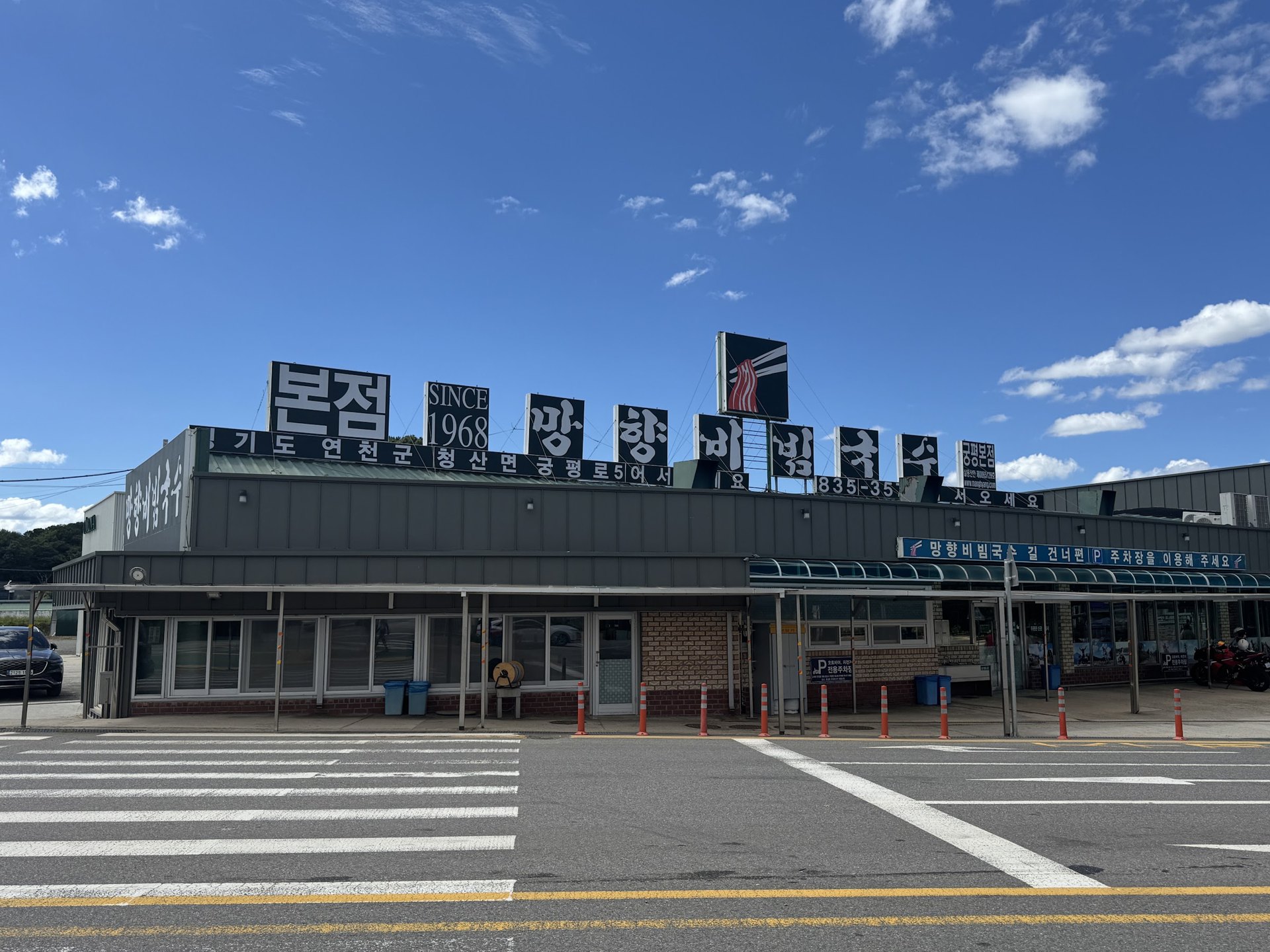
The building is big. Not the size the words “noodle house” bring to mind: the car park alone is wide, and the dining hall runs on and on. At lunchtime the queue reaches outside.
Yet this place started in 1968 as a small noodle stall by the main gate of the army base directly opposite. It was where visiting families and soldiers out on leave each ate a bowl.
The name is Manghyang — to look towards home. What follows is what we ate and saw on a visit in September 2026.
The story — a noodle house that began outside an army base in 1968
Manghyang Bibim Guksu started in 1968, outside the army base in Gungpyeong-ri. On the name, owner Choi Jong-o explained in a Kyeonggi Ilbo interview (2022-02-06) that it was a name his mother chose, holding the grief and longing of those who lost their home towns in the Korean War.
It has since grown into two buildings, halls one and two, seating around a thousand people. Branches have opened across the country, but the original is still on this spot.
According to Visit Korea, the kitchen uses around ten kinds of vegetable and bedrock water, and the noodles are not the usual thin somyeon but a medium-thick noodle. The difference shows when you eat: the sauce is thick, yet the noodles hold their own.
It is also known as a filming location for the film Steel Rain.
| Item | Details |
|---|---|
| Address | 231-16 Gungpyeong-ri, Cheongsan-myeon, Yeoncheon-gun, Gyeonggi-do |
| Hours | Daily 10:00~20:00 |
| Phone | 031-531-2507 |
| Website | manghyang.com |
| Founded | 1968, outside the army base in Gungpyeong-ri |
| Origin of the name | The longing of those who lost their home towns in the Korean War — chosen by the founder’s mother |
| Dogs | Allowed, but only in the designated area (a separate glasshouse-style room) |
| Rating | Google Maps ★4.1 from 4,076 reviews — review count is ample, but the rating is below this site’s standard |
Bibim guksu — heat that the medium noodle can carry
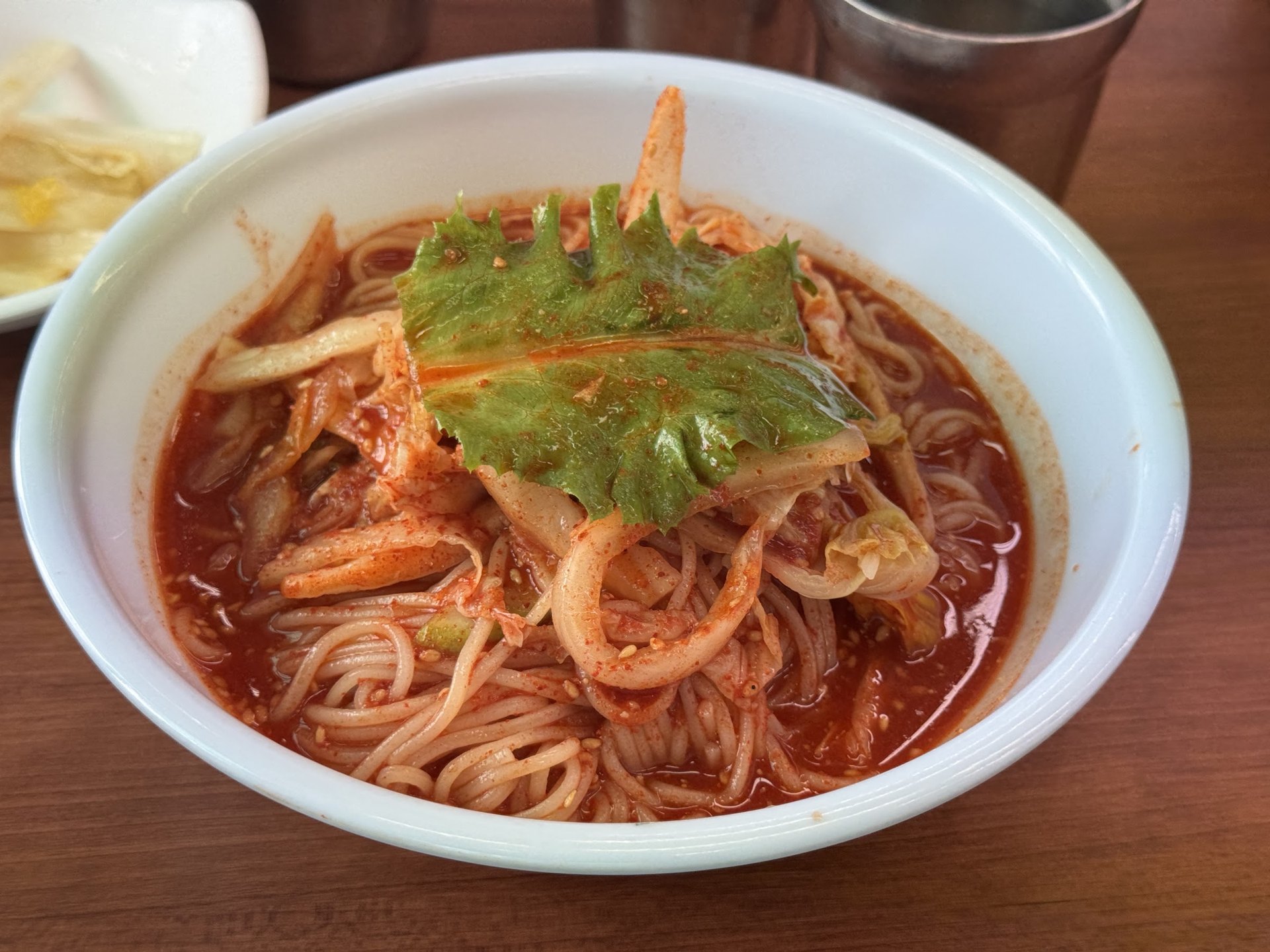
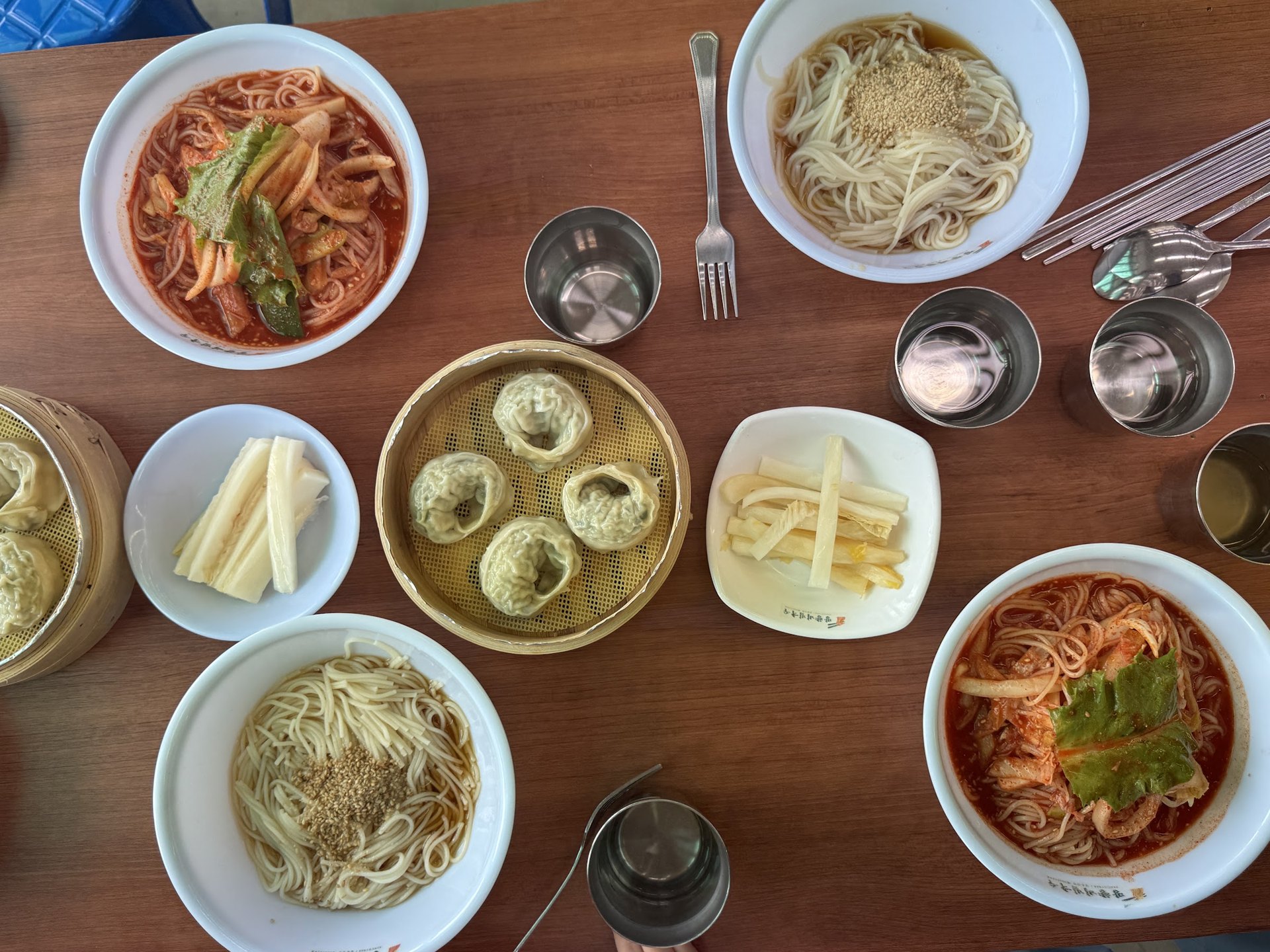
The signature dish is, of course, bibim guksu. It arrives in a white bowl with the red sauce evenly worked through, topped with perilla leaf and shredded vegetables.
Sweetness comes first. Heat follows, not the coarse burn of chilli powder but the kind that clears cleanly. Vinegar keeps the balance in the middle. The scent of perilla leaf comes with every mouthful.
The noodles matter. Thin somyeon would have gone soft quickly against a sauce this thick, but the medium-thick noodle keeps its bite to the last. The noodles are still standing when the bowl is empty.
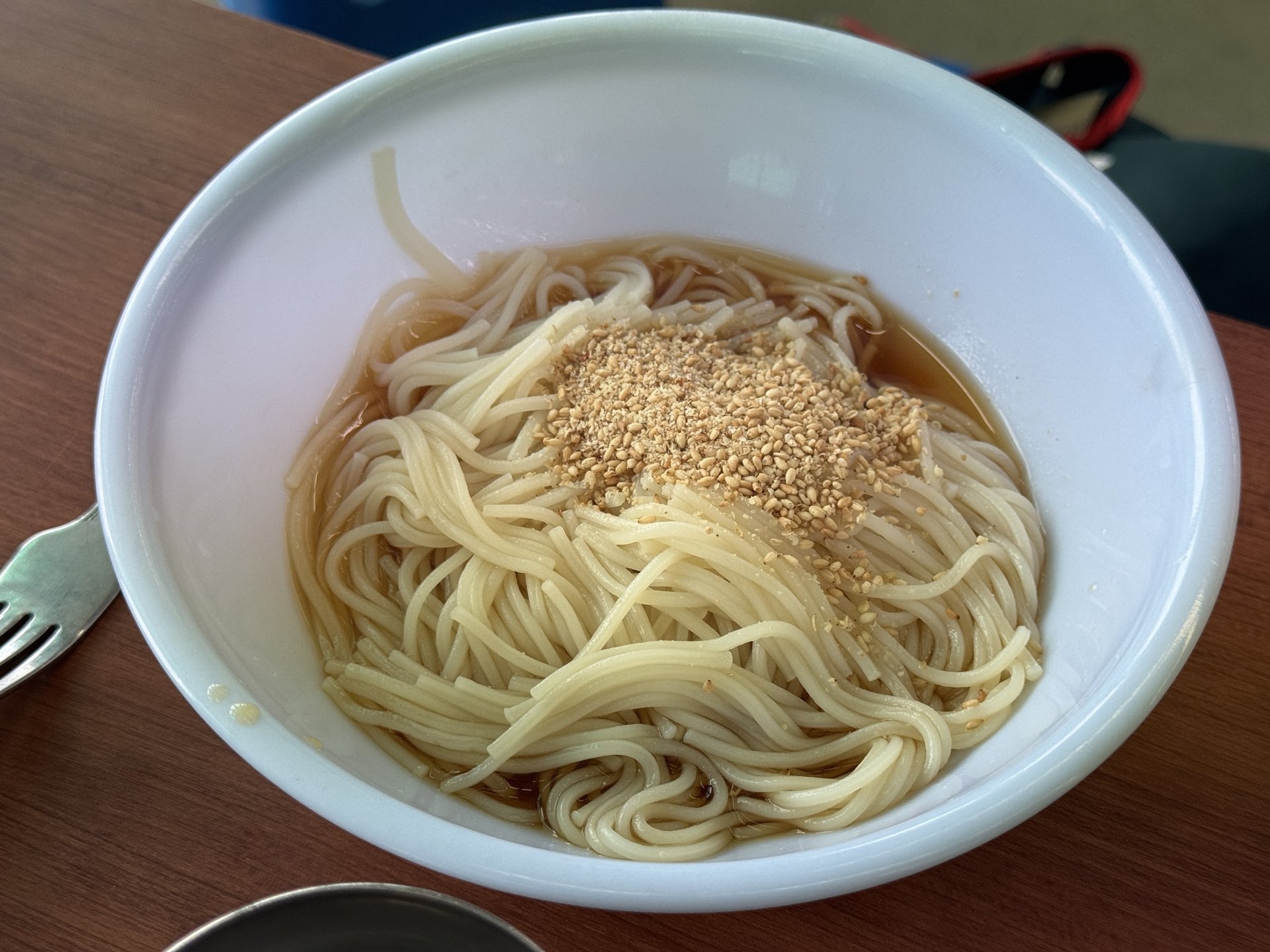
If you are not good with heat, order janchi guksu instead — a clear noodle soup in anchovy broth with sesame scattered over it, easy to share when you have a child with you. For small children this is the right bowl.
Dumplings and white kimchi — a mistake to stop at the noodles
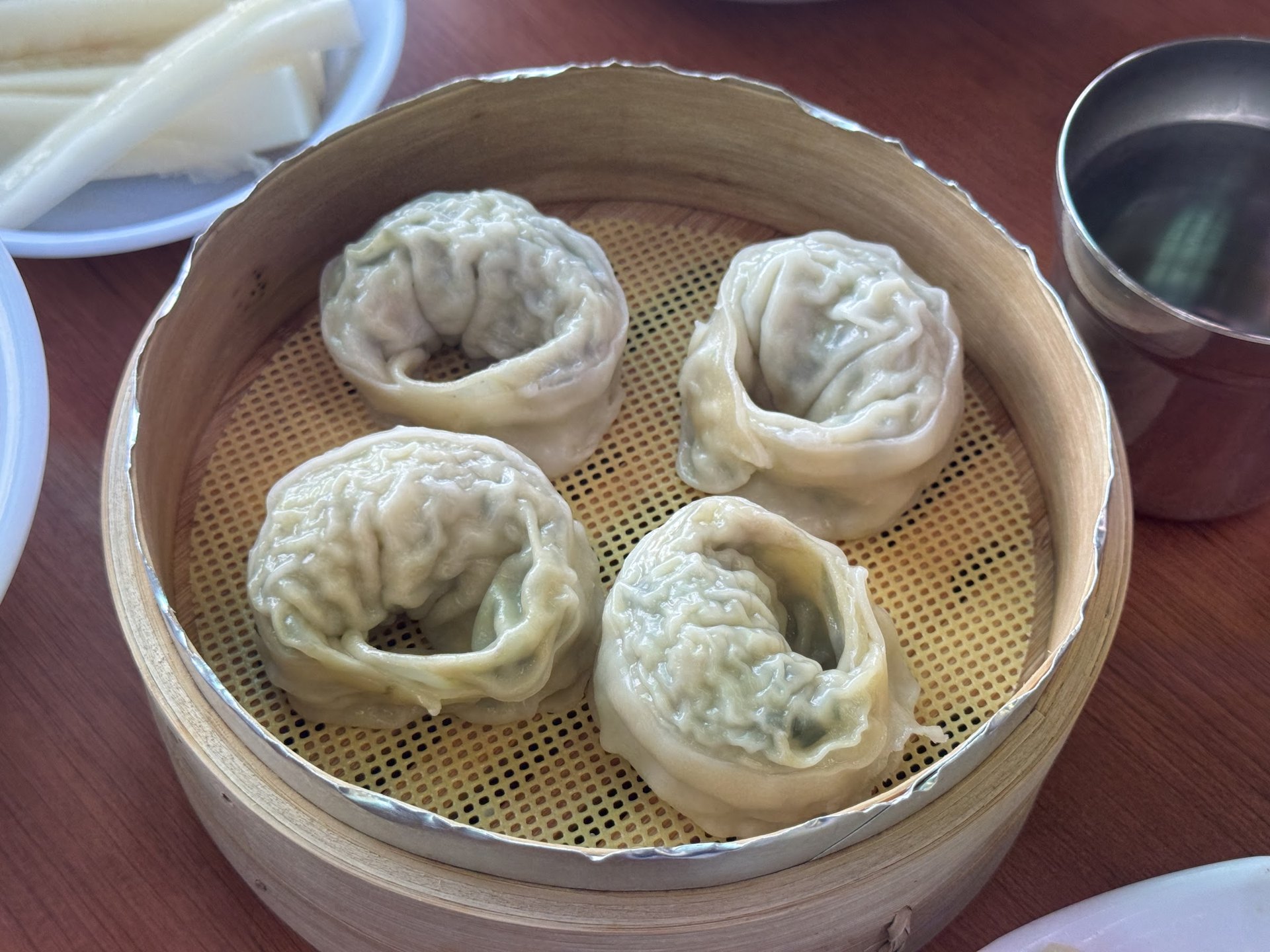
The mandu, served in a steamer, has thin skin and a tightly packed filling. Better to split one in half while it is hot to let the steam out. Slotting one in between mouthfuls of hot noodles gives the palate a rest.
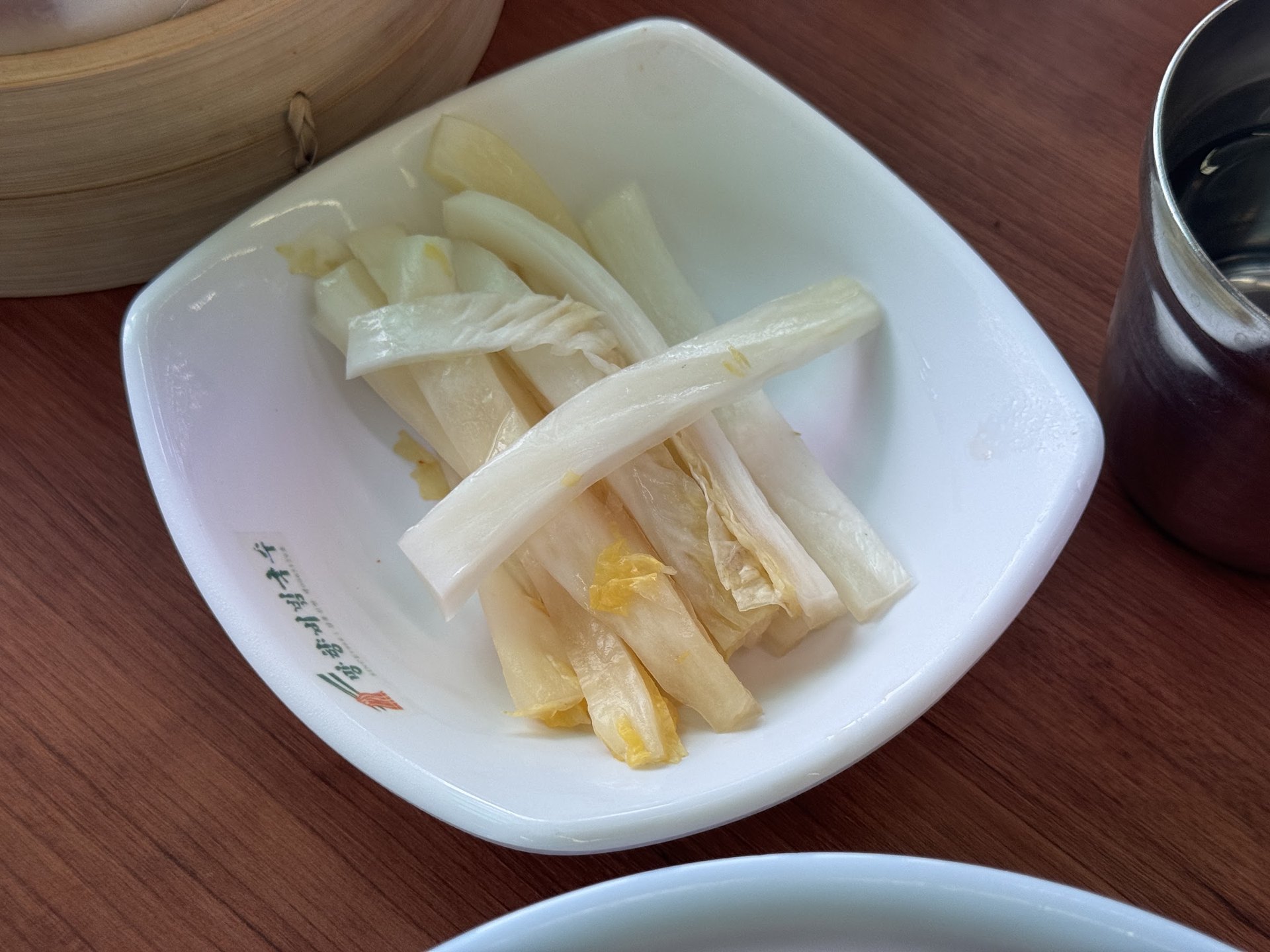
The white kimchi that comes as a side dish matters more than you would expect. Made without chilli powder, it is cool and rinses the hot sauce away. It is also a kimchi a child can eat.
Dogs and babies — it starts with where you sit
There is a reason this place fills up with families. The range of company you can bring is unusually wide.
Dogs. Separate from the main hall there is a glasshouse-style room with a sign reading “A happy time with your dog”. Visit Korea’s listing likewise notes that pets are allowed but only in the designated area. So it is not any table you like — this is the room to use. If you are coming with a dog, head straight for it on arrival.
Babies. High chairs are set out along the window side. That they sit in plain view, without having to be asked for, says something about the place. Noodles can be cut up with scissors, and with mild janchi guksu and white kimchi on the table there is no separate puzzle about what the child will eat.
There is also a wide yard and outdoor space, so there is somewhere to walk for a moment after eating — which makes a real difference with a child or a dog in tow.
Map and practicalities — getting there, timing, what is nearby
Address 231-16 Gungpyeong-ri, Cheongsan-myeon, Yeoncheon-gun, Gyeonggi-do
Hours Daily 10:00~20:00
Phone 031-531-2507
Website manghyang.com
Getting there. A car is more realistic than public transport. Around 1 hour 30 minutes from central Seoul. The car park is large. Waits get long at lunch (12:00~13:00) and at weekends, so late morning or after 14:00 is easier.
Budget. Google Maps lists around 10,000 won per person. Menu prices can change between visits, so the board in the restaurant is the accurate source. Takeaway is available — visitor reports on Google Maps mention that it is packed in portions of three and the noodles come dried (a user report, so it may change).
Nearby. If you have come as far as Yeoncheon, Jaein Falls and the Hantan River flood control dam are close by. It is a long round trip for a single bowl of noodles, so it works better slotted into a day around the Hantan River.
The rating, honestly. Google Maps shows ★4.1 from 4,076 reviews. The review count is far beyond this site’s threshold of 100, but it falls short of the ★4.5 rating standard. Long-standing restaurants on this scale tend to be marked down for queues and table turnover. Go knowing that.
FAQ
Is this in Paju or Yeoncheon?
It is in Gungpyeong-ri, Cheongsan-myeon, Yeoncheon-gun, Gyeonggi-do. Many people assume Paju, but the main store’s address is in Yeoncheon.
Can I bring my dog?
Yes. Dogs are allowed only in the designated area, and there is a separate glasshouse-style dog-friendly room apart from the main hall.
Is it suitable for children?
Yes. High chairs are provided, and with mild janchi guksu and white kimchi available there is no separate puzzle about what the child will eat.
When should I go to avoid a wait?
Opening hours are 10:00~20:00 daily, and waits are longest at lunchtime and at weekends. Late morning or after 14:00 is relatively quiet.
Is the bibim guksu very spicy?
Rather than the coarse burn of chilli powder, the heat arrives alongside sweetness and sourness, so the finish is clean. If heat is a problem, order janchi guksu and have the white kimchi with it.
- Google Maps — Manghyang Bibim Guksu main store (address, hours, rating; checked 2026-09-19)
- Visit Korea — Manghyang Bibim Guksu main store (founded 1968, pet policy)
- Kyeonggi Ilbo 2022-02-06 — interview with owner Choi Jong-o of Manghyang Bibim Guksu, Yeoncheon (origin of the name, scale)
- Manghyang Bibim Guksu official website
- GGC (Gyeonggi Cultural Foundation) — Manghyang Bibim Guksu main store, Yeoncheon
Address, opening hours and rating were checked on Google Maps on 2026-09-19. The founding year and the origin of the name follow Visit Korea and a Kyeonggi Ilbo interview dated 2022-02-06.