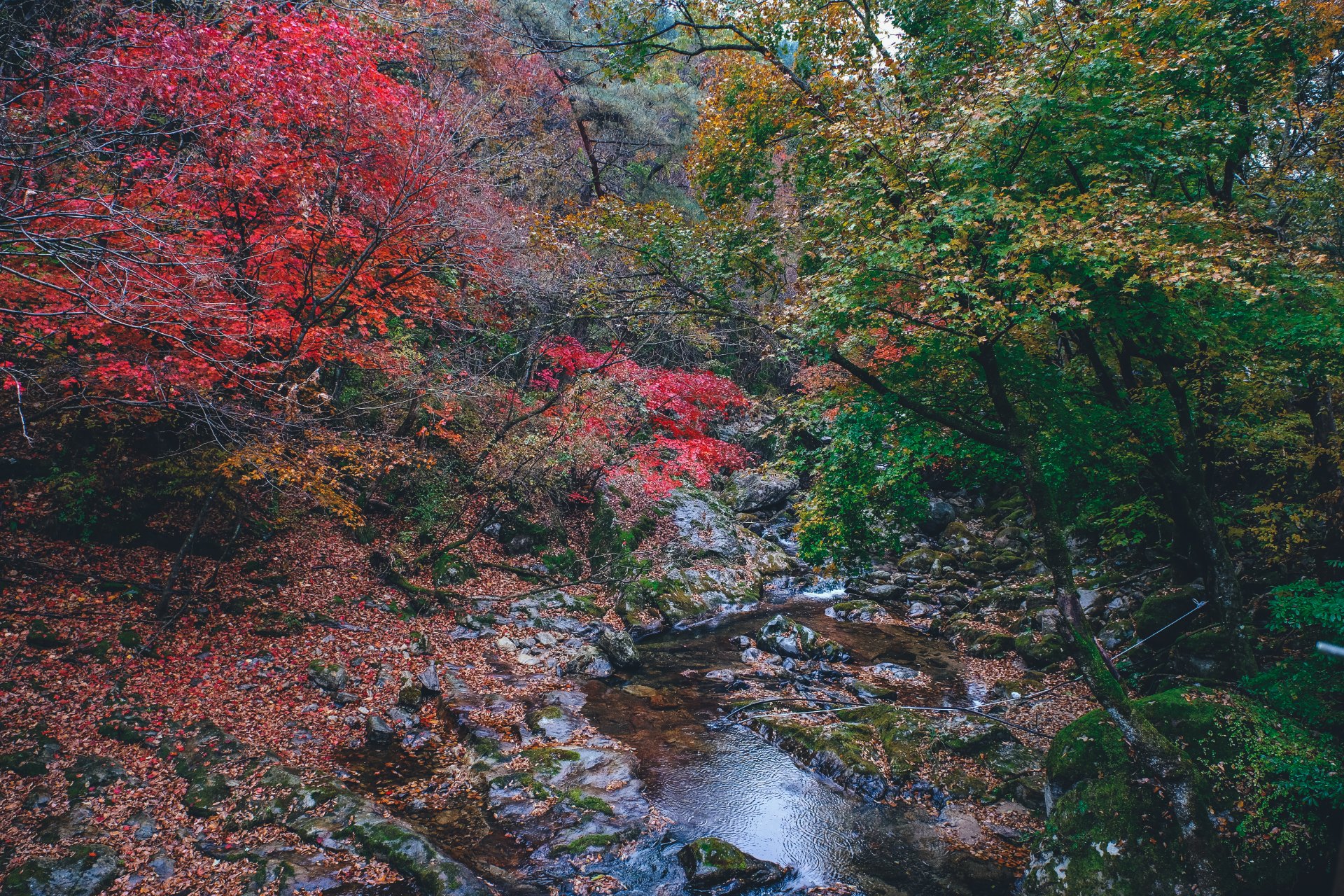
- The foliage front starts on the high northern peaks and works south and downhill at roughly twenty-o…
- These dates come from past patterns.
- You do not need to leave the city.
Who this is for
- Anyone about to book on the theory that October in Korea means leaves
- People wondering whether Seoraksan works as a day trip
- Anyone who’d rather see the colour without leaving Seoul
Korean autumn colour doesn’t move south so much as it moves downward—from the high ground to the low, from the mountains into the city.
Which is why “go to Korea in October and you’ll see the leaves” is only half true. Here’s the thing: when Seoraksan peaks in mid-October, the street trees in Seoul are still green. By the time the palaces in Seoul turn deep red at the end of the month, Seoraksan is already bare.
“So when do I go, and where?” The right order is to decide what you want to see and let that set your dates—not the other way round. Seoulog drew the map; let’s get into it.
Contents
1. The colour comes down from the mountains
2. Region by region
3. Seeing it inside Seoul
4. Can you do Seoraksan as a day trip?
5. When to book
6. A three-step check so you do not miss it
7. Frequently asked questions
1. Twenty-Odd Kilometres a Day? The Colour Comes Down from the Mountains
✔ Two rules
The foliage front starts on the high northern peaks and works south and downhill at roughly twenty-odd kilometres a day. On top of that, every hundred metres of elevation pulls the turn forward by a few days.
Between those two rules, “October” can mean a difference of nearly three weeks between a mountainside and a city street. Seoraksan and Naejangsan are more than a fortnight apart.
The shorthand: mid-October for mountains, late October into early November for cities. Get that much right and you won’t miss by much.
✔ Want to go a level deeper? “Seoul’s Four Tiers” digs into what comes after this.
2. Seoraksan Mid-October, Seoul Late October! Region by Region
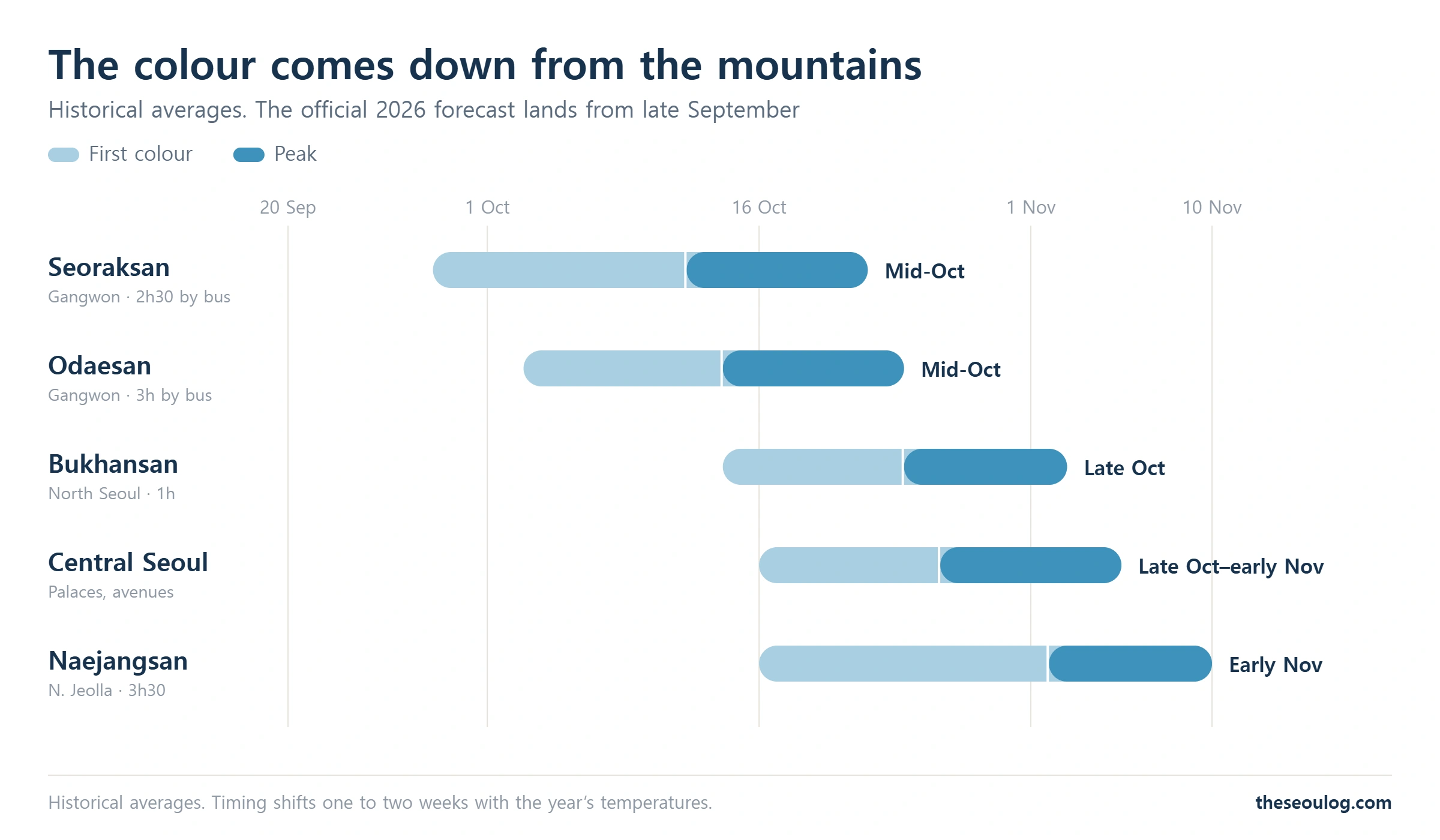
| Place | First colour | Peak | From Seoul |
| Seoraksan (Gangwon) | Late Sept – early Oct | Mid-October | Bus ~2h30 plus |
| Odaesan (Gangwon) | Early October | Mid-October | Bus ~3h |
| Bukhansan (north Seoul) | Mid-October | Late October | 1h by metro and bus |
| Central Seoul (palaces, avenues) | Mid-October | Late Oct – early Nov | — |
| Naejangsan (North Jeolla) | Mid-October | Early November | 3.5h by KTX and bus |
✔ These dates come from past patterns
Actual timing depends on September temperatures—a warm September pushes everything back about a week, and warming has been shifting the whole season later in recent years.
The 2026 official forecast has not been published yet. Korean meteorological and forestry bodies release a foliage-front forecast each year in late September or early October. The dates above are historical averages, so check the current forecast one to two weeks before you travel. Searching the name of a specific site on social media gives you the fastest read on how far along the colour actually is.
3. No Need to Leave the City? Seeing It Inside Seoul
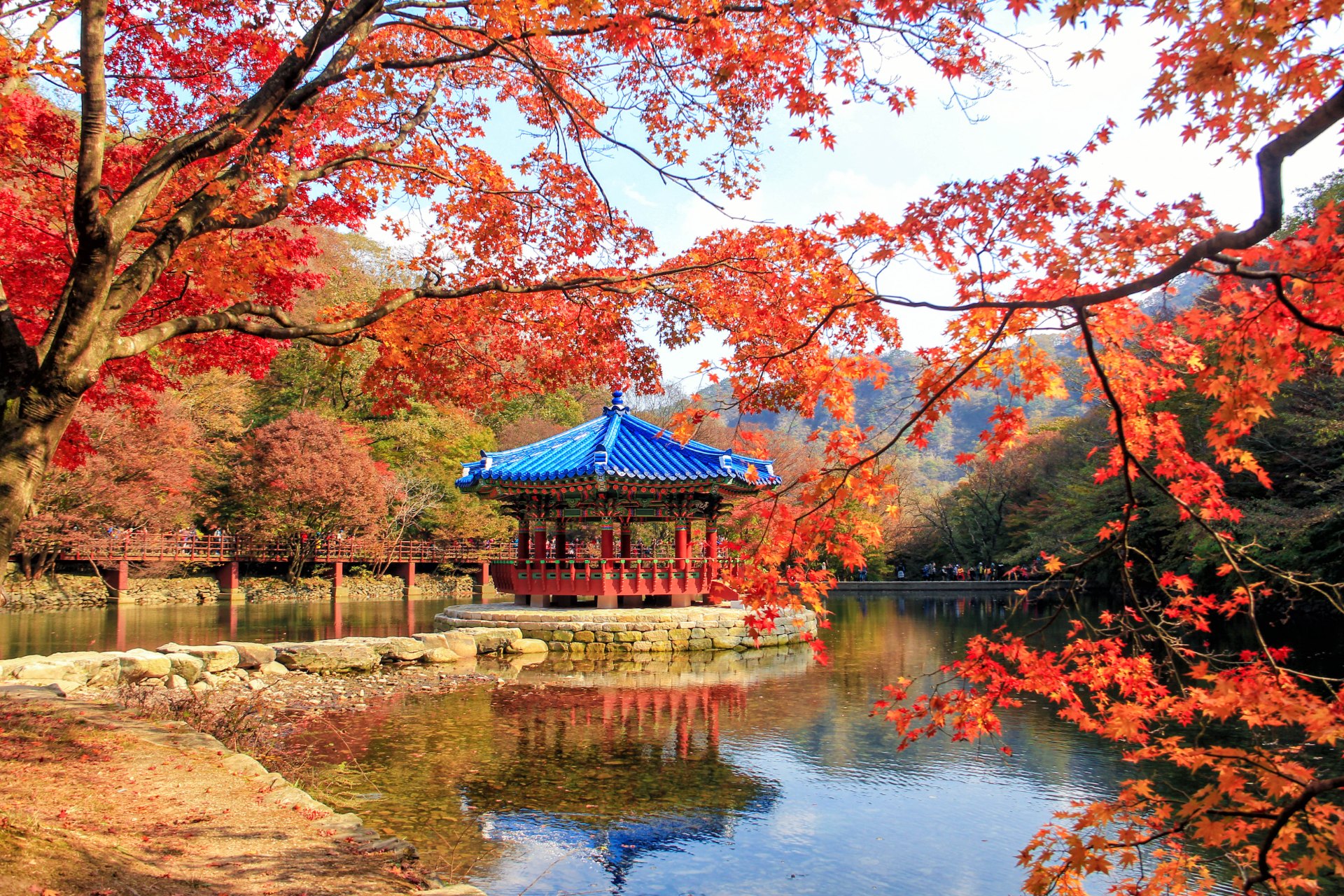
✔ You don’t need to leave the city
Aim for late October into early November.
The Deoksugung stone-wall road is a short walk from City Hall and photographs well, red leaves against grey stone. Huwon, the secret garden at Changdeokgung, is entered on a timed guided tour booked in advance, and autumn slots go early. Seoul Forest is mostly ginkgo and suits families. Namsan sits high enough to turn a few days before street level.
Palace admission and closing days are covered in our four-day itinerary. If you are here for the Chuseok holiday, the palaces open free — but the leaves will not have started.
4. Six Hours on the Road! Can You Do Seoraksan as a Day Trip?
✔ Yes, but don’t
Seoul’s East Bus Terminal to Sokcho takes about two and a half hours, plus another half hour to the park entrance. Six hours of travel buys you four or five hours on the ground.
At peak foliage the roads also jam and the cable-car queue is long. Either stay a night, or settle for Bukhansan closer to home. Those are the two honest options.
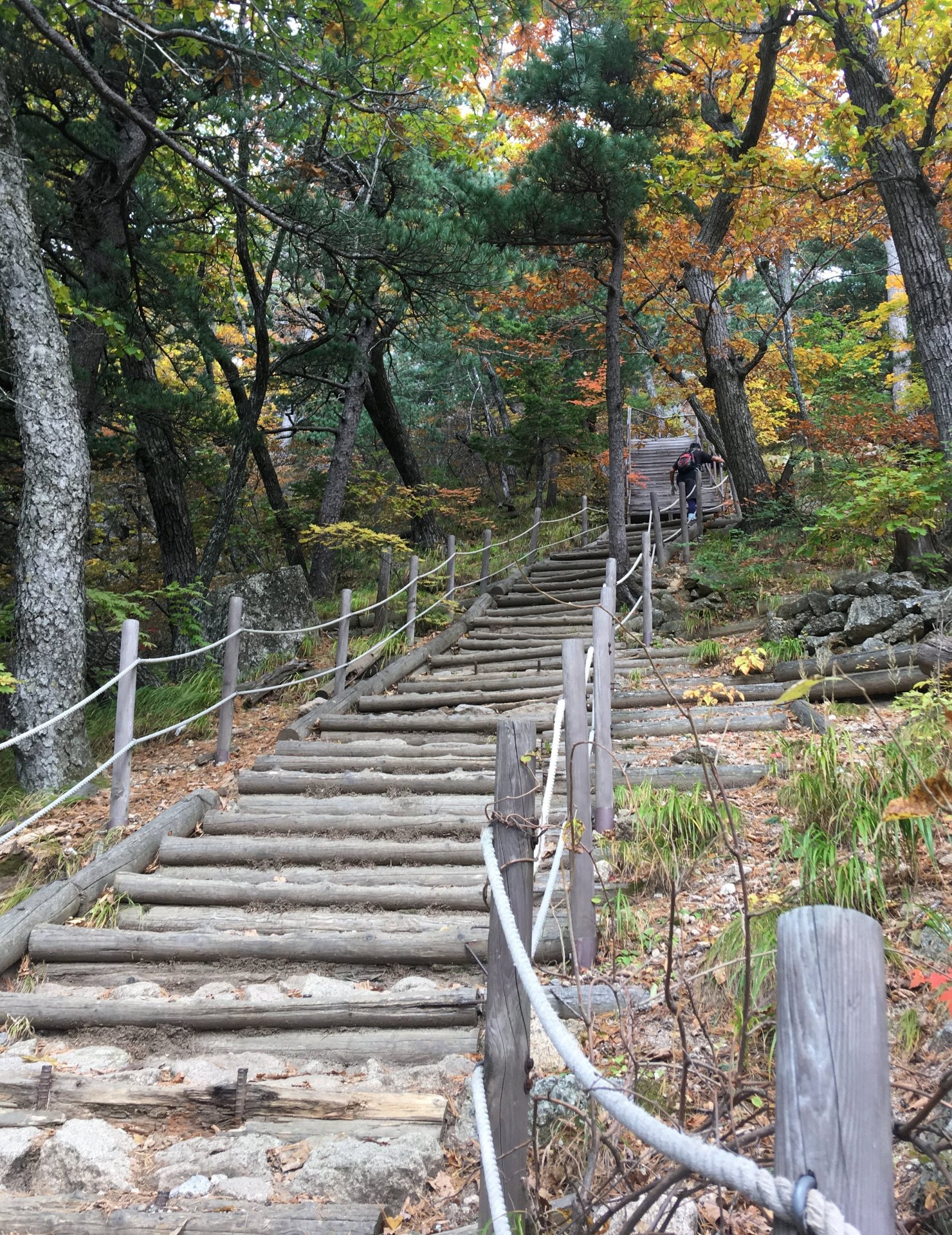
Bukhansan is within an hour by metro and bus. Its elevation means it turns before the city, peaking in late October, and you don’t need hiking gear—walking the lower trails already puts you inside the colour.
5. October Weekends Clear Out Rooms and Trains! When to Book
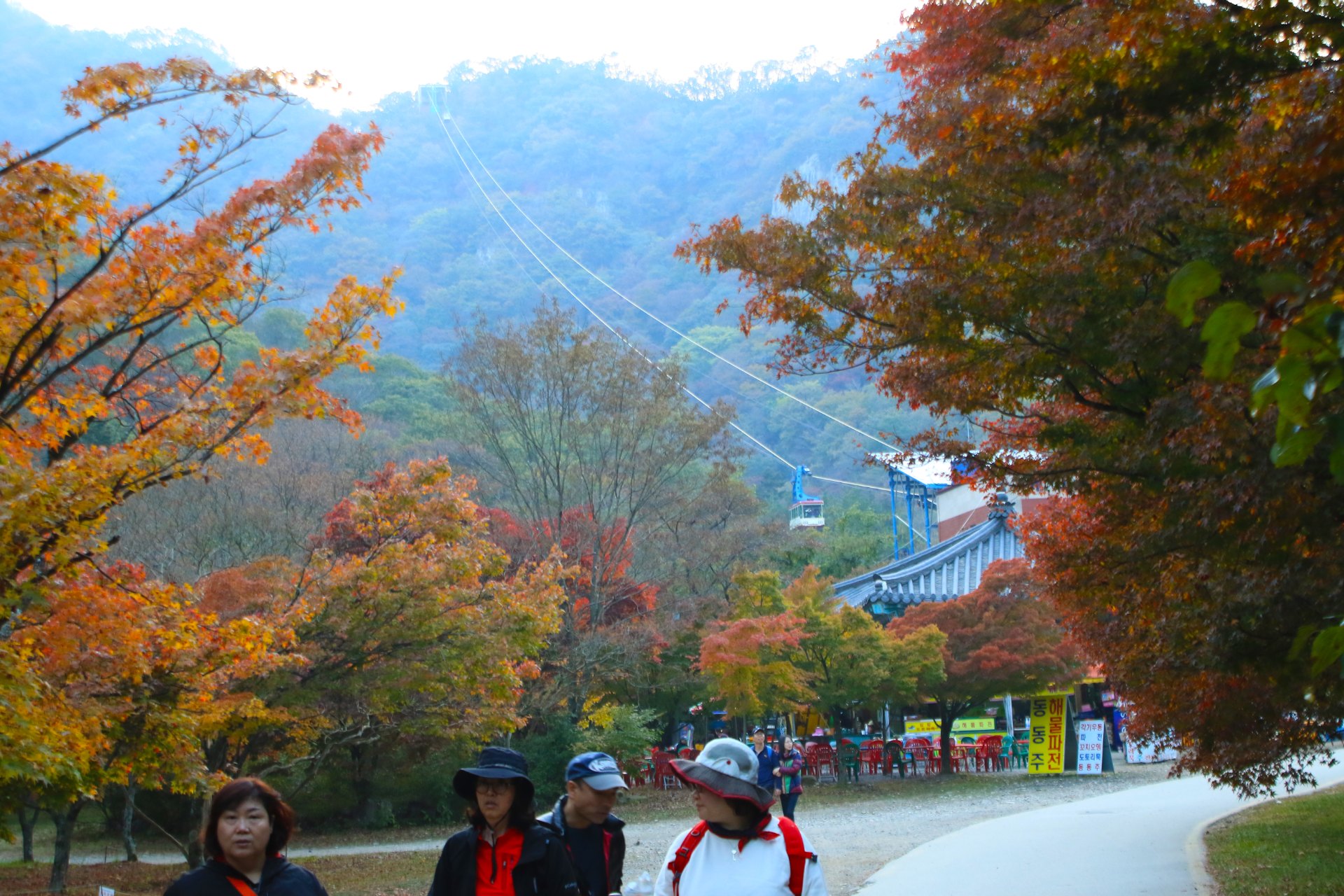
✔ Foliage season collides with the public holidays
Early October carries a run of them, and the season proper begins straight after. October weekends clear out mountain accommodation and KTX seats together.
As a rule: if you’re heading for the Gangwon mountains in mid-October, have rooms and buses booked during September. Staying in Seoul gives you more slack, though even city hotels move quickly for the last weekend of October.
One more thing. Go on a weekday if you possibly can. At the well-known sites, weekday and weekend crowds aren’t remotely comparable. Same view, half the people.
6. One Wet Night Ends It? A Three-Step Check So You Don’t Miss It
✔ Check in three stages
1. Late September to early October — the year’s forecast appears. Set your broad dates from it.
2. One week out — search the site name on social media and look at actual photographs. This is where you learn whether the season is running early or late.
3. The day before — check the weather. Heavy rain and wind strip the colour in a single night.
Don’t skip the third step. Foliage starts gradually and ends abruptly; one wet night can close the season where you were heading. Check the forecast the day before, every time.
In short
• Colour moves north to south and high to low, at roughly 20-odd km a day
• Mid-October for the mountains, late October to early November for the cities
• Southern sites like Naejangsan peak in early November
• The 2026 forecast lands in late September — check before you commit
• A Seoraksan day trip is possible but wasteful. Stay overnight or use Bukhansan
• October weekends sell out rooms and trains. Travel midweek if you can
Frequently asked questions
When is the best time for autumn colour in Korea?
It depends where. Mid-October for the Gangwon mountains, late October to early November for Seoul. Within one year those two are nearly three weeks apart.
Can I see autumn colour without leaving Seoul?
Easily. The Deoksugung stone-wall road, Huwon at Changdeokgung, Seoul Forest and Namsan are all within the city. Target late October to early November.
Is Seoraksan doable as a day trip?
Physically yes, but you spend six hours travelling, and peak season adds traffic. Staying a night, or substituting Bukhansan, is the better use of a day.
When does the 2026 forecast come out?
Typically late September or early October. The dates in this article are historical averages, so confirm against the current forecast before finalising plans.
Does rain end the season?
Heavy rain and wind will strip the leaves overnight. If you are travelling in the back half of the peak window, always check the previous day’s forecast.
Information current as of 11 August 2026. Foliage timing shifts one to two weeks year to year with temperature; the official 2026 forecast is expected from late September.
Sources: historical foliage-front patterns and published Korean seasonal foliage data. Photographs: Wikimedia Commons
This article is based on the official information below. Rules can change, so please check the original before you travel.
· Korea Tourism Organization official site
Information as of 2026-08-27 (official listings and Google Maps as shown at publication). Updated when things change.