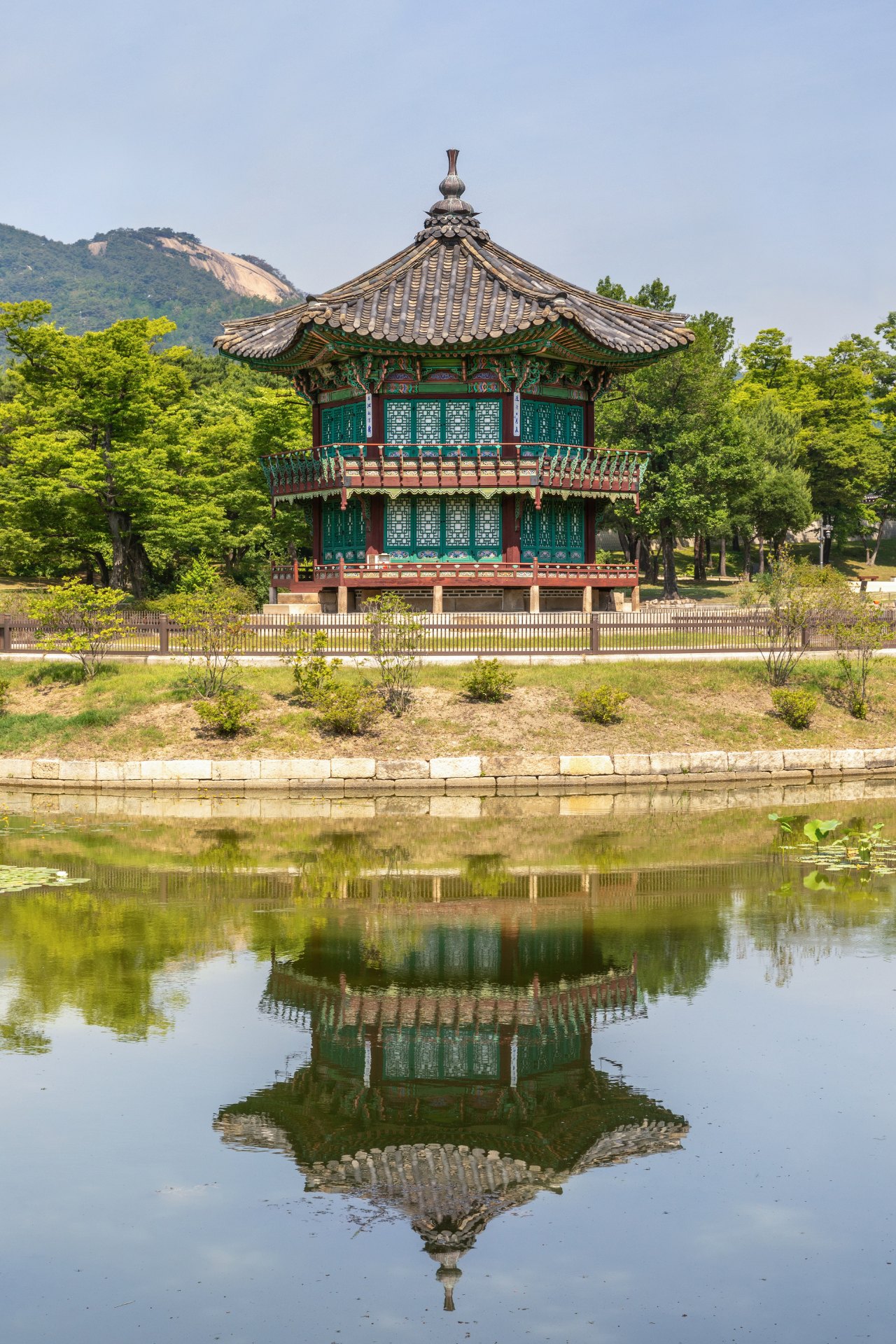
- Seoul’s main areas break into four blocks: Jongno and Bukchon for palaces and alleys, Hongdae and Ye…
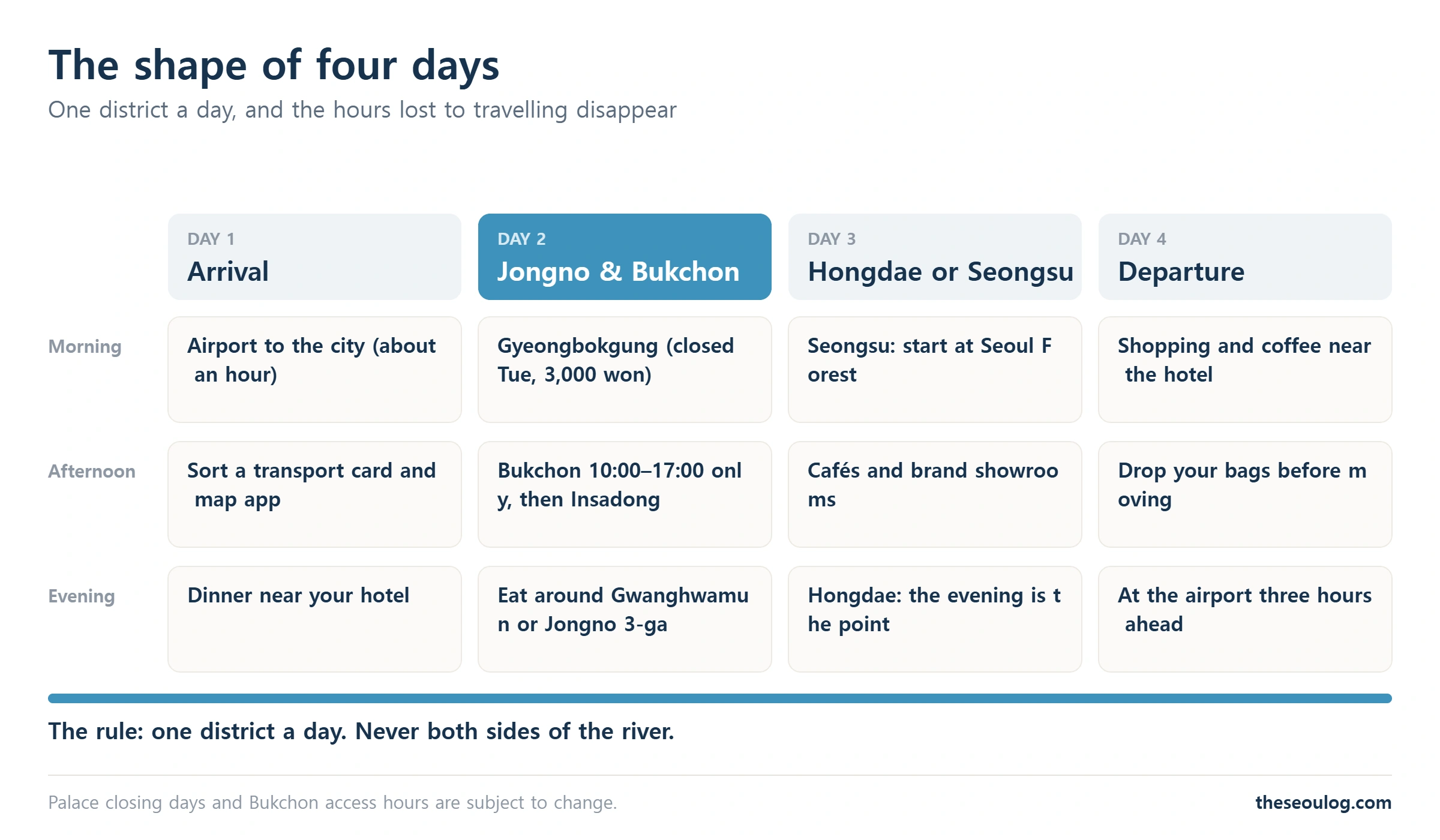
- From Incheon Airport, the AREX train or a limousine bus takes about an hour.
- Start at Gyeongbokgung.
Who this is for
- Anyone on a first Seoul trip with twenty places on the list
- People thinking “north and south of the river in one day, surely?”
- Anyone who hasn’t yet heard about Bukchon’s visiting hours or palace closing days
People who get their first Seoul trip wrong rarely do so because they missed something. They do it because they lost half a day to travelling across the city.
Seoul is really two cities of different character sitting either side of the Han River. North of it: palaces, alleys, markets. South of it: glass towers and wide boulevards. On a map they look close. Here’s the thing: each crossing costs you forty minutes to an hour. Bounce between the two every day of a four-day trip and you’ve paid more than half a day in transit and waiting.
“So how do I build it?” There’s only one sensible way: one district per day. What follows is four days built on that rule—plus one place where, in 2026, not knowing the rule will get you fined. Let’s get into it.
Contents
1. The rule: one district a day
2. Day 1 — don’t overreach on arrival
3. Day 2 — palaces and Bukchon (mind the hours)
4. Day 3 — Hongdae or Seongsu
5. Day 4 — how to use the morning
6. Three mistakes first-timers make
7. FAQ
1. Half as Long Again? The Rule: One District a Day
✔ The main areas break into four blocks
Jongno and Bukchon for palaces and alleys, Hongdae and Yeonnam for students and food, Seongsu and Seoul Forest for cafés in converted factories, and Gangnam and Apgujeong for shopping and towers. Add whatever is around your hotel, plus Myeongdong.
Combine only neighbouring areas in a single day. Jongno with Bukchon, Hongdae with Yeonnam, Seongsu with Seoul Forest—each pair is walkable. Put Jongno with Gangnam, or Hongdae with Seongsu, and you’ll spend more than an hour underground.
Following this one rule makes a four-day trip feel roughly half as long again.
✔ Here’s the question that comes next. “Where to Stay in Seoul” picks up right where this leaves off.
2. Day 1 — Three Jobs, Nothing More! Don’t Overreach on Arrival
✔ You’re rarely moving before 15:00
From Incheon Airport, the AREX train or a limousine bus takes about an hour. Even on a midday flight, you’re rarely out of your room and moving before 15:00.
Three jobs for this day. Sort out a transport card. Install Naver Map or KakaoMap. Eat dinner near where you’re sleeping.
Staying in Myeongdong, eat in Myeongdong. Staying in Jongno, Gwangjang Market is close by—stalls start closing around 21:00, so aim for the 18:00–20:00 window.
3. Day 2 — Bukchon Is 10:00–17:00 Only! Palaces and Bukchon
✔ Start at Gyeongbokgung
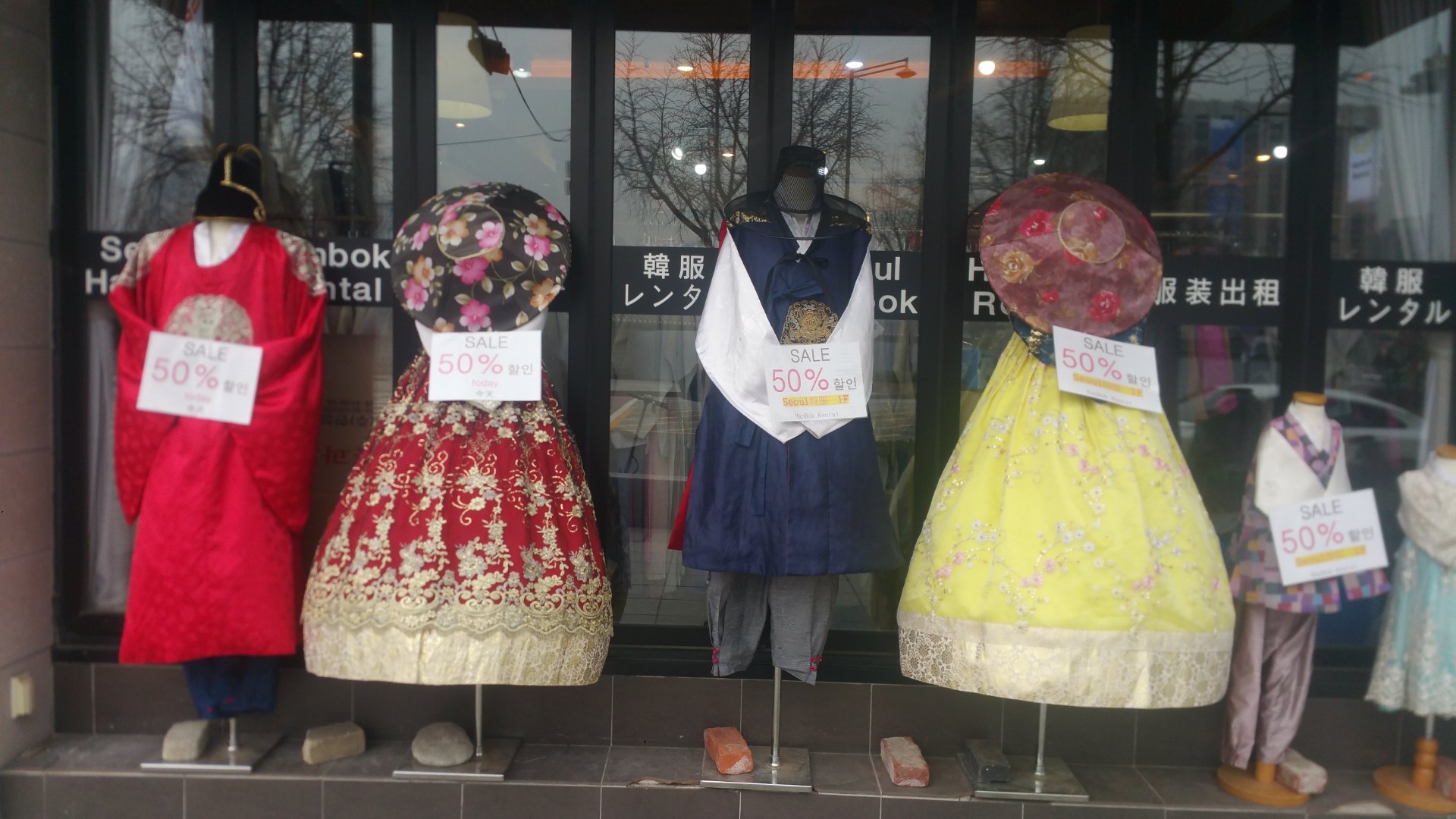
Admission is 3,000 won and it’s closed every Tuesday. September and October opening hours are 09:00–18:00, with the changing of the guard staged morning and afternoon. Wear hanbok and entry is free—which is why the streets outside are lined with rental shops.
Bukchon is about a ten-minute walk from the palace. And here’s a rule most guidebooks still haven’t caught up with.
Part of Bukchon has visiting hours. The area around Bukchon-ro 11-gil (roughly 34,000 m²) is designated a “red zone” where tourists may enter only between 10:00 and 17:00. From 17:00 until 10:00 the next morning, access is restricted, and since March 2025 violations have carried a fine of around 100,000 won. From 2026, chartered coaches face restrictions too.
This is what happened after roughly 6.6 million visitors a year arrived in a residential neighbourhood of about 6,000 people. The urge to photograph Bukchon at dusk is understandable. It is also no longer possible.
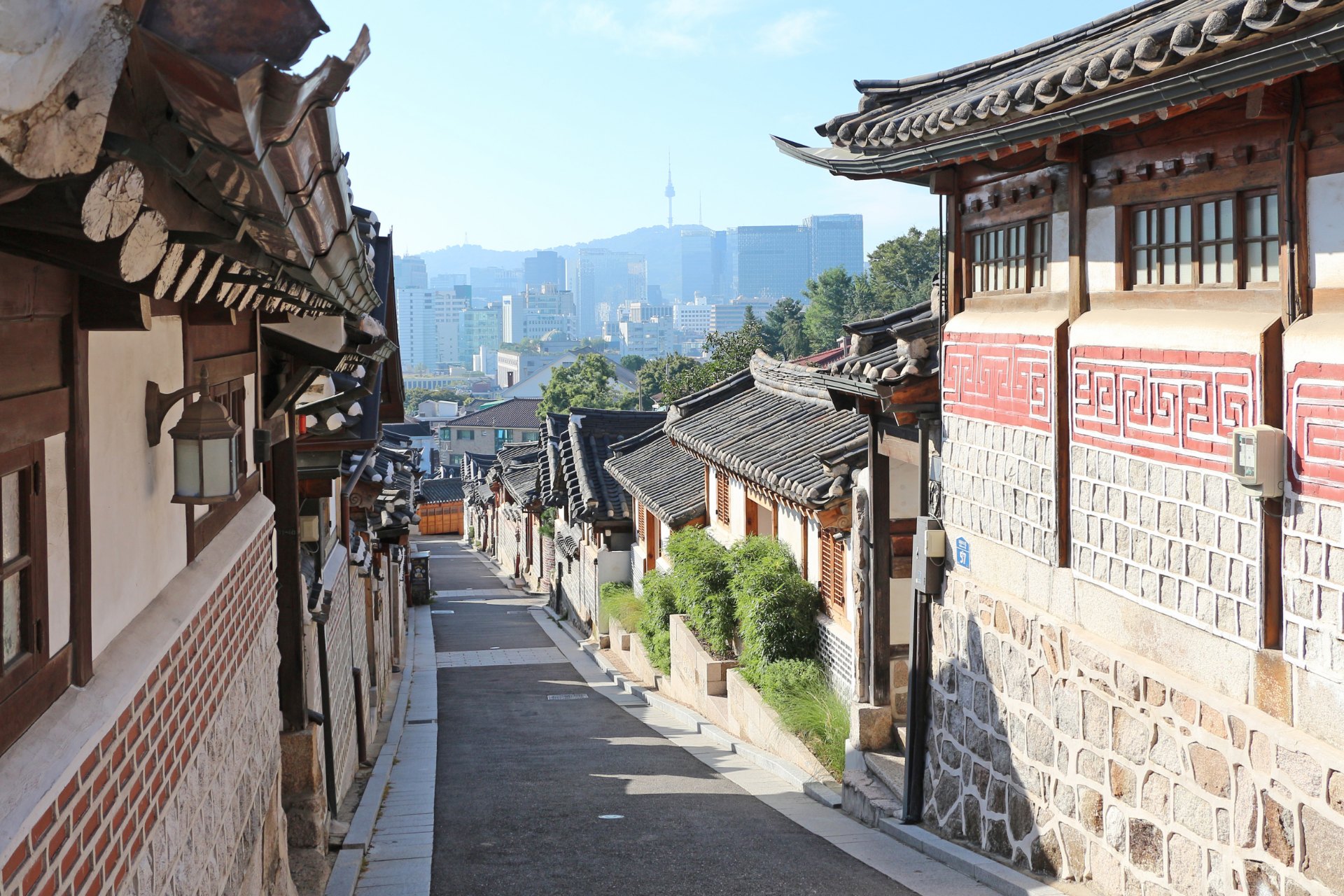
In the afternoon, walk down through Insadong to the Cheonggyecheon stream. All of it is on foot. Eat around Gwanghwamun or Jongno 3-ga and you’ll barely touch the metro all day.
4. Day 3 — Night Owl or Photographer? Hongdae or Seongsu
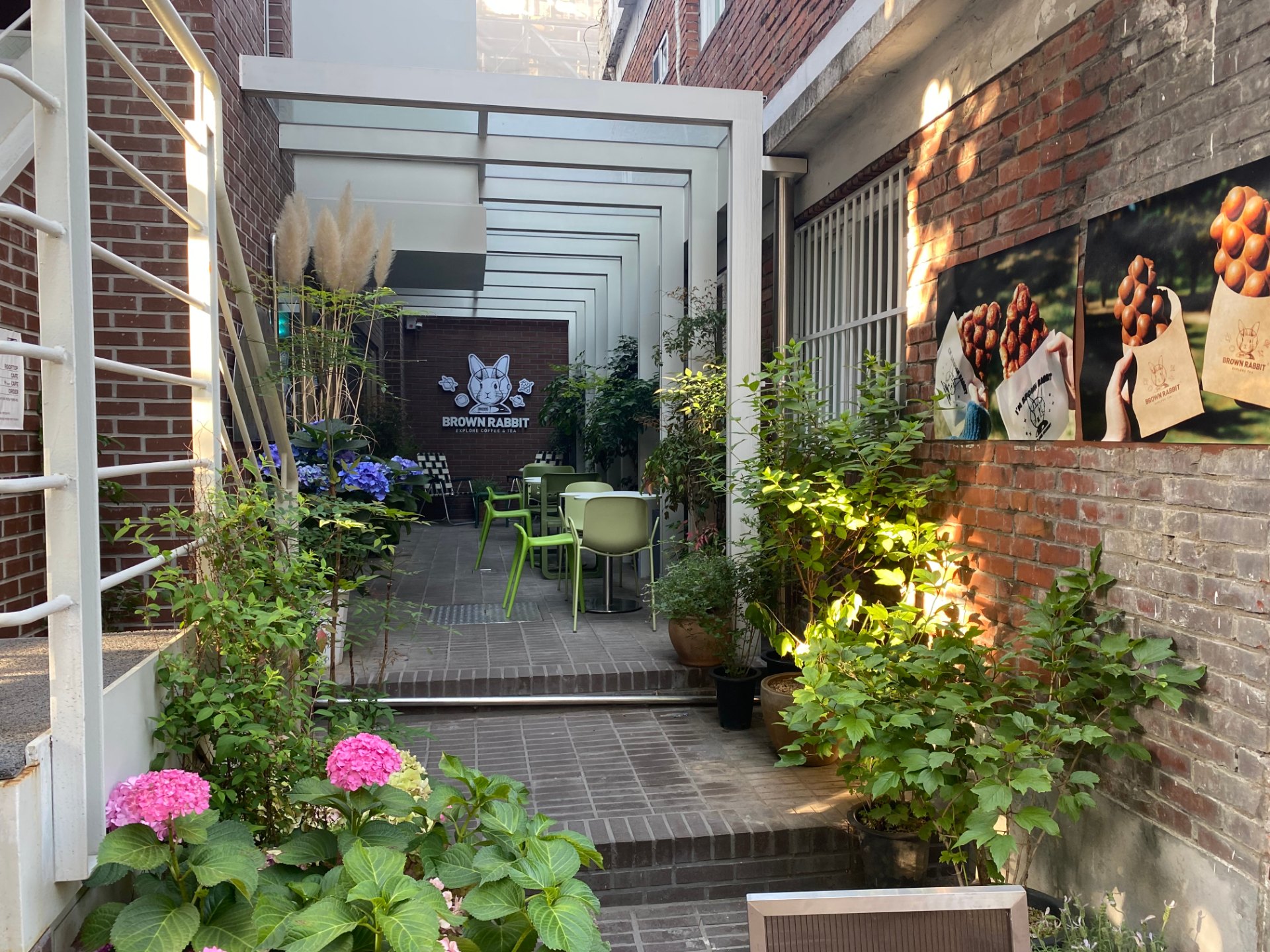
✔ This is where taste decides
Which one you choose changes the flavour of the whole trip.
| Hongdae / Yeonnam | Seongsu / Seoul Forest | |
| Feel | Student quarter. Street performers, late openings | Old factories turned into cafés and showrooms |
| Suits | Night owls, music and bars | Photographers, a slower walk |
| Best hours | Evening into night | Midday into late afternoon |
| Walking | A lot, but flat | A lot, with little shade |
If you can’t decide: Hongdae if you stay up late, Seongsu if you take photographs. From Hongdae, walk on to Yeonnam and rest along the Gyeongui Line Forest Park, a converted railway cutting. In Seongsu, do Seoul Forest first and hit the cafés afterwards to dodge the crowd.
If you still have energy, N Seoul Tower can be bolted on to this evening. But Namsan takes longer to reach and leave than people expect. Don’t force it in.
5. Day 4 — Two or Three Free Hours? How to Use the Morning
✔ Work backwards and it looks like this
Be at the airport three hours before departure. An hour to Incheon, half an hour to get out of the hotel. Unless you’re on an evening flight, you have two or three free hours, all of them in the morning.
What fits: anything close to your hotel. Shopping at Olive Young, a café, a market you haven’t seen. What doesn’t fit: palaces and observation decks. Both swallow one to two hours inside.
Drop your bags first. Station lockers or a luggage service let you move freely after checkout. Dragging a suitcase through a market helps nobody, least of all you.
6. Three Mistakes First-Timers Make—How Many Are Yours?
✔ 1. Crossing the river twice in one day
“It looks close” is the trap. Each leg is under an hour, but with transfers and walking a round trip approaches three hours.
✔ 2. Scheduling palaces without checking closing days
Gyeongbokgung shuts on Tuesdays, Changdeokgung on Mondays. If you land on a Monday or Tuesday, move the palace day.
✔ 3. Leaving the shopping to the last day
Heavier bags slow you down and the tax refund queue takes time. Buy the bulky and liquid things by day three. How many of the three are yours? Fix them now, while it’s still cheap.
For costs, see our four-day Seoul budget worked out in actual numbers.
In short
• One district a day. Never both sides of the river in one day
• Gyeongbokgung: closed Tuesdays, 3,000 won, free in hanbok
• Bukchon-ro 11-gil is open to visitors 10:00–17:00 only; fines around 100,000 won outside those hours
• Day 3: Hongdae for night owls, Seongsu for photographers
• Keep the last morning local and drop your bags first
Frequently asked questions
Can I do Seoul and Busan in four days?
Not advisable. The KTX takes two and a half hours each way, so a return trip costs half a day. On a four-day trip, stay in Seoul; if you need to leave the city, consider a day trip to Suwon or Incheon.
I arrive on a Monday. Where should I go first?
Most palaces close on Mondays, so give day one to markets and shopping streets. Gwangjang Market, Myeongdong and Dongdaemun all run as normal.
Is Bukchon still worth visiting?
Yes — between 10:00 and 17:00, and quietly. It is a residential neighbourhood, so avoid long photo sessions outside private homes and keep your voice down.
Do I need to book hanbok rental in advance?
Most shops take walk-ins, but weekend mornings involve a wait. Since hanbok gets you into the palaces free, renting around the time Gyeongbokgung opens is the efficient move.
How often will I use the metro over four days?
With one district a day, roughly two to four rides daily. At that rate a pay-as-you-go T-money card usually beats an unlimited pass.
Information current as of 11 August 2026. Admission fees, closing days and access restrictions may change.
Sources: Korea Heritage Service, Royal Palaces and Tombs Centre (admission and opening hours) · Seoul Media Hub (Bukchon special management area restrictions) · Jongno-gu special management area notice. Photographs: Wikimedia Commons
This article is based on the official information below. Rules can change, so please check the original before you travel.
· HiKorea (Korea Immigration Service)
Information as of 2026-08-25 (official listings and Google Maps as shown at publication). Updated when things change.