- Standing stalls usually display prices and let you try things cheaply.
- Tented stalls are sit-down places built around drinking.
- If no price is shown, ask before ordering.
Who this is for
- Anyone who wants to try a Seoul street stall at night but isn’t sure how it works
- People wondering “will I get overcharged?” or “is it hygienic?”
- Anyone who may end up needing somewhere to sit out a missed last train
Walk through the city at night and you pass stalls with steam rising off them. They come in two distinct forms.
One is the standing stall, lining market lanes and busy streets, selling skewers and griddled snacks you eat as you walk. The other is a tent with stools inside, where you sit, order dishes, and drink.
“So which one do I go for?” Here’s the thing: they work quite differently, so here they are separately. Let’s get into it.
Small Sums, Point to Order! Standing Stalls
✔ One item at a time, on the move
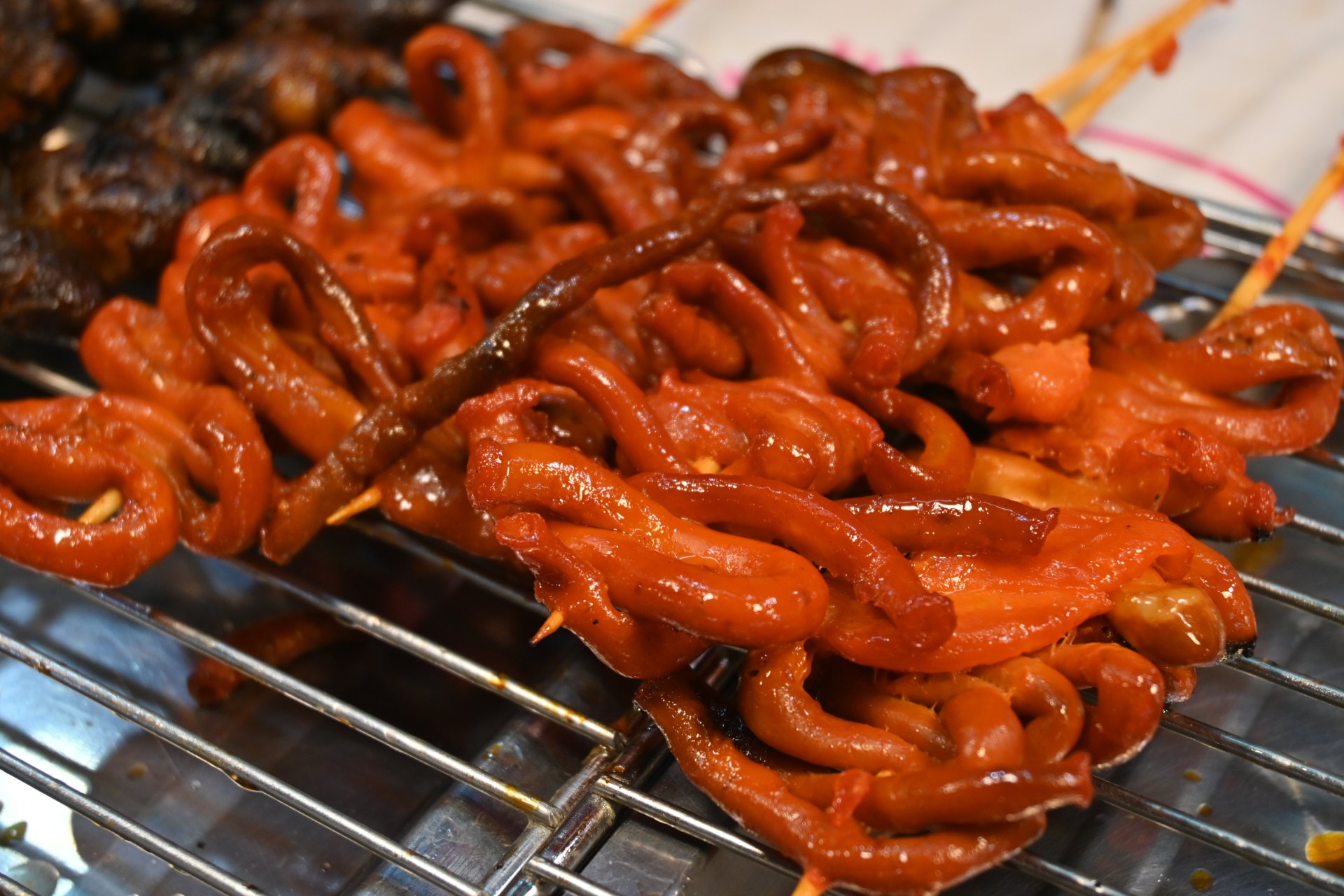
The stalls along market lanes let you try things cheaply, one item at a time, eaten on the move.
Prices are usually displayed. If not, point and ask before ordering.
More stalls take cards now, but some are cash only. Small notes save trouble.
Some have a ledge to stand and eat at. Return your rubbish to the stall’s bin.
| Aspect | Standing stall | Tented stall |
|---|---|---|
| Where | Market lanes, busy streets | Pavements and plazas |
| How long | Minutes | An hour or more |
| Ordering | Pointing is enough | From a menu |
| Payment | Cash and cards | Some cash only |
| Alcohol | Generally none | Central to it |
| Prices | Usually displayed | Ask first |
✔ Want to go a level deeper? “The Gwangjang Market Method” digs into what comes after this.
Ask the Price First! Inside the Tents
✔ Sit, order dishes, drink
You go in, sit, and order from a menu. Dishes with drinks is the standard use.
Prices are sometimes absent from the menu. Ask before ordering—disputes almost always trace back to skipping that step.
You may be seated with strangers. At busy hours that is normal and nothing to worry about.
Solo diners are fine, though portions are built for two or more.
Many stay open into the small hours and become somewhere to sit out a missed last train.
Pick the Stall With People at It! Hygiene and Choosing
✔ The rule is simple
Pick the stall with people at it. High turnover means nothing sits around.
Stalls where you can watch the cooking are reassuring. Where raw ingredients are involved, look at how they are stored before deciding.
On warm days, fried or thoroughly cooked items are the safer choice.
If you are already unwell, or facing a long journey the next day, do not push it.
Autumn Is the Right Season! Hours and Season
✔ Early evening into the night
Some standing stalls open in the afternoon, but most run from early evening into the night.
Tented stalls start after dark and go late.
Autumn is the right season for both. Not too hot, and still comfortable sitting outside. From November it turns cold enough that you want a coat even inside the tent.
Some stalls do not open in the rain. On a wet evening, do not build the night around them.
Finally, where stalls operate shifts over time with local policy and redevelopment. Rather than targeting one specific spot, enjoying whatever is open that night suits this better—and it’s more fun that way.
FAQ
Are cards accepted?
Increasingly yes, though some stalls are cash only.
Can I go alone?
Standing stalls, easily. Tented ones too, though portions suit two or more.
How do I check the price?
If it is not displayed, point and ask before ordering.
Is it hygienic?
Choose stalls with high turnover where you can see the cooking.
Do they open in the rain?
Some do not. Do not count on them on a wet night.
Information as of 2026-09-23 (official listings and Google Maps as shown at publication). Updated when things change.