- Travel times: Hwaseong Fortress in Suwon is about an hour on Line 1 (subway only); Incheon Chinatown 1 hour 10 (Line 1 to Incheon Station); Everland in Yongin 1 hour 20 (subway plus the Everline); Nami Island 1 hour 20 (ITX-Cheongchun to Gapyeong plus shuttle); Heyri in Paju about an hour by bus from Hapjeong.
- The essentials: Everland (★4.5, 64,083 reviews), Nami Island (★4.4, 37,621), Hwaseong Fortress (★4.6, 9,156; walls free and open 24 hours), the Korean Folk Village (★4.4, 16,212) and Incheon Chinatown (★4.0, 13,336).
- Honestly, the travel eats the day: two destinations is the realistic maximum. Heyri Art Valley rates ★4.0 with many venues closed on Mondays, and Incheon Chinatown also ★4.0 — both reward adjusted expectations.
Who this is for
- Anyone staying four nights or more who wants one day somewhere further out
- People torn between a World Heritage fortress, a tree-lined island and a theme park
- Anyone who wants to plan a suburban day backwards from the last train
One of Seoul’s better features is the range of day trips within one to two hours by train: a UNESCO-listed fortress (Hwaseong in Suwon), Korea’s most photographed tree-lined island (Nami), one of East Asia’s largest theme parks (Everland), a treaty-port streetscape (Incheon) and a town built entirely of publishers and bookshops (Paju Book City).
This guide gathers the suburbs reachable by public transport into one piece. Metropolitan subway lines run unbroken to Suwon, Incheon and Uijeongbu, while ITX-Cheongchun (Yongsan–Chuncheon) and the GTX cover Gapyeong and Hwaseong. Most journeys take a T-money card, at ₩1,500–8,000 one way.
“So if I only have one day, where?” Here’s the thing: the guide cuts the suburbs into 9 themes (sights, food, shopping, beauty, wellness, nature and walks, nightlife, play, art), listing only places verified on Google Maps. To be honest, beauty and nightlife barely exist out here—keep both for the city and use the suburbs for sights and landscape. Let’s get into it.
The Easiest World Heritage Site From Seoul! Sights — Hwaseong Fortress, Nami Island, Old Incheon, the Korean Folk Village
✔ The easiest World Heritage site to reach from Seoul
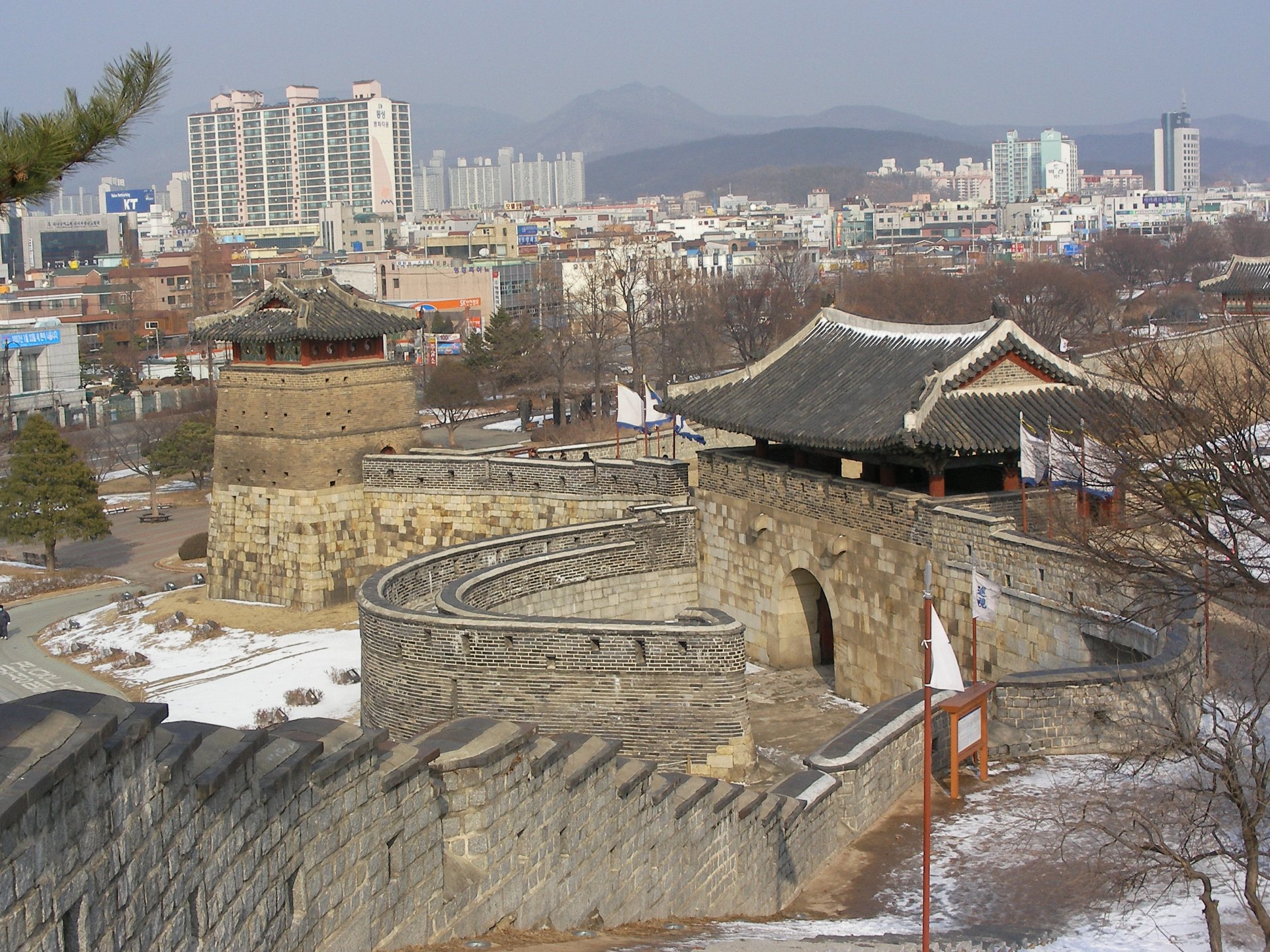
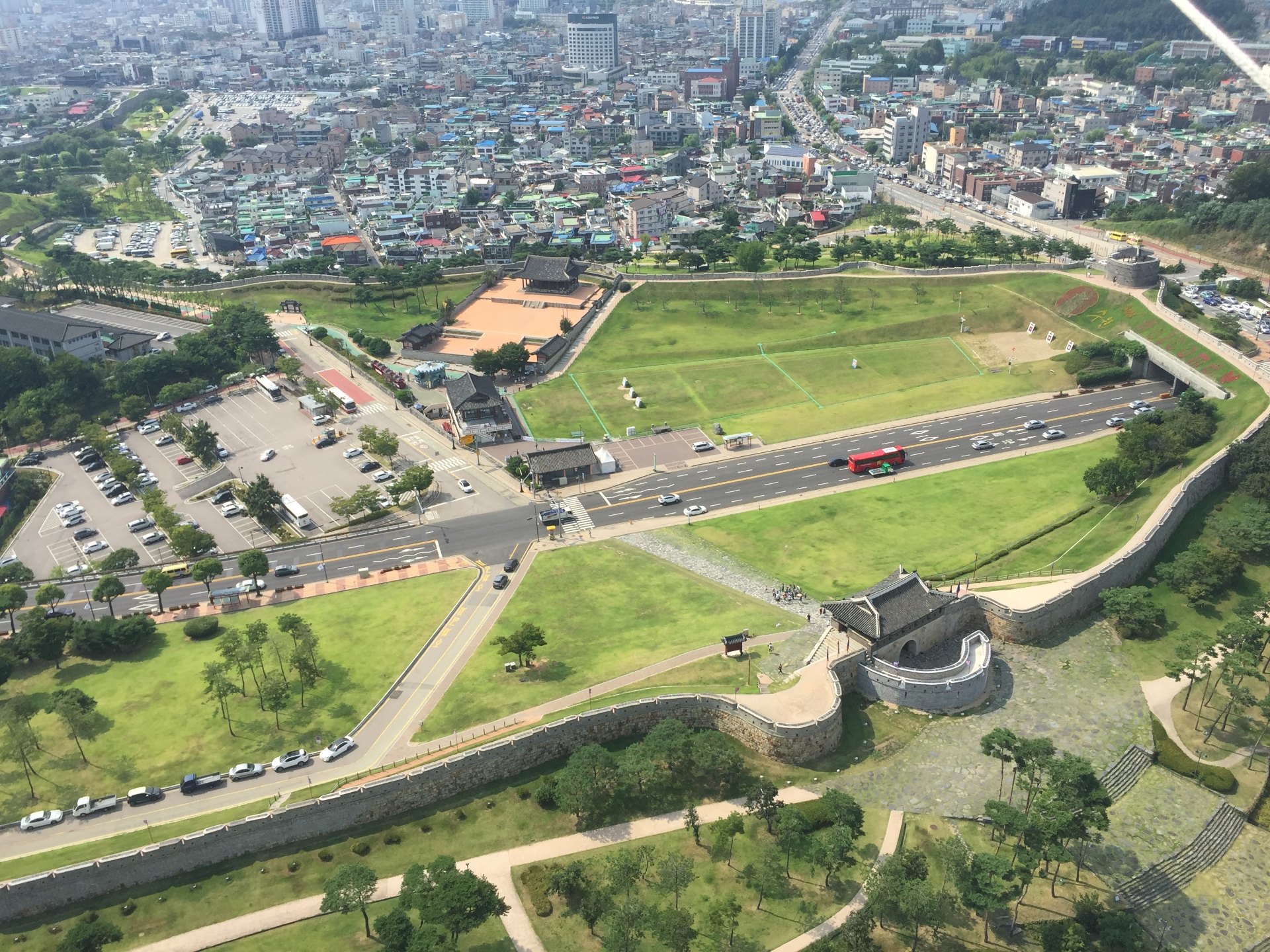
Hwaseong Fortress (수원화성) — Jangan-gu, Suwon, Gyeonggi-do. ★4.6 (9,156 reviews); the walls are free and open around the clock, Haenggung palace ₩1,500 (9:00–18:00). King Jeongjo built these 5.7 km of walls in 1796, and UNESCO listed them in 1997. You can walk the full circuit in about two hours, rent a bike, or take the “Hwaseong train” (around ₩4,000). Line 1 to Suwon Station, then ten minutes by city bus—it’s the easiest World Heritage site to reach from Seoul.
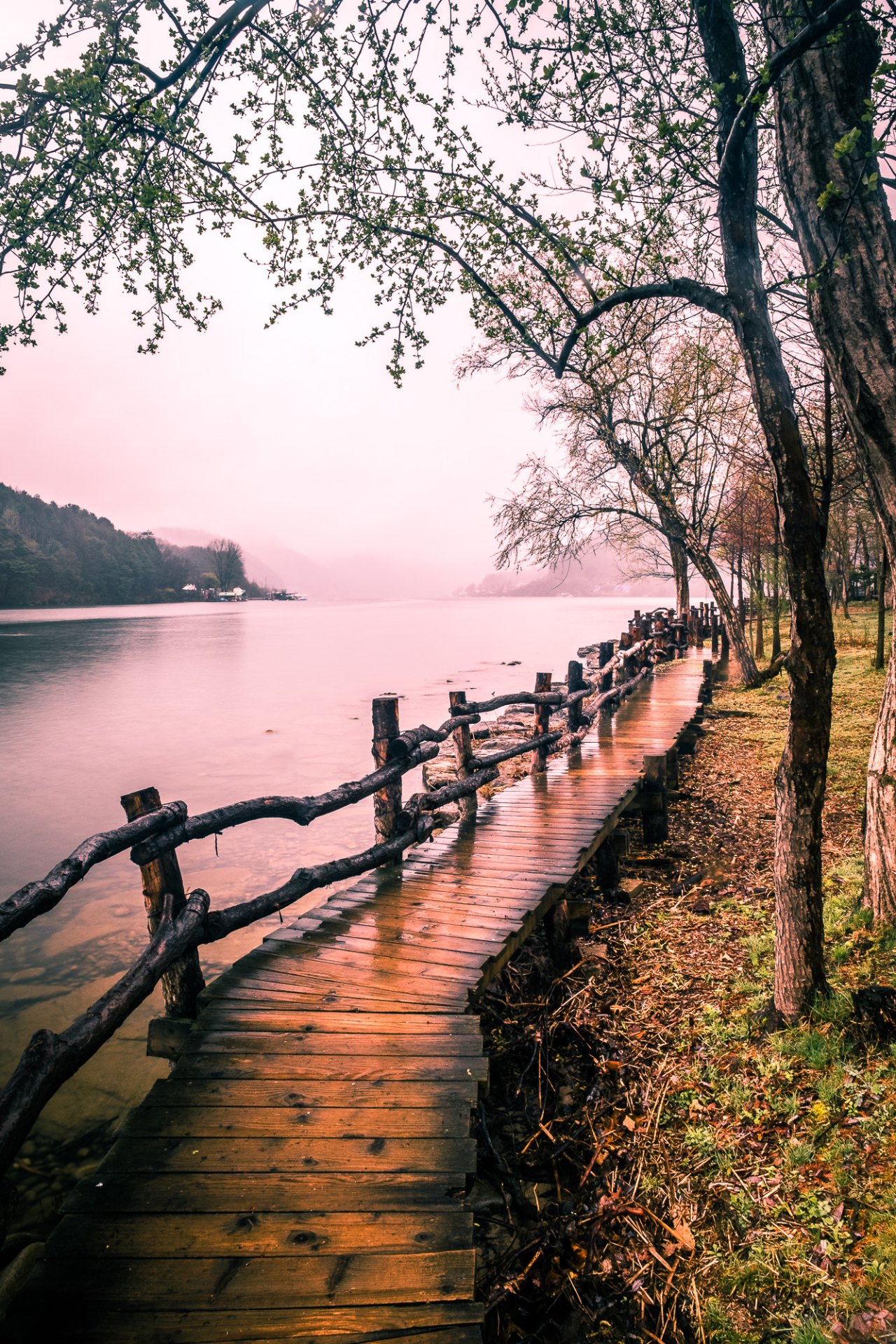
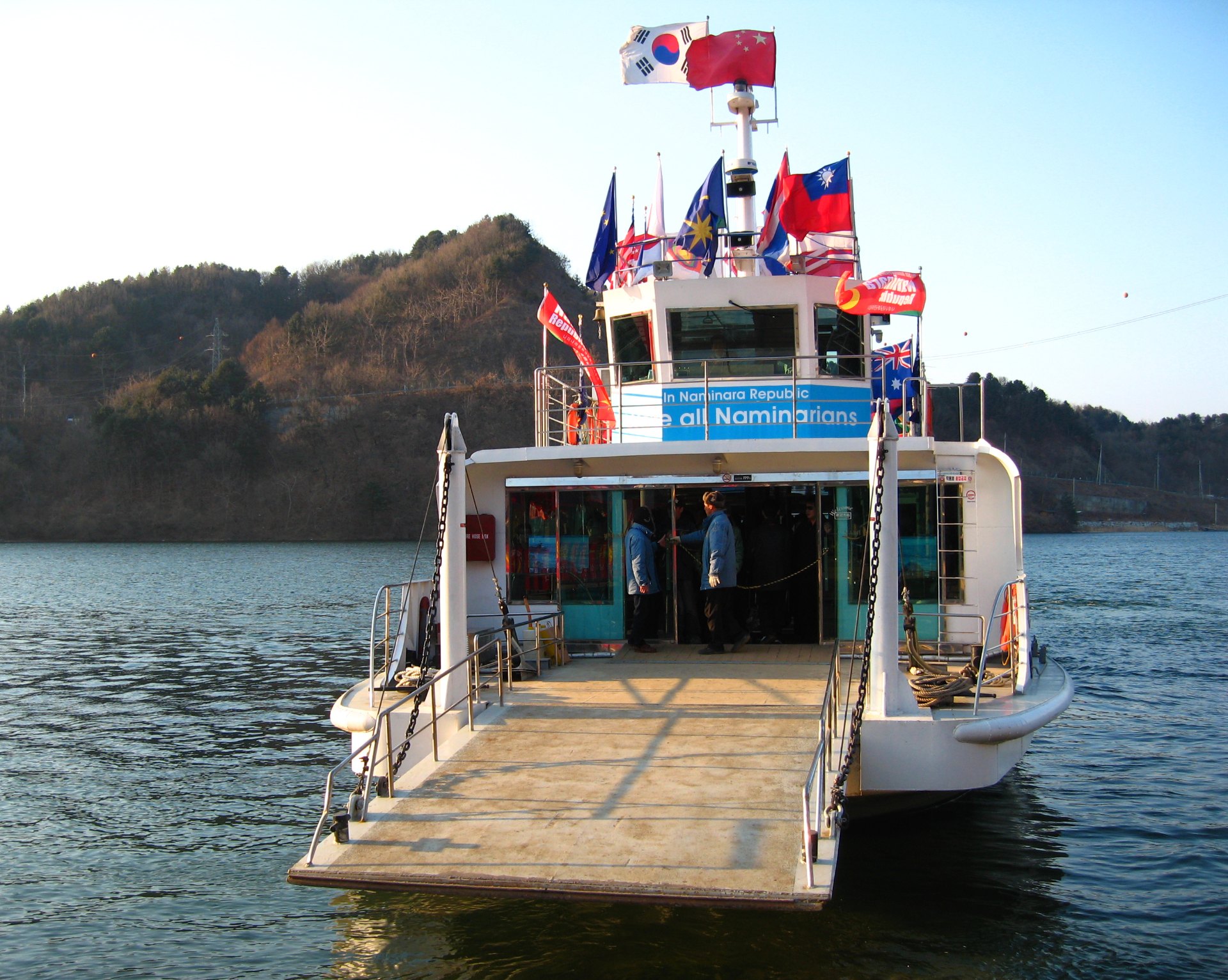
Nami Island (남이섬) — Chuncheon, Gangwon-do, with the ferry from Gapyeong. ★4.4 (37,621). A crescent-shaped island known for its metasequoia and ginkgo avenues, and famous across East Asia as a drama location. Entry including the ferry is about ₩16,000; take ITX-Cheongchun to Gapyeong and the shuttle bus. Autumn colour peaks from late October to early November; blossom comes in early April.
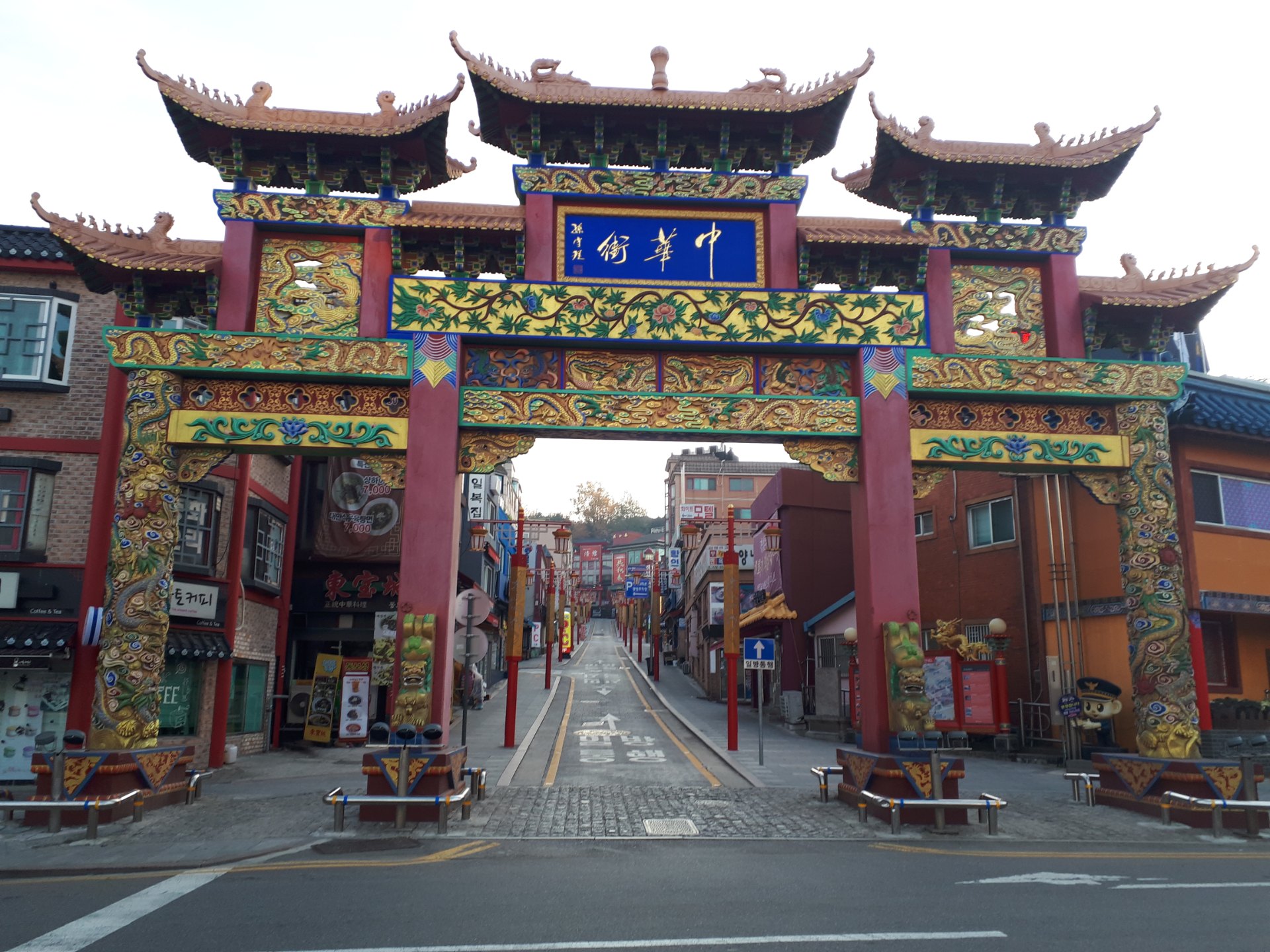
Incheon Chinatown (인천 차이나타운) — Jung-gu, Incheon; right outside Incheon Station exit 1 on Line 1. ★4.0 (13,336). Korea’s only full Chinatown grew with the port opening of 1883, and jjajangmyeon was invented here. The adjoining open-port district keeps buildings from the Japanese and Qing concessions on streets that run downhill to the harbour. The ★4.0 rating reflects opinions of a touristy shopping street; come for the streetscape and the history and it reads much better.
Korean Folk Village (한국민속촌) — 90 Minsokchon-ro, Giheung-gu, Yongin. ★4.4 (16,212), 10:00–19:00 (seasonal), about ₩32,000. An open-air museum of relocated and reconstructed Joseon houses, with tightrope walking, horsemanship and farmers’ music performed daily, and a favourite location for historical dramas. Good for families and for anyone wanting Korean tradition in one place.
| Item | Details |
|---|---|
| Getting there (from Seoul Station or Gangnam) | Hwaseong Fortress: Line 1 to Suwon (about 1 hour) plus a 10-minute bus / Incheon Chinatown: Line 1 to Incheon (about 1 hour 10), at the exit / Everland: Bundang Line to Giheung plus the Everline (about 1 hour 20) / Korean Folk Village: Bundang Line to Sanggal plus bus (about 1 hour 20) / Nami Island: ITX-Cheongchun to Gapyeong plus shuttle (about 1 hour 20) / Heyri and Book City in Paju: bus 2200 from Hapjeong (about 1 hour) / Gangchon Rail Park: Gyeongchun Line to Kim Yu-jeong (about 1 hour 30) / Gwangmyeong Cave: Line 1 to Gwangmyeong plus bus (about 50 min) |
| Typical prices | Hwaseong: walls free, Haenggung palace ₩1,500 / Everland: day pass about ₩64,000 (cheaper online) / Nami Island: about ₩16,000 including the ferry / Korean Folk Village: about ₩32,000 / Gangchon Rail Park: ₩35,000 for a four-seat rail bike / Gwangmyeong Cave: ₩6,000 / Incheon Chinatown and Heyri: free to enter, venues charge separately |
| Best time | Nami Island in late October to early November (metasequoia colour) and April. Hwaseong late afternoon, for sunset on the walls. Everland on a weekday right at opening. Gangchon Rail Park April to November. Incheon by day — it closes early |
| Closed days | Heyri Art Valley: many venues closed Mondays (the village itself stays open). Korean Folk Village and Everland: open daily, hours vary by season. Gwangmyeong Cave: closed Mondays. The Hwaseong walls and the Chinatown streets are always open |
| How long to allow | Hwaseong plus Haenggung: 3–4 hours / Nami Island: 4–5 hours, a full day with travel / Everland: a full day / Incheon Chinatown plus the open-port district: 3–4 hours / Paju (Heyri and Book City): 5 hours / Gwangmyeong Cave: 2–3 hours |
| Transport cards | T-money and Cashbee work on metropolitan subways, city buses and express buses. ITX-Cheongchun and some limited expresses need a reserved seat ticket, bought in the Korail app (English available). The Everline and Gangchon Rail Park sell tickets on site |
| Notes | Two destinations a day is the realistic ceiling. December to February is below freezing at Nami Island and Gangchon — dress for it. Heyri and Paju involve hills and infrequent buses. Incheon shuts early in the evening |
✔ Want to go a level deeper? “Suwon Hwaseong Is 30–40 Minutes From Seoul and Under ₩10,000 for a Half Day” digs into what comes after this.
A ₩7,000 Bowl at the Original? Food — Jjajangmyeon in Incheon, Suwon Galbi, Gapyeong Dakgalbi, Paju Cafés
✔ The clearest food destination in the suburbs
Jjajangmyeon in Incheon Chinatown is the clearest food destination in the suburbs. Around Gonghwachun, said to have opened in 1905 and now preserved as the Jjajangmyeon Museum, older restaurants serve bowls at ₩7,000–10,000, including white jjajang and other variations worth comparing. Skip the lunch rush and go after 14:00.
Suwon galbi, the city’s beef short ribs, is not cheap at ₩30,000–50,000 a portion, but the marinade tradition goes back more than two centuries; the long-established restaurants cluster near Suwon Station and the fortress. In Gapyeong and Chuncheon the dishes are dakgalbi (spicy chicken on a hot plate, about ₩15,000) and makguksu buckwheat noodles — eating them in Chuncheon on the way back from Nami Island is the classic route.
Paju is also café country: Heyri and Book City are dotted with large book cafés, bakeries and gallery cafés, with more space and less noise than Seoul. Forest of Wisdom (지혜의숲) (★4.5, 676; inside Book City) is a free reading hall walled with eight-metre shelves, with a café attached where you can spend a whole day. Incheon, Suwon and Paju all close early, so save dinner for Seoul, where the choice is wider.
Outlets for a Rainy Day! Shopping — Outlets, Traditional Markets, the Bookshops of Paju
✔ Suburban shopping means outlets
Suburban shopping means outlets. Paju has large Shinsegae and Lotte outlet malls along the expressway, an hour by bus from Hapjeong Station, with brands cheaper than the Seoul department stores and tax refunds available. The bus stops at the door, which helps in the rain.
For traditional markets, Suwon’s Paldalmun Market in front of the fortress’s south gate is the largest, selling food, clothing and household goods at local prices. Incheon’s Sinpo International Market is known for fried chicken and hotteok, ten minutes on foot from Chinatown. Neither charges tourist prices, and both show ordinary Korean shopping.
Paju Book City (파주출판도시) (★4.5, 251) is a planned town of publishers, printers and bookshops — a scale of “book town” that is rare anywhere. The publishers’ own shops sell overstock at 30–70% off, and you can look at the architecture as you walk. The studio shops of Heyri Art Valley (★4.0, 8,126) sell one-off ceramics, leather and jewellery, though many close on Mondays.
Gangnam or Myeongdong Instead? Beauty and Healthcare — Not Out Here (Keep It for Seoul)
✔ No reason to go to the suburbs for beauty
Plainly: there’s no reason to go to the suburbs for beauty. Clinics and salons are few, foreign-language service is rare, and prices are no lower than in the city. Have treatments done in Gangnam or Myeongdong and use the suburbs for sights and landscape (see our “Gangnam and Sinsa” and “Myeongdong and Namdaemun” guides).
Practical care: these are long walking days — 5.7 km around the Hwaseong walls, 2–3 km on Nami Island, hills at Heyri — so wear shoes you trust. Shade is scarce in summer, so carry water and cover up. In winter Nami Island and Gangchon sit below freezing, and the river wind drops it further.
Pharmacies cluster near each station and many close on Sundays, so bring what you need from Seoul. Large hospitals are in Suwon (Ajou University Hospital), Incheon (Gil Hospital) and Yongin, some with international desks.
Hot Springs by the Station for ₩10,000–20,000! Wellness — Hot Springs, Lake Parks, the Gangchon Rail Bike
✔ Day-use hot springs by the station, ₩10,000–20,000
There are hot-spring towns near Seoul. Icheon (Gyeonggi-do, Gyeonggang Line) and Onyang in Asan (out along Line 1) both have day-use bathhouses close to the station at ₩10,000–20,000. Korean hot springs are sauna-plus-bath complexes: no swimwear, towels rented on the door.
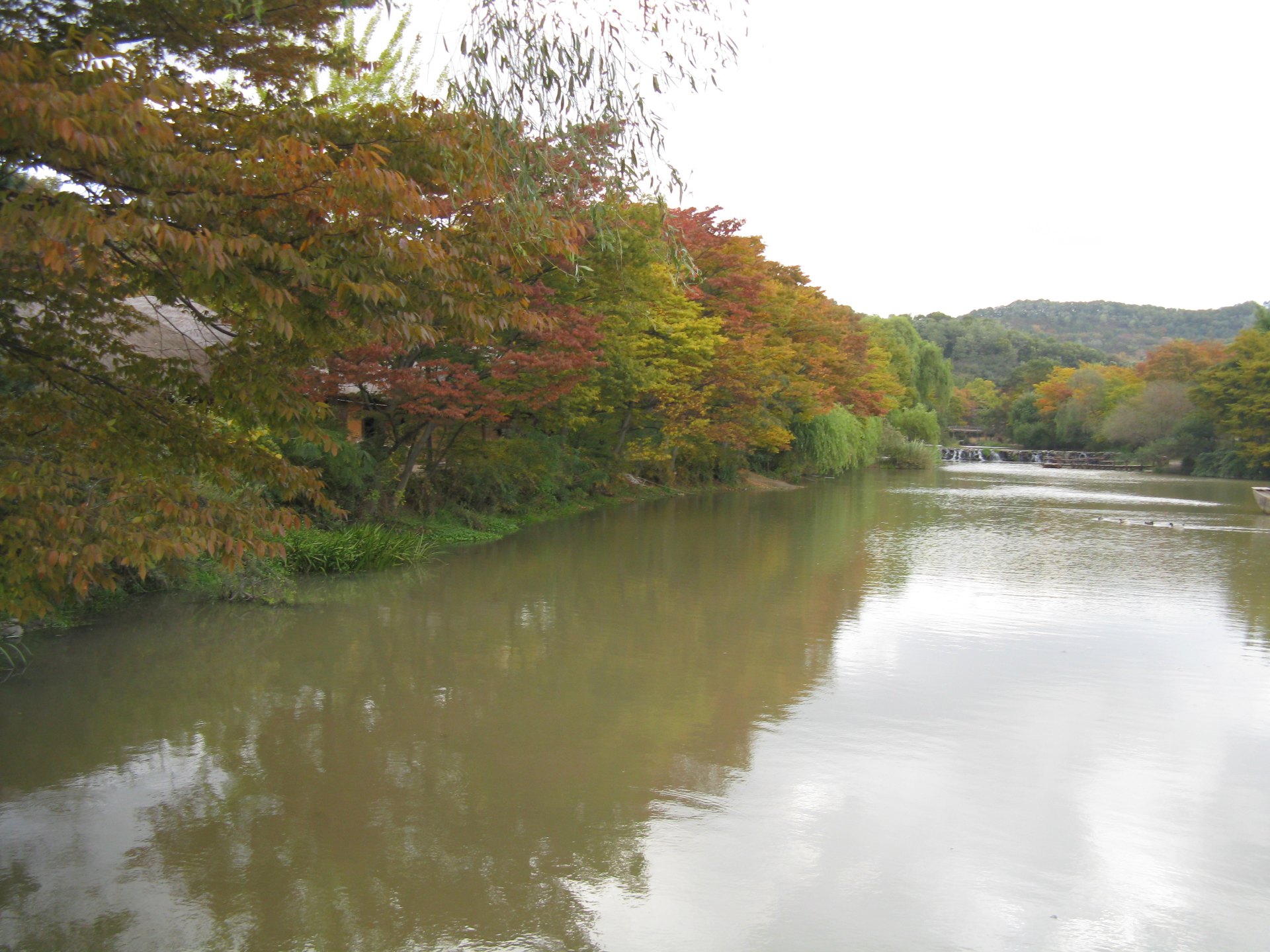
Ilsan Lake Park (일산호수공원) (★4.6, 6,162; Goyang, Line 3 Jeongbalsan Station) is one of Asia’s largest artificial lakes, ringed by a 4.7 km path and a bike lane. It draws fewer people than city parks and suits a morning walk. Seoho Park (Chukmanje) (★4.5, 1,036; Suwon) is a reservoir from King Jeongjo’s reign with a fine sunset.
Gangchon Rail Park (강촌레일파크) (★4.4, 7,020; 1383 Kimyujeong-ro, Chuncheon; 9:00–17:30) runs rail bikes on a disused line: ₩35,000 for a four-seater, about 8 km and 50 minutes one way. Pedalling along the North Han River is one of the best-rated activities in the whole suburban ring. Walk from Kim Yu-jeong Station on the Gyeongchun Line.
Korea’s Most Photographed Avenue? Nature and Walks — Nami’s Avenues, Bukhansan, Ganghwa Island, Lake Parks
✔ The most photographed tree-lined roads in Korea
Nami Island’s metasequoia avenue, about 700 m long, and its ginkgo walk are the most photographed tree-lined roads in Korea, at their best from late October to early November. Get around by bike (about ₩10,000 an hour) or on foot in two to three hours. Ferries run every ten minutes, and a zip wire (about ₩40,000) lets you fly in instead.
Bukhansan (북한산) (★4.6, 412) is a national park reachable by subway from central Seoul; Baegundae (836 m) is a four to five-hour return climb, with several trailheads at Ui-dong, Bukhansanseong and elsewhere, plus gentler paths for beginners (details in our “Seongbuk and Bukhansan” guide).
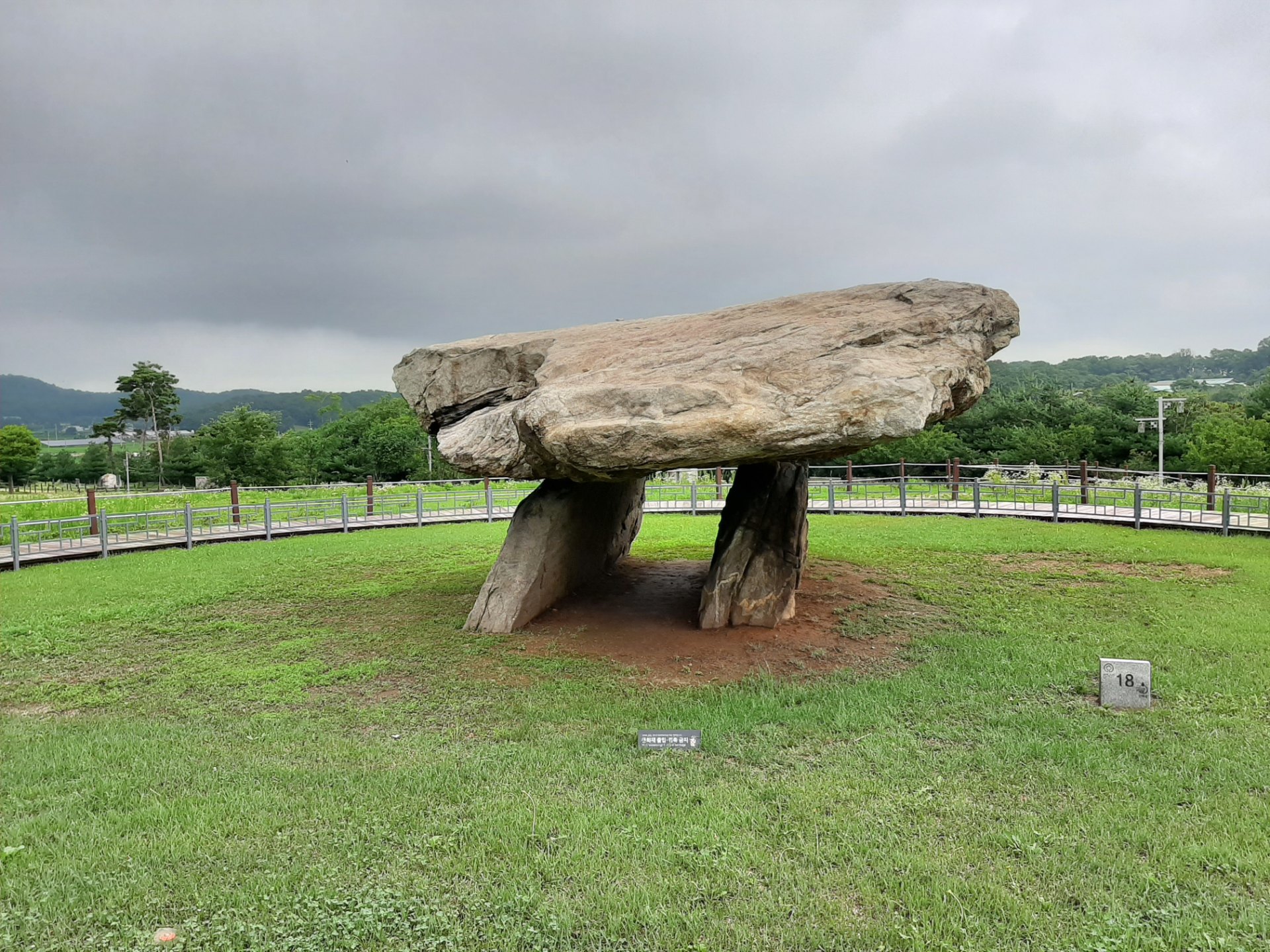
Ganghwa Island (강화도) (★4.2), northwest of Incheon, holds Bronze Age dolmens inscribed as UNESCO World Heritage. It also served as the Goryeo capital in exile, and offers tidal flats, migratory birds and the old temple of Jeondeungsa. Buses take about 90 minutes from western Seoul and run infrequently, so allow slack.
Pocheon Art Valley (포천아트밸리) (★4.1, 1,654) is a flooded former quarry — the “Cheonju Lake” — with a monorail, an industrial-reuse counterpart to Seonyudo Park (see our “Hangang” guide).
Attractions Close by 18:00–20:00! Nightlife — The Evenings Are Short (Plan Back From the Last Train)
✔ The suburbs have no nightlife
Plainly: the suburbs have no nightlife. In Incheon, Suwon and Paju the attractions close between 18:00 and 20:00 and the restaurants quieten by 21:00–22:00. Build the day around daylight and go back to Seoul for the evening.
Numbers to plan back from: the last Nami Island ferry runs between 18:00 and 21:00 depending on season, and the last ITX-Cheongchun from Gapyeong leaves after 22:00. Everland closes at 22:00 (seasonal) with Everline services to Giheung afterwards. The last Line 1 trains from Suwon and Incheon run around midnight, and Suwon to Seoul Station takes about an hour, so board before 23:00.
The exceptions worth staying out for are Everland’s evening parade and fireworks (seasonal, an hour before closing) and the summer illuminations at Gwangmyeong Cave on extended-hours days. If night views are the goal, the Han River or Namsan (see our guides) will serve you better than any day trip.
Headline Rides in the First Hour? Play — Everland, Gwangmyeong Cave, Rail Bikes, Folk Village Shows
✔ Headline rides in the first hour after opening
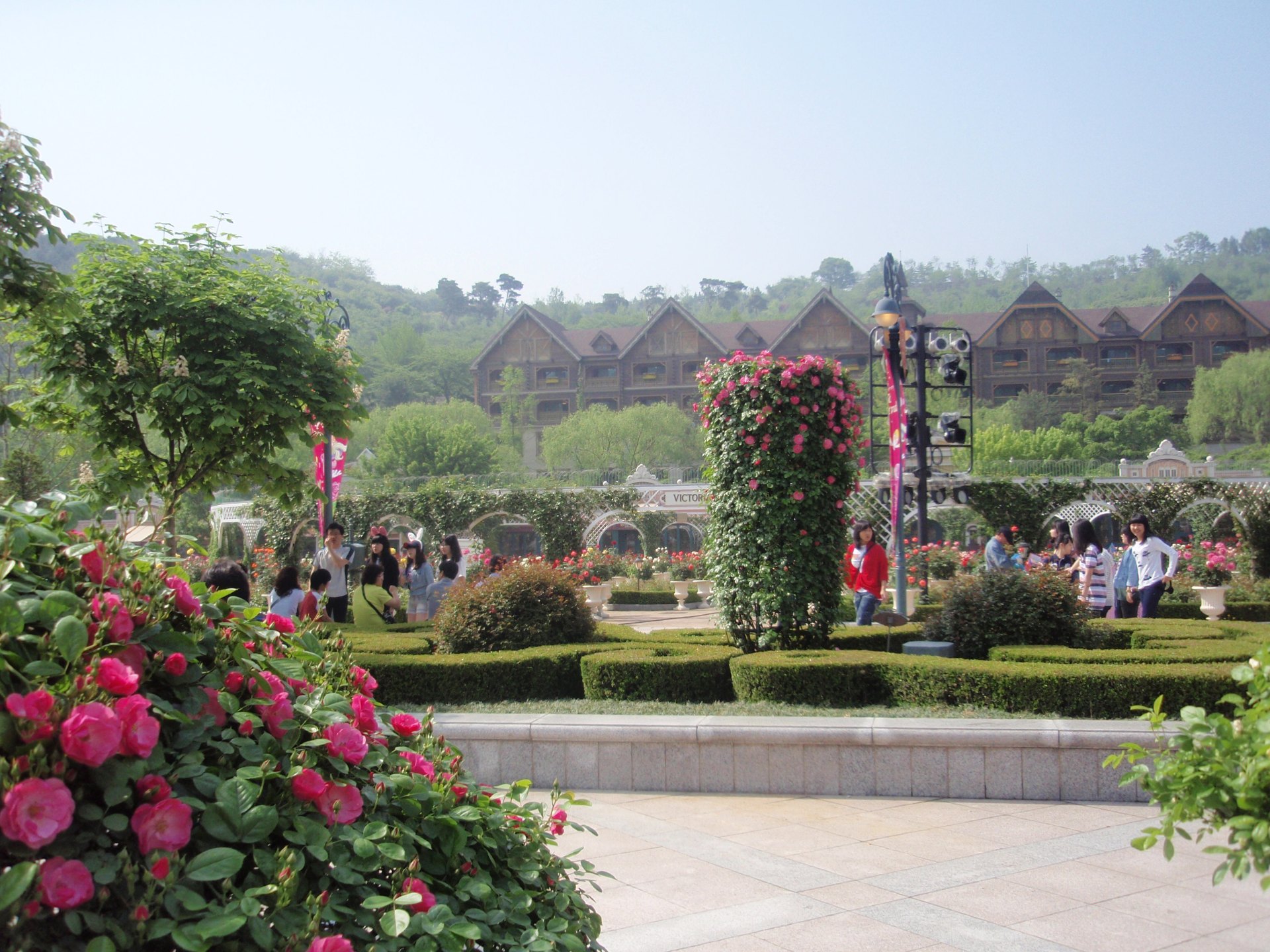
Everland (에버랜드) — 199 Everland-ro, Cheoin-gu, Yongin. ★4.5 (64,083), 10:00–22:00 (seasonal), day pass about ₩64,000, cheaper online. Korea’s largest theme park, with the wooden coaster T-Express, the Lost Valley safari, seasonal gardens (tulips in spring, roses in autumn) and a winter snow park. Queues pass two hours in peak season, so the rule is to take the headline rides in the first hour after opening. Subway plus the Everline, about 1 hour 20.
Gwangmyeong Cave (광명동굴) (★4.3, 12,938; Gwangmyeong, closed Mondays, ₩6,000) is a gold mine opened in 1912 and turned into an attraction, holding about 12°C year-round, with a wine cellar, light installations and an underground watercourse — the most practical escape from the summer heat in the whole region. Line 1 to Gwangmyeong, then a bus.
Gangchon Rail Park (above, ★4.4, 7,020) and the performances at the Korean Folk Village — tightrope, horsemanship, farmers’ music, several times daily — both suit families. Theme parks such as Provence Village in Paju divide opinion, so check current Google ratings before setting out.
500,000 Books, Free! Art and Design — Paju Book City, Heyri Art Valley, the Architecture of Hwaseong
✔ The densest concentration of contemporary Korean architecture
Paju Book City (파주출판도시) (★4.5, 251) has been built since the 1990s as a planned town for the publishing industry, with headquarters designed by Korea’s leading architects and by international names. Minimal concrete and brick set against wetland—it’s the densest concentration of contemporary Korean architecture anywhere. Forest of Wisdom (★4.5, 676, free) holds 500,000 open-shelf books, with sections open around the clock.
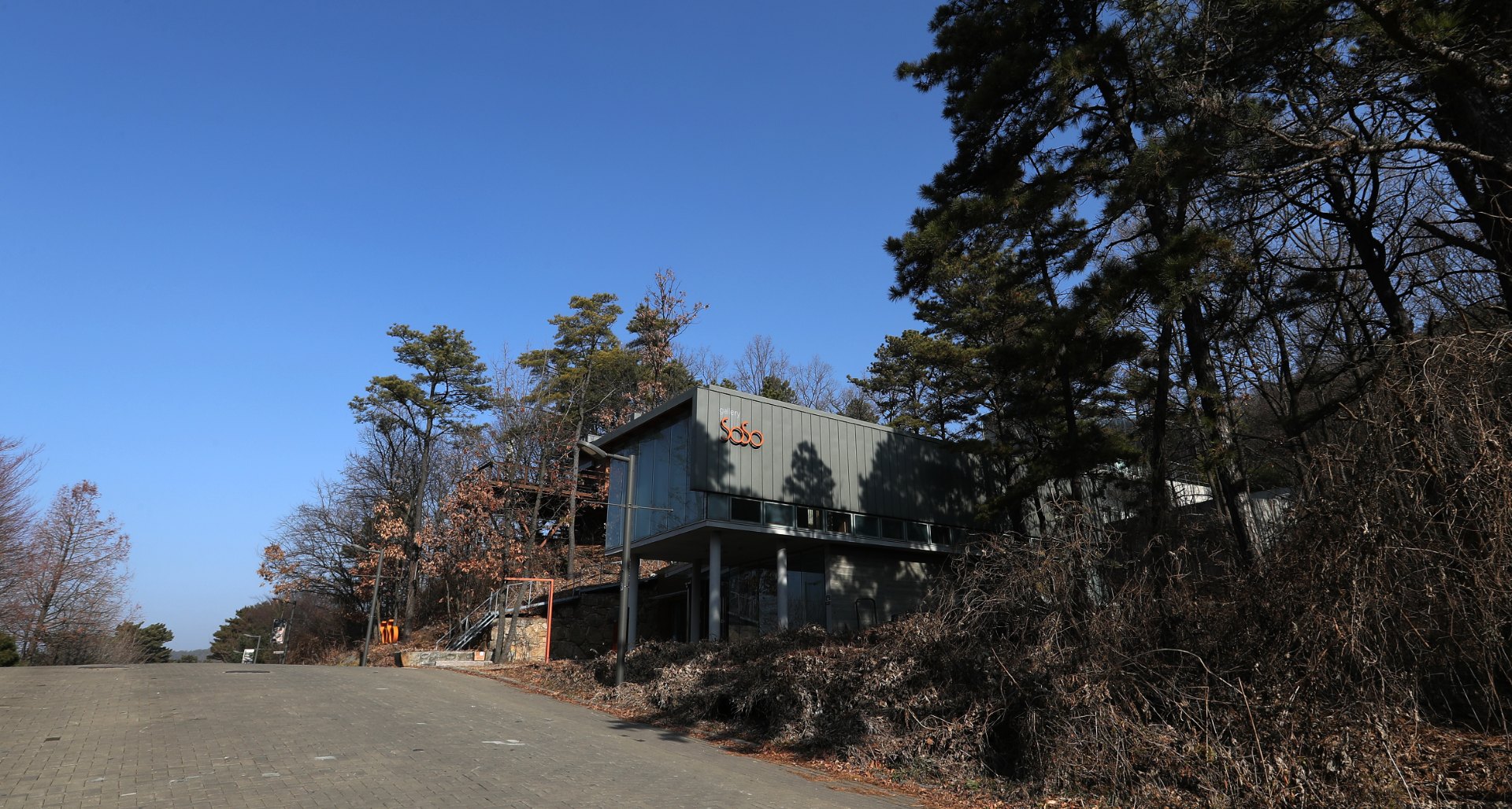
Heyri Art Valley (헤이리 예술마을) (★4.0, 8,126; Tanhyeon-myeon, Paju; many venues closed Mondays) has been built by artists and architects since 1998: around 400 studios, galleries, cafés and small museums. The ★4.0 rating includes reviews complaining of “cafés open, museums closed”, so checking which venues are open before you go decides how the day feels.
Hwaseong Fortress matters architecturally too, fusing late-Joseon practical learning (Jeong Yak-yong’s design thinking) with Western fortification. The bastions, the hollow observation towers and the water gate at Hwahongmun are textbook early-modern construction. Read alongside Gyeongbokgung and Changdeokgung in the city (see our guides) and the line of Joseon architecture becomes clear.
From Seoul Station, an Hour to Suwon on Line 1! On the Map — Day Trips From Seoul With Google Ratings
✔ Distances are from Seoul Station
Distances are from Seoul Station: about an hour to Suwon on Line 1, 1 hour 10 to Incheon, 1 hour 20 to Yongin by subway and Everline, an hour to Gapyeong by ITX-Cheongchun. Ratings as of 6 September 2026.
- Hwaseong Fortress (UNESCO) — Google ★4.6 (9,156)
- Nami Island — Google ★4.4 (37,621)
- Everland — Google ★4.5 (64,083)
- Korean Folk Village, Yongin — Google ★4.4 (16,212)
- Incheon Chinatown — Google ★4.0 (13,336)
- Gangchon Rail Park — Google ★4.4 (7,020)
- Gwangmyeong Cave — Google ★4.3 (12,938)
- Heyri Art Valley, Paju — Google ★4.0 (8,126)
- Paju Book City — Google ★4.5 (251)
- Forest of Wisdom, Book City — Google ★4.5 (676)
- Ilsan Lake Park, Goyang — Google ★4.6 (6,162)
- Pocheon Art Valley — Google ★4.1 (1,654)
- Wolmido, Incheon — Google ★4.1 (489)
- Ganghwa Island (dolmens) — Google ★4.2
FAQ
How many places can I fit into one day trip?
One or two. Each leg takes an hour to ninety minutes, so pair things that sit close together: Hwaseong Fortress with the Korean Folk Village, Incheon Chinatown with Wolmido, or Heyri with Paju Book City.
How far does a T-money card get me?
Across metropolitan subways, city buses and express buses — including Line 1 to Suwon and Incheon, the Bundang Line to Giheung and Line 3 to Goyang. ITX-Cheongchun (for Gapyeong and Chuncheon) and some limited expresses need a separate reserved ticket from the Korail app, which has an English version.
When is the autumn colour on Nami Island?
The metasequoia avenue usually turns from late October into early November, with the ginkgos following in mid-November. Ferries are crowded at weekends, so aim to arrive on the first sailings around 9:00. Blossom comes in early April.
What time should I get to Everland?
The first hour after opening at 10:00 is the quietest, and the time to ride T-Express. In peak season queues run past two hours. Buying online is cheaper and speeds up entry.
Incheon Chinatown only rates ★4.0 — is it worth going?
Yes, if you come for the streetscape and the history: the 1883 port opening and the birthplace of jjajangmyeon. The modest rating mostly reflects the touristy shopping street. Walk on into the open-port district’s colonial-era architecture and as far as Sinpo Market and the day improves considerably.
What should I watch out for in winter?
Nami Island, Gangchon and Paju all drop below freezing, and the riverside wind makes it feel colder. Bring a proper coat and gloves, especially for outdoor activities like the rail bikes. Opening hours shorten in winter, so check the official site for the day you travel.
- Korea Heritage Service — Hwaseong Fortress (UNESCO)
- Nami Island official
- Everland official
- Korean Folk Village official
- Gangchon Rail Park official
- Paju Book City — Forest of Wisdom official
Verified 6 Sep 2026 · Addresses, hours and ratings from Google Maps; prices and closing days from each venue’s official site; Hwaseong from the Korea Heritage Service. Prices and last services change by season — re-check official sources before you travel.