- The seats at both ends of each carriage stay empty even in a crush. Sit in the middle and you are fine.
- Phone calls are not banned, but the shared expectation is short and quiet. Playing audio out loud is the real problem.
- In crowds, carry your backpack in front or put it on the rack. Doing this is what separates a visitor from a nuisance.
Who this is for
- Anyone riding the Seoul subway for the first time
- People who have sat in a priority seat and felt the stares
- Anyone who wants rush hour and suitcase logistics sorted in advance
Seoul has one of the densest, most frequent metro networks anywhere. Fares are low and signs are in English. Actually riding it is not the hard part.
What catches people out comes after boarding. You take an empty seat and feel eyes on you. You answer a call and someone says something. Both still happen regularly.
“Is there a rulebook?” No. Here’s the thing: there are a few unwritten lines that almost everyone observes, and once you know them you will blend in within a couple of days. Let’s get into it.
Not Sitting Is the Simplest Answer! A Priority Seat Is Not a Free Seat
✔ Treated more strictly than in many countries
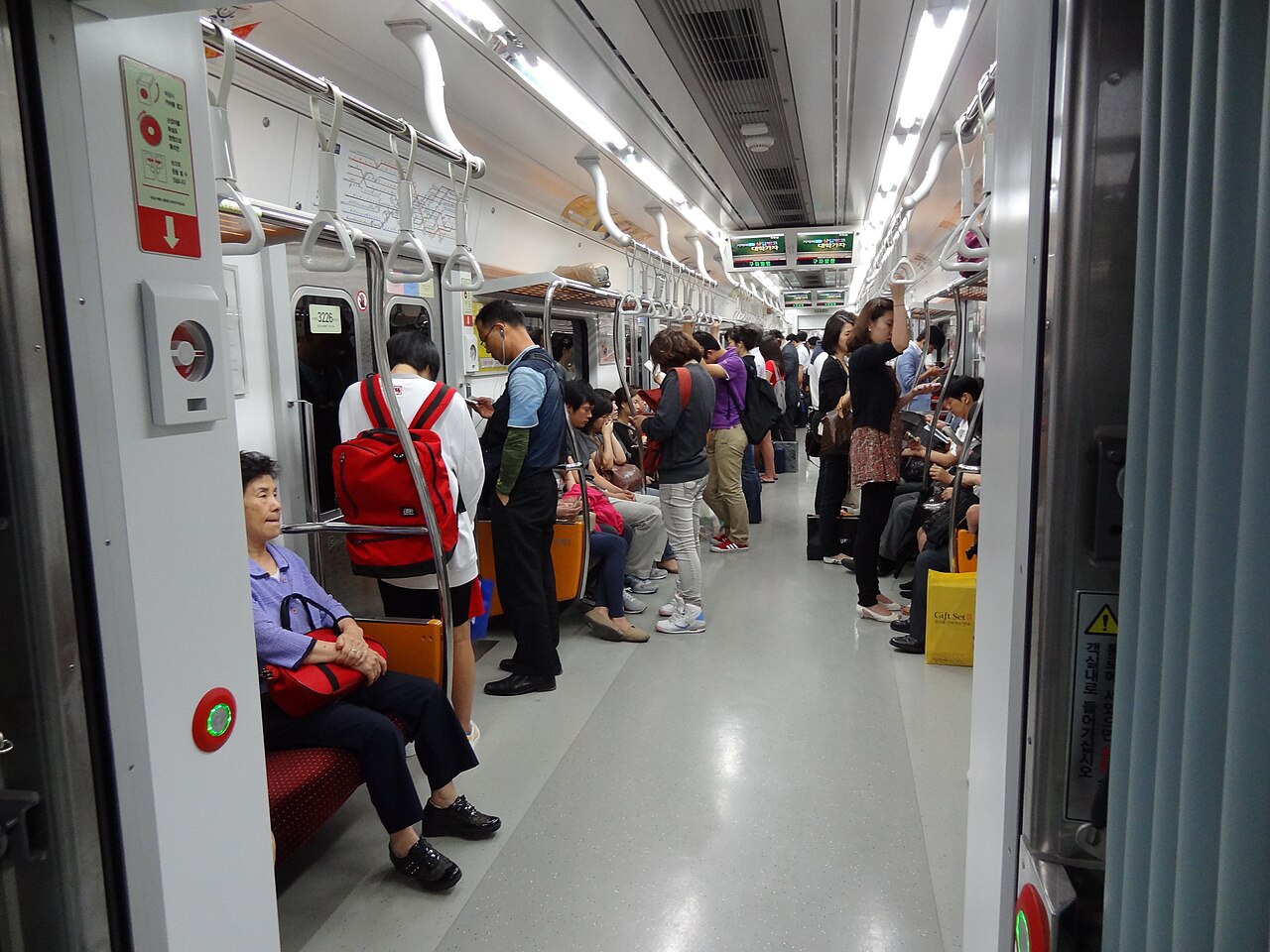
The seats at each end of every carriage are priority seats, for older passengers, pregnant women, people with disabilities and those travelling with infants. In practice they are treated more strictly here than in many countries.
Most people will not sit there even when the seats are empty, and a packed carriage with one empty corner is a common sight. There is no legal penalty for a visitor sitting down, but being spoken to is a real possibility.
Seats reserved for pregnant passengers are marked in pink, and the expectation that they stay clear is even firmer. Not sitting is the simplest correct answer.
| Situation | What locals do | Is it a rule |
|---|---|---|
| Priority seats | Left empty even when free | Custom, not law |
| Phone calls | Short and quiet | Not banned |
| Audio without headphones | Headphones expected | Can bring a fine |
| Backpacks | Held in front or on the rack | Custom |
✔ This one comes first, in order. Skim “Riding the Seoul Subway” and the rest of this page lands better.
Sound Is the Real Problem! Calls, Video, Headphones
✔ Calls are not prohibited
Taking a call is not prohibited, and people do take short ones. Long, loud conversations are clearly unwelcome, and announcements ask passengers to be considerate about volume.
The thing that actually causes trouble is playing video or music through a speaker. Seoul Metro has provisions for fining disruptive noise, so this is not always just a warning. Bring headphones.
Talking itself is fine. Friends chat on the train all the time. It is about volume, not silence.
Backpack in Front! Bags and Suitcases
✔ Worn on the back, it hits someone all the way
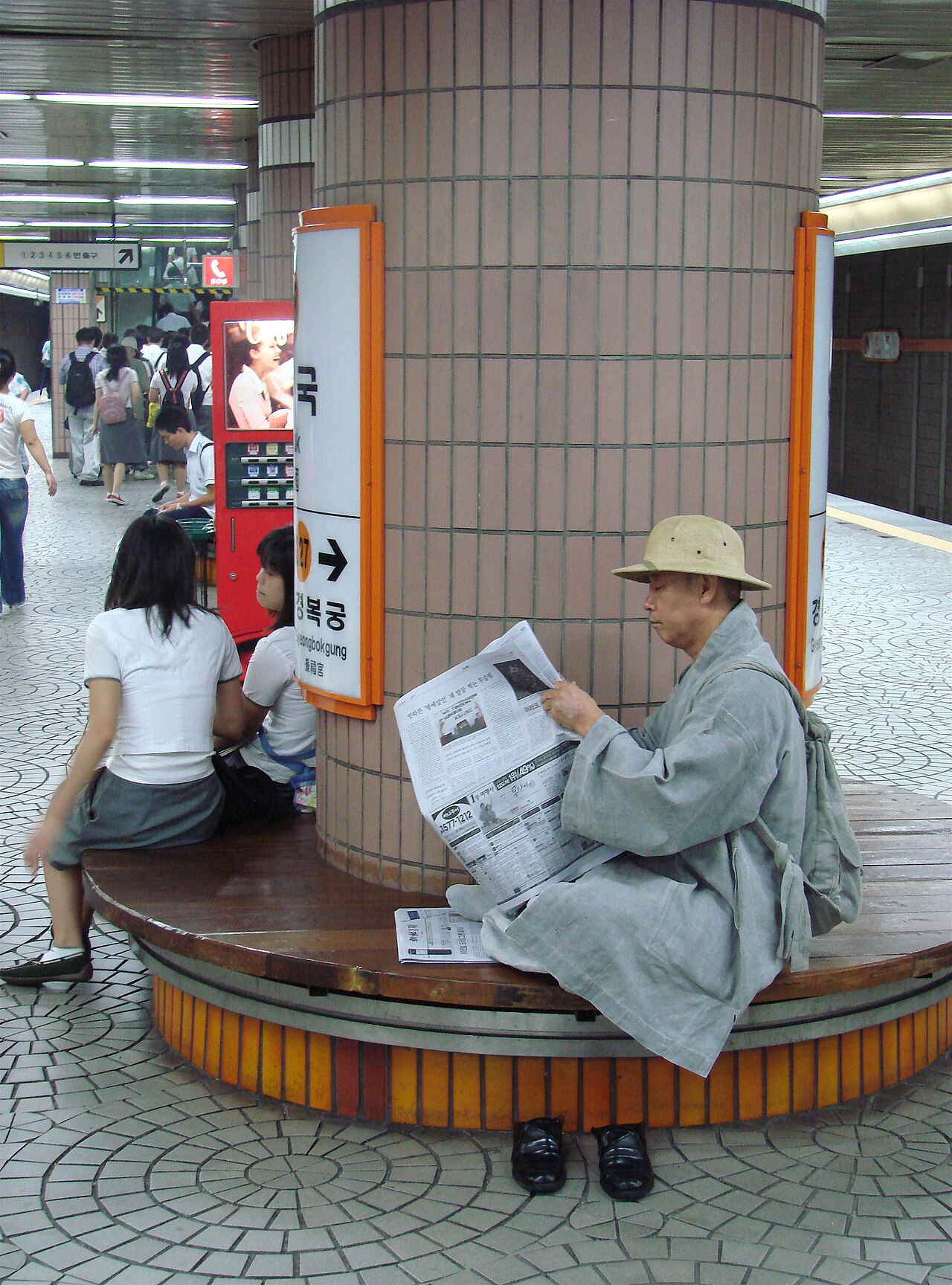
In a crowded carriage, a backpack goes in front of you or up on the rack. Worn on the back it keeps hitting the person behind for the whole journey.
Avoid boarding with a large suitcase at rush hour. Between 7:30 and 9:00 and again from 18:00 to 19:30, some lines are packed to the point where you cannot move. Shifting your airport transfer outside those windows changes the experience entirely.
If you are standing by the doors, step out onto the platform at each stop, let people off, then get back on. Most passengers do this, and copying it makes the flow much easier to join.
Transfers Vary by Ten Minutes! Escalators and Transfers
✔ Stand right, leave the left clear
The convention is to stand on the right and leave the left clear. Signs also ask people to stand on both sides for safety, and off-peak you will often see two rows standing.
Transfer distances vary enormously. Two stations both labelled as interchanges can mean a one-minute walk or a ten-minute one. Journey planners do not always include that walking time.
Some exits are still stairs only. On a day with luggage, look up which exit number has a lift before you arrive.
FAQ
Will I get told off for sitting in a priority seat
It can happen. There is no legal penalty, but it is better avoided.
Can I take a phone call on the train
Yes. Short and quiet calls are not treated as a problem.
What about watching video on speaker
That can be treated as disruptive noise and fined. Use headphones.
When should I travel to avoid the crush
Weekdays from 7:30 to 9:00 and 18:00 to 19:30 are worst. Between 10:00 and 16:00 is comfortable.
Can I bring large luggage
Outside rush hour, yes. Standing in the wider space at the end of the carriage keeps you out of the way.
Information as of 2026-09-28 (official listings and Google Maps as shown at publication). Updated when things change.