- Leave by exit 2 of Ansan station on subway line 4 and it is the street running off to the right. It was designated a multicultural village special zone in 2009.
- Around 170 restaurants from 15 countries are gathered here, and roughly 70,000 foreign residents from more than 70 countries live in the surrounding area.
- The route we would suggest: eat rice-noodle soup, pad thai and crab curry in a Thai restaurant, look over the Chinese street snacks, and finish with lamb skewers at 1,000 won each.
Who wrote this
- Walked the multicultural food street in Wongok-dong, Danwon-gu, Ansan in September 2026; every photograph here was taken on site.
- The skewer price comes from a photograph of the price board on site, and the special zone designation and scale were checked against Visit Korea (Korea Tourism Organization) and Gyeonggi Cultural Foundation material.
- Because the subject is a whole street rather than one restaurant, no star rating is used here — only the price board and the photographs.
Ride subway line 4 down towards the end of the line and you reach Ansan. The moment you step out of exit 2, the number of scripts on the shop signs jumps.
Chinese sits beside Korean, and below it Thai and Vietnamese, Russian Cyrillic and Arabic all hang together. Here, Korean is one language among many.
Ansan designated this area a multicultural village special zone in 2009. Today around 170 restaurants from 15 countries are gathered here, with roughly 70,000 foreign residents from more than 70 countries living nearby.
Half a day is enough if you come as a visitor. What follows is the order in which we walked it in September 2026 — starting in a Thai restaurant, through the market, ending on lamb skewers.
The street — exit 2 at Ansan station, a neighbourhood made a special zone in 2009
There is a reason Wongok-dong became what it is. Ansan grew from the 1970s around the Banwol and Sihwa industrial complexes, and as people who came to work there settled near the station, the shops followed.
The result is the street as it stands. Designated a multicultural village special zone in 2009, with roughly 70,000 foreign residents from more than 70 countries nearby and around 170 restaurants from 15 countries along it.
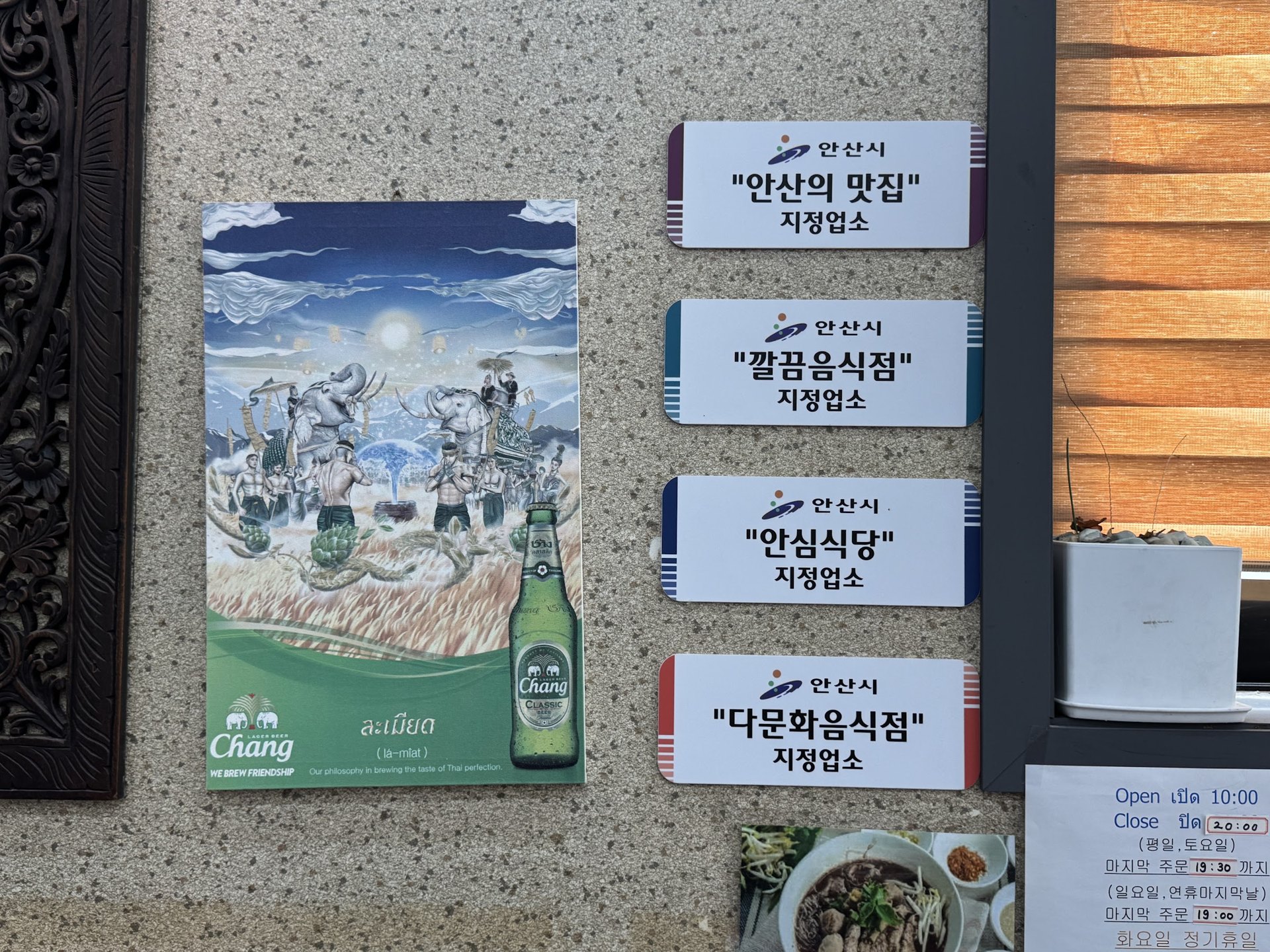
Walk it and you notice something. Every shop carries a designation plaque issued by the city — “Ansan restaurant of note”, “clean restaurant”, “safe restaurant”, “multicultural restaurant”. Which is to say this is not a street dressed up for tourism but a working commercial district under municipal oversight.
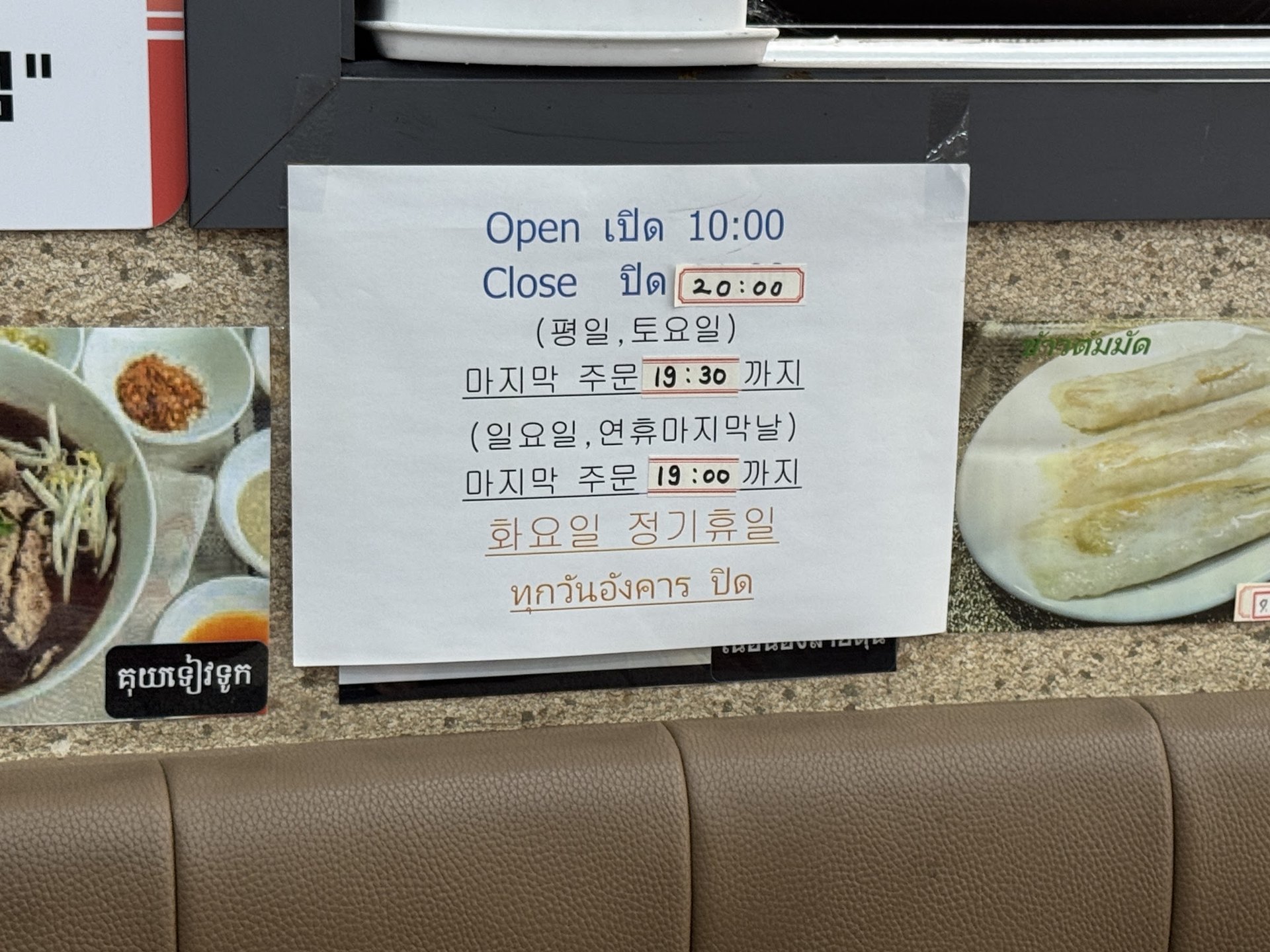
Opening notices are posted in two languages as well. A sign with Thai written under the Korean is the default here.
| Item | Details |
|---|---|
| Location | Wongok-dong, Danwon-gu, Ansan, Gyeonggi-do |
| Getting there | Subway line 4, Ansan station exit 2 → the street to the right |
| Special zone | Multicultural village special zone, 2009 |
| Scale | Around 170 restaurants from 15 countries |
| Local population | Roughly 70,000 foreign residents from more than 70 countries |
| What to eat | Samsa, pad thai, tom yum goong, lamb skewers, Chinese street snacks |
| Skewer price | 1,000 won each (price board on site, 2026-09) |
| Best time | Lunch to early evening (the stalls are liveliest around sunset) |
In a Thai restaurant — rice-noodle soup, pad thai, crab curry
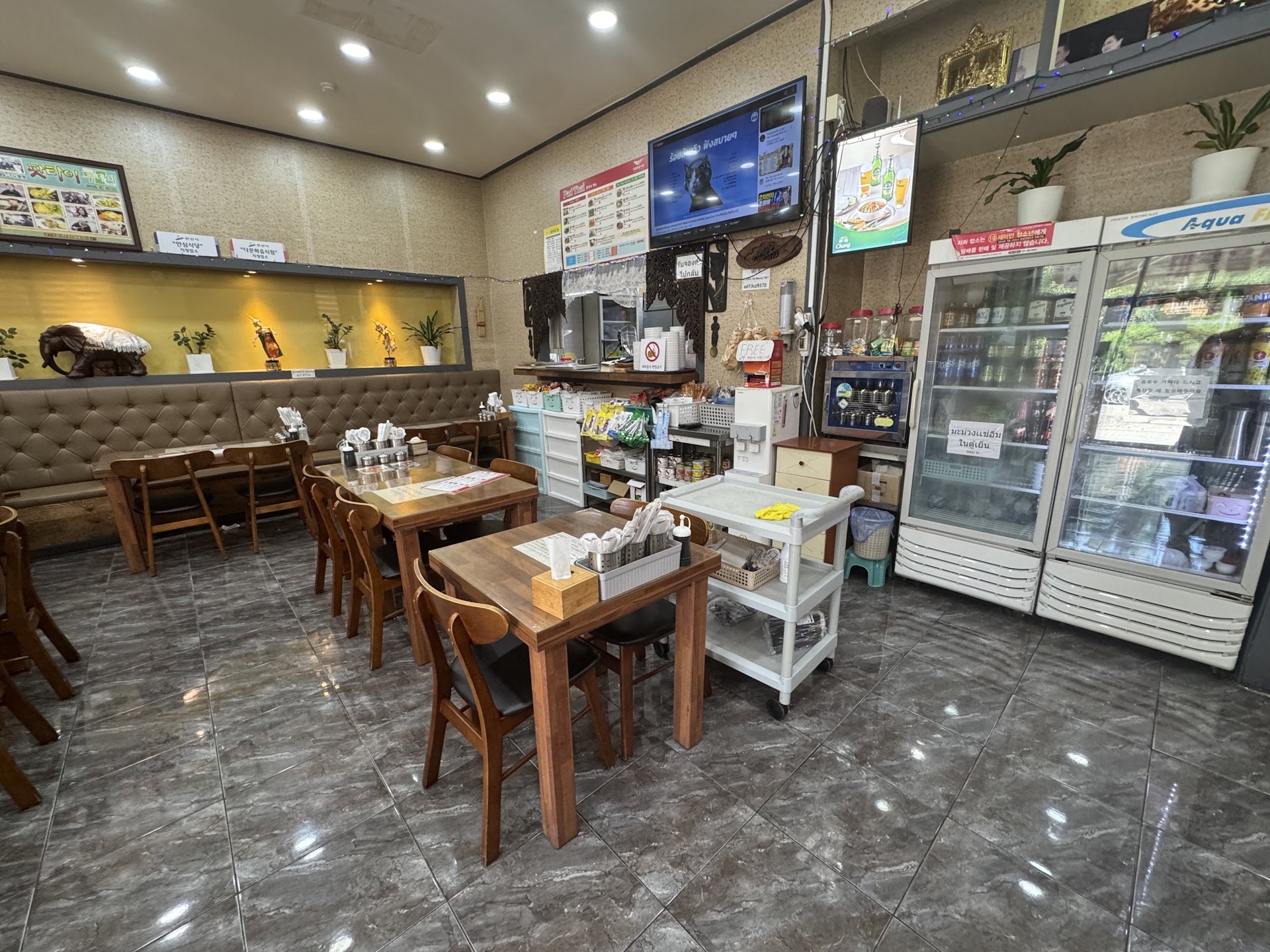
The densest concentration on the street is Chinese and Korean-Chinese places, but there are several Thai restaurants too. Step inside and the air changes: the walls are covered with photo menus and the television is showing Thai broadcasts.
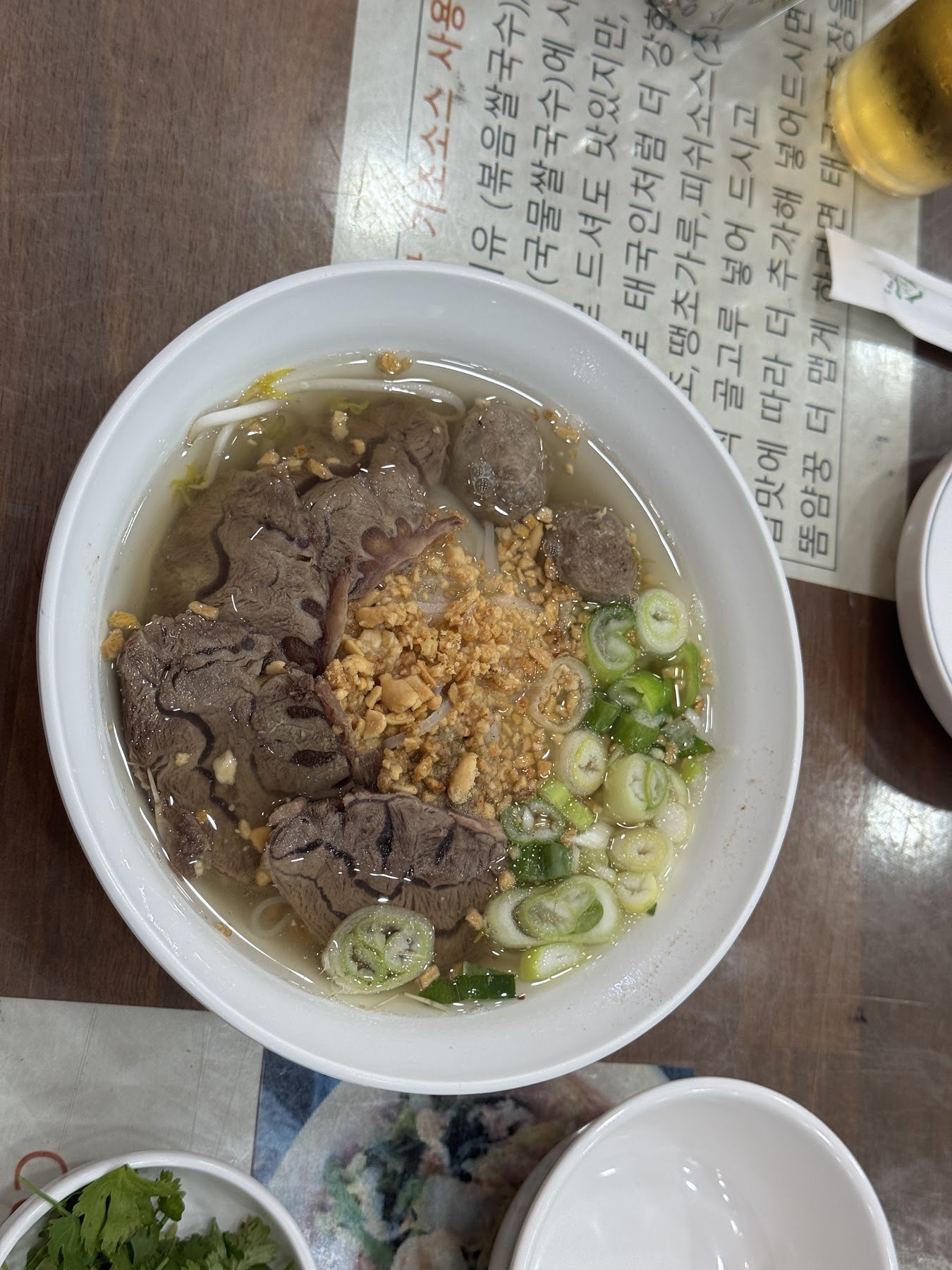
Rice-noodle soup. Clear broth with beef, fried garlic and spring onion on top. The broth is not heavy and finishes cleanly, which makes it a good first bowl if you plan to order several dishes.
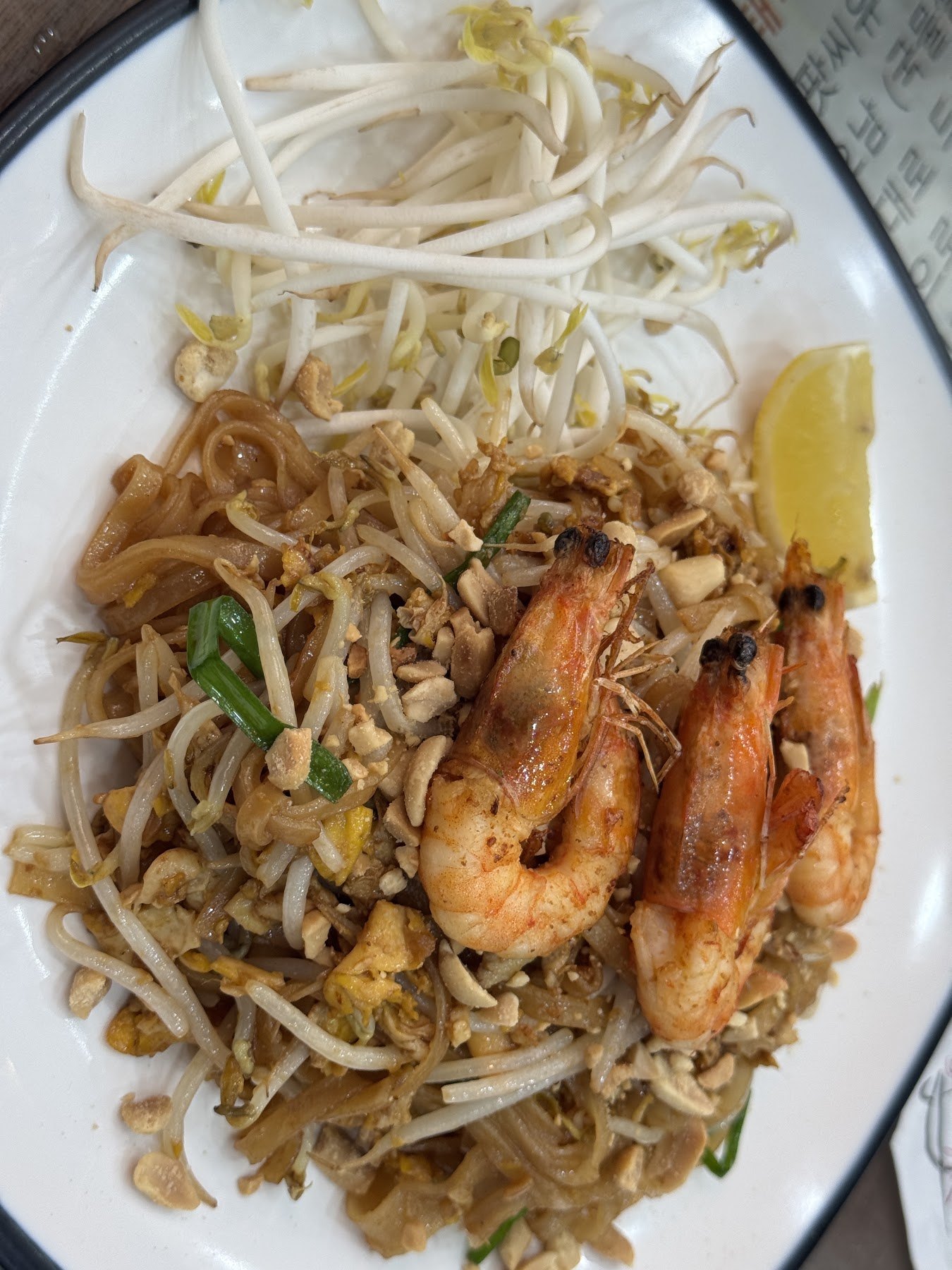
Pad thai. A generous bed of bean sprouts with prawns on top. Sweetness and sourness come first, with ground peanut holding the finish. Squeezing the lime that comes with it lightens the whole plate. A portion is large enough for two to share.
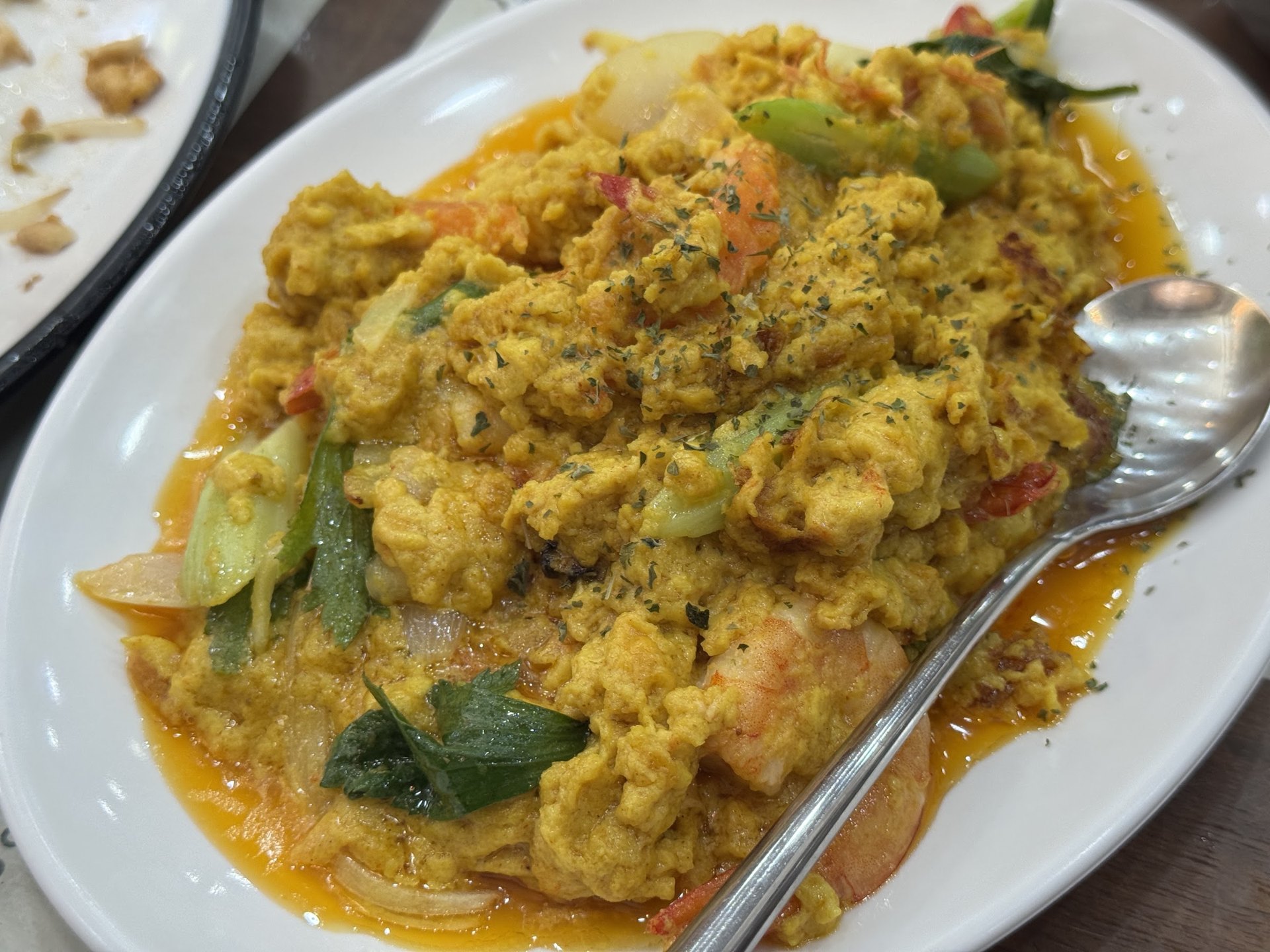
Poo pad pong curry. The most extravagant plate you can eat on this street. Crab meat and egg are folded into a thick yellow curry, with peppers and spring onion giving it bite. It is not spicy and has a sweetness to it, so children will eat it. Order a bowl of rice separately and mix it through.
Add a plate of fried rice and a bowl of rice-noodle soup and it balances out nicely for two or three people.
Street and market — the stretch you eat with your eyes first
Once you have eaten, the walking is the main event. Grocers and stalls run down both sides of the street, and the displays alone tell you which country a shop belongs to.
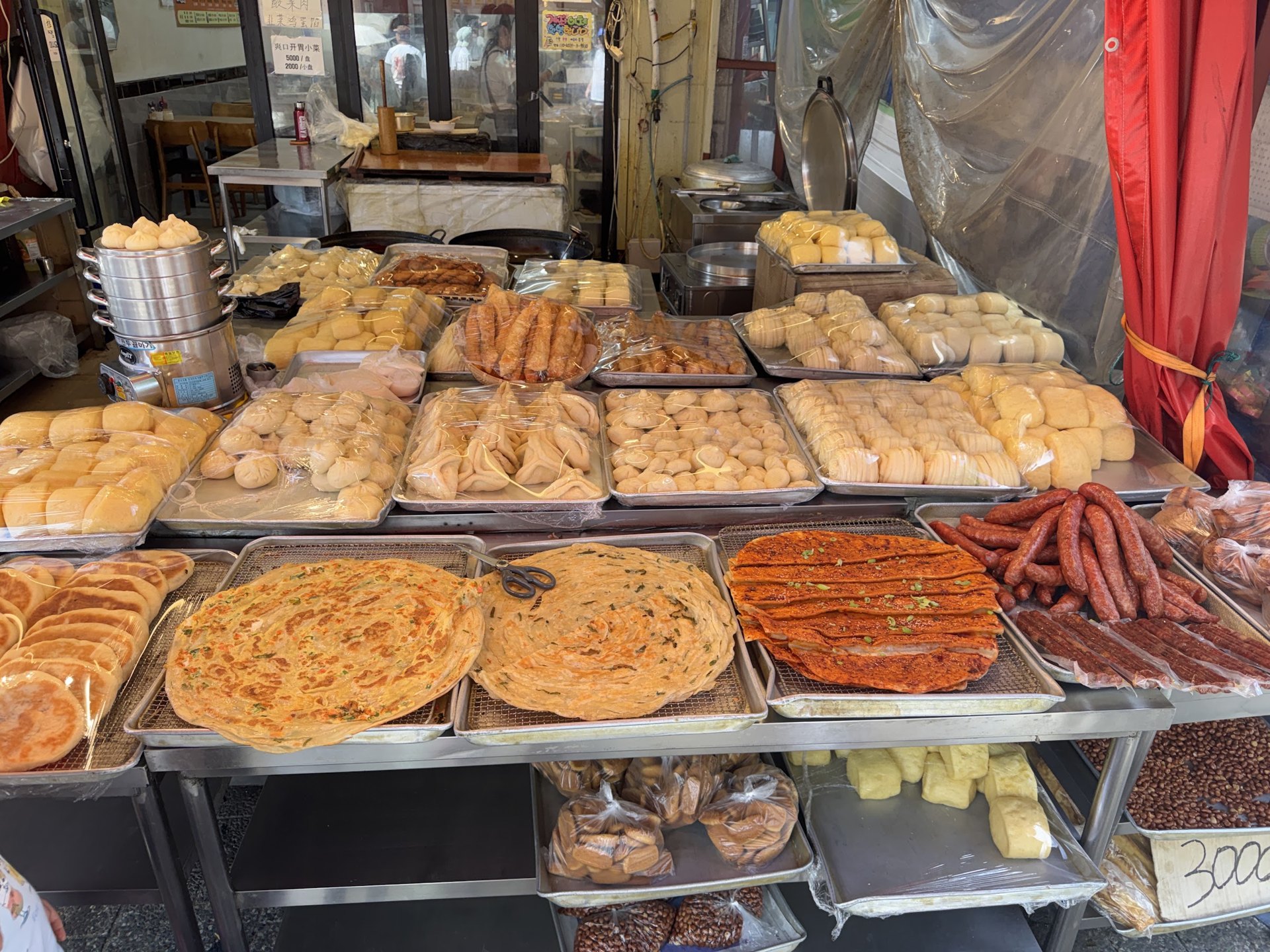
The Chinese stalls have large trays lined up: bread griddled in oil, thick sausage, cured meat, steamed corn, sweets set with nuts. You can buy a single piece and eat it as you walk, or have it weighed out and packed up.
What differs from a Korean market is the smell. Star anise, cumin and coriander mix in different proportions down every alley. Before taking a photograph, it is worth standing still and taking in the smell first.
The grocers sell instant noodles, sauces and spices. Things you could not find in a Seoul supermarket are standard stock here.
Lamb skewers at 1,000 won each — how the street ends
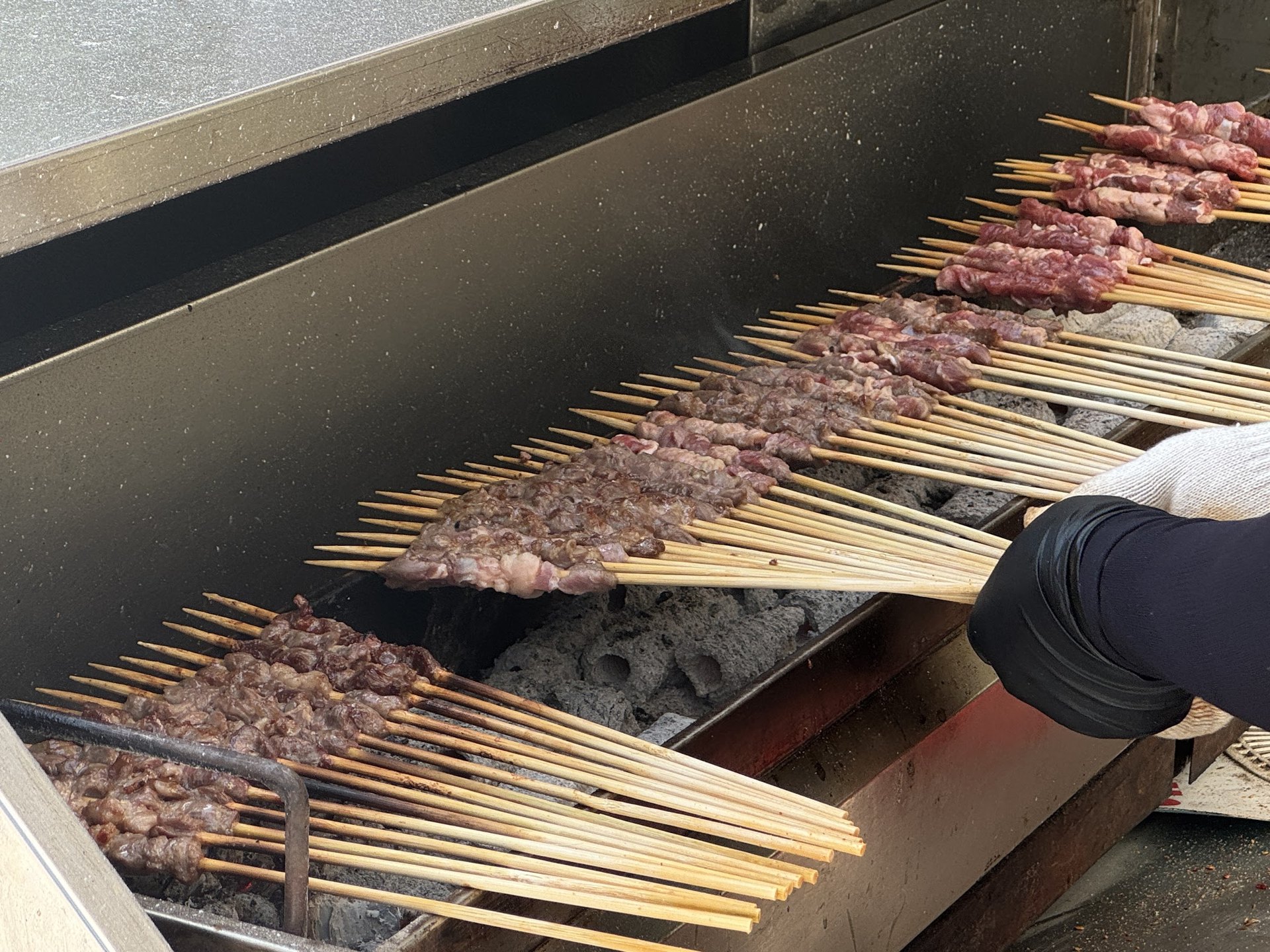
The street ends with lamb skewers. A long charcoal grill is set up at the roadside, skewers packed tightly across it. What stops you as you pass is the smell — cumin and chilli powder hitting hot fat.
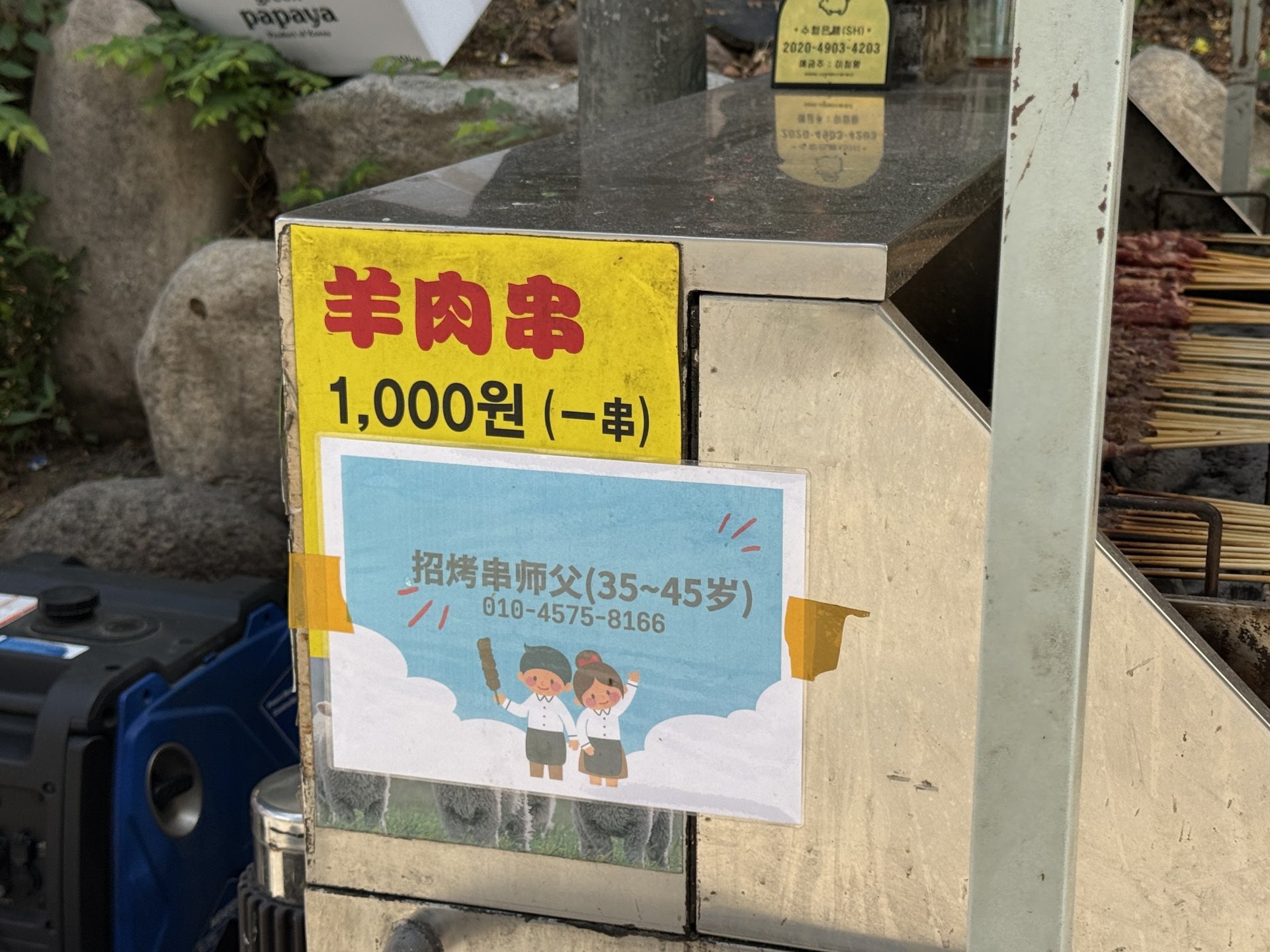
There is a price board. Lamb skewers (羊肉串) at 1,000 won each, exactly as the board in the photograph reads. Ten skewers still comes to 10,000 won.
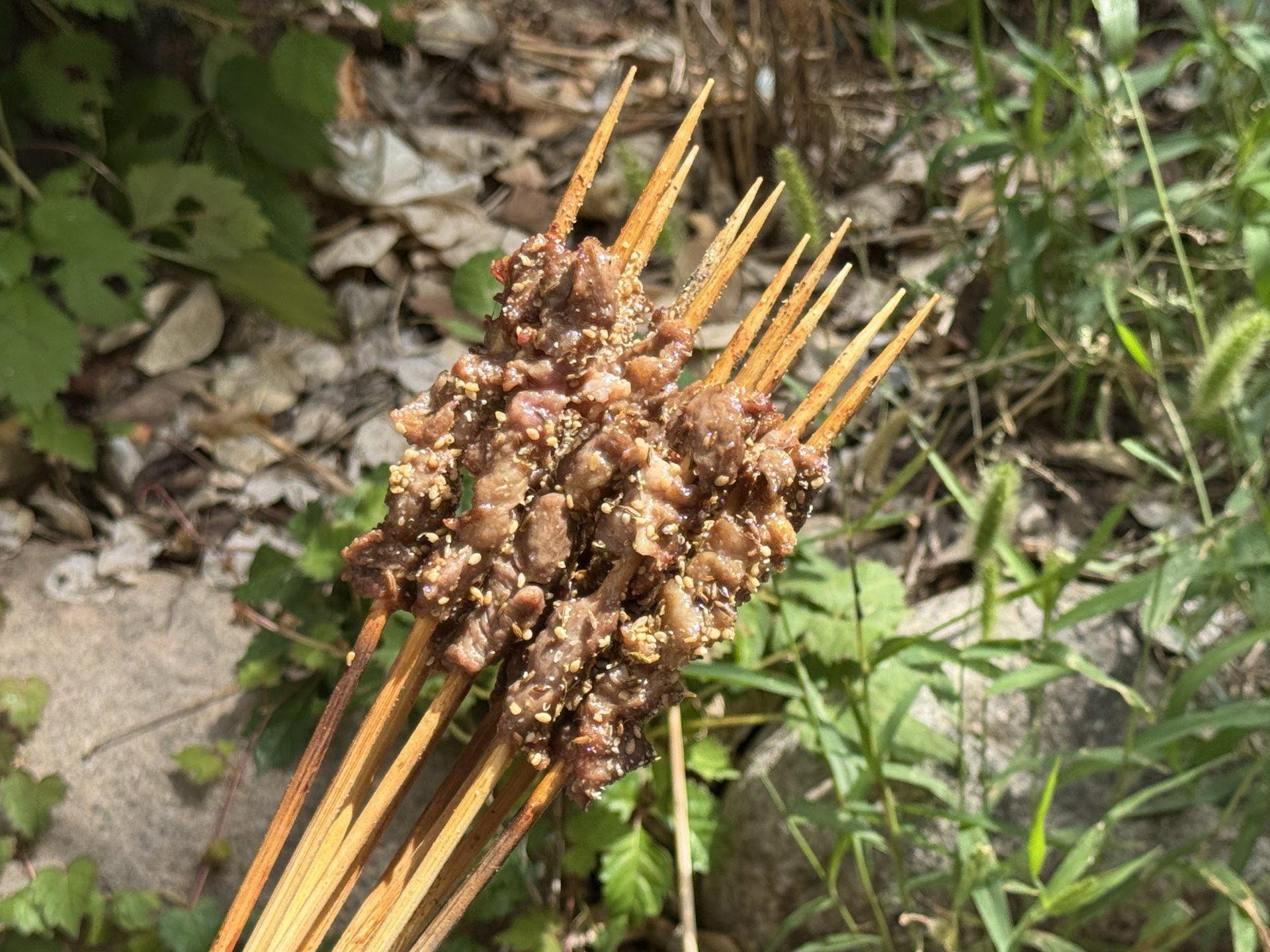
There is a set order to the grilling. One side cooks, then it is turned, dusted with cumin and chilli powder, and turned once more. The meat is threaded in bite-sized pieces with fat in between, so the fat bursts first and the cumin follows.
The particular smell of lamb is less strong than you might expect. It is more accurate to say the cumin redirects it than that it covers it. If this is your first time, order two or three and judge from there.
Buy a can of beer or a Chinese soft drink, hold it in one hand, and eat standing. Not having to find a seat is the point of this stretch.
Map and practicalities — getting there, timing, what to watch for
Location Wongok-dong, Danwon-gu, Ansan, Gyeonggi-do (the multicultural food street)
Getting there Leave exit 2 of Ansan station on subway line 4 and take the street running off to the right. Line 4 goes there directly from central Seoul.
Best time Lunch to early evening. The stalls and skewer grills are at their liveliest as the sun starts to drop.
Worth knowing.
- Closing days vary from shop to shop. Some shut on Tuesdays, some close early on Sundays, so read the notice at the door before you go in.
- Some stalls prefer cash. Most places take cards, but a little small change makes life easier.
- When taking photographs, it is better to avoid shop interiors and people’s faces. This is not a tourist attraction but somewhere people live.
- This is a hard place to give a rating to. The subject is a whole street rather than a single restaurant, so this piece works from the price board and the photographs rather than any star rating for a particular shop.
As a half-day trip from Seoul it is very good value. One line, one loop on foot, 10,000 won of lamb skewers. The country changes several times along the way.
FAQ
How do I get there?
Leave by exit 2 of Ansan station on subway line 4; it is the street running off to the right. Line 4 goes there directly from Seoul.
How much are the lamb skewers?
1,000 won each, according to the price board on site in September 2026. Ten skewers comes to 10,000 won.
Which countries’ food is there?
Chinese and Korean-Chinese places are the most numerous, alongside Thai, Vietnamese, Pakistani, Indonesian, Nepalese and Uzbek among around 170 restaurants from 15 countries.
Is it all right to go with children?
Yes. There are mild, sweet dishes such as poo pad pong curry. The stall stretch does get crowded and the grills sit right at the roadside, though, so it is best to hold hands.
When is the best time to go?
Lunch through to early evening. The stalls and skewer grills are liveliest as the sun starts to drop. Closing days vary, so check the notice at each door.
- Visit Korea — Ansan multicultural special zone (designation year, scale, getting there)
- GGC (Gyeonggi Cultural Foundation) — Wongok-dong multicultural street, Ansan
- Ansan City culture and tourism — guide to the multicultural food street
- Photograph of the price board on site (taken 2026-09, source for the skewer price)
- Seoul Metro — line 4 services towards Ansan station
The year the multicultural special zone was designated and its scale follow reporting by Visit Korea and material from the Gyeonggi Cultural Foundation. The skewer price is taken from a photograph of the price board on site in September 2026.