- The deal covers Seoul’s major royal palaces plus Jongmyo Shrine.
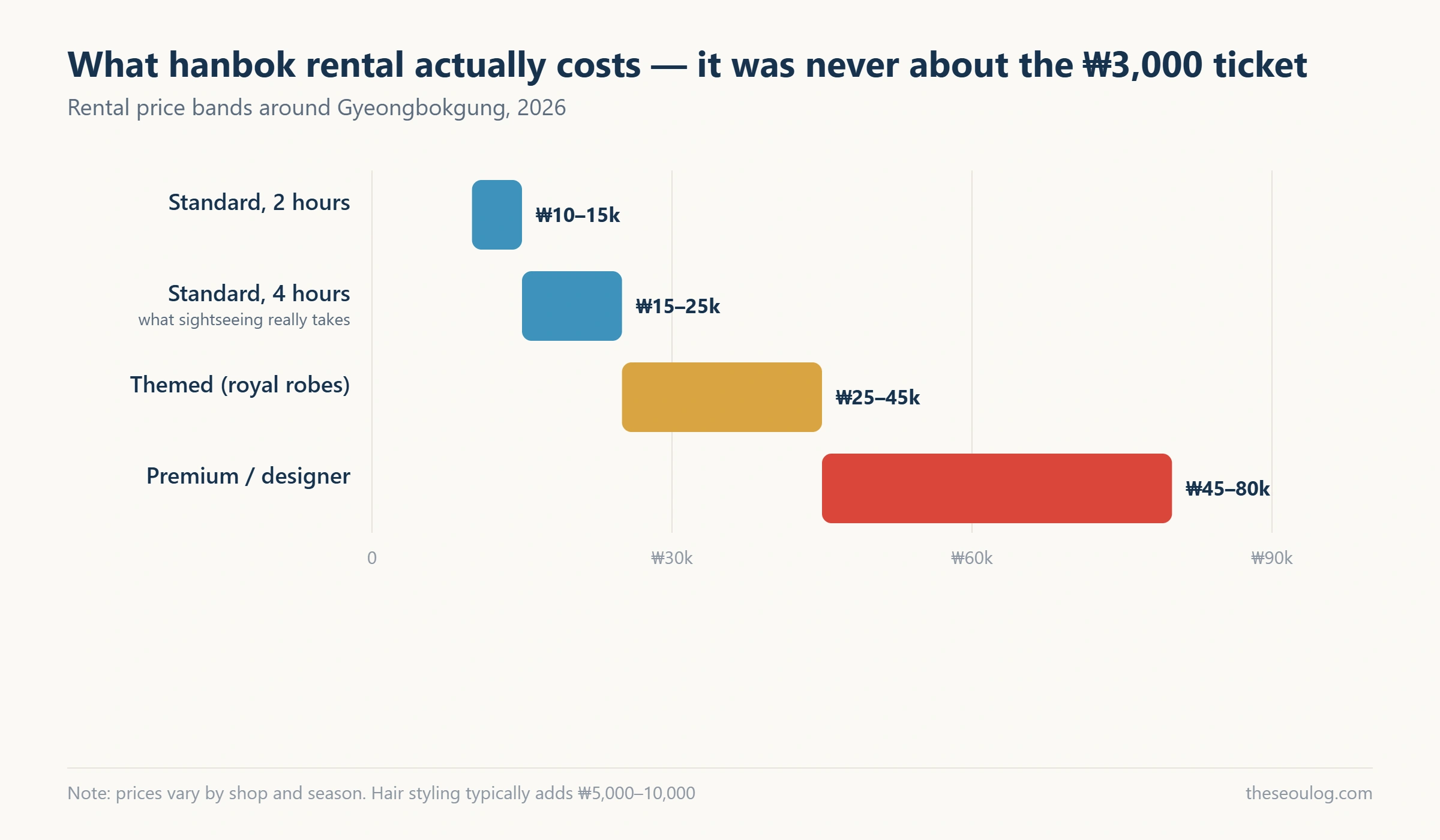
- The market is transparent: ₩10,000–15,000 for two hours of standard hanbok, ₩15,000–25,000 for four.
- Keep the route simple: rent around 9 a.
Who this is for
- Anyone who wants the Gyeongbokgung-in-hanbok photo and needs to know what it actually costs
- People checking the precise free-entry conditions and which day the palace is closed
- Anyone who’d rather not learn about the Bukchon time restriction from a fine
“Wear a hanbok and the palaces are free.” Every guidebook prints it. Do the math, though, and it collapses: admission is ₩3,000, and the cheapest rental starts above ₩10,000. Nobody has ever saved money on this deal.
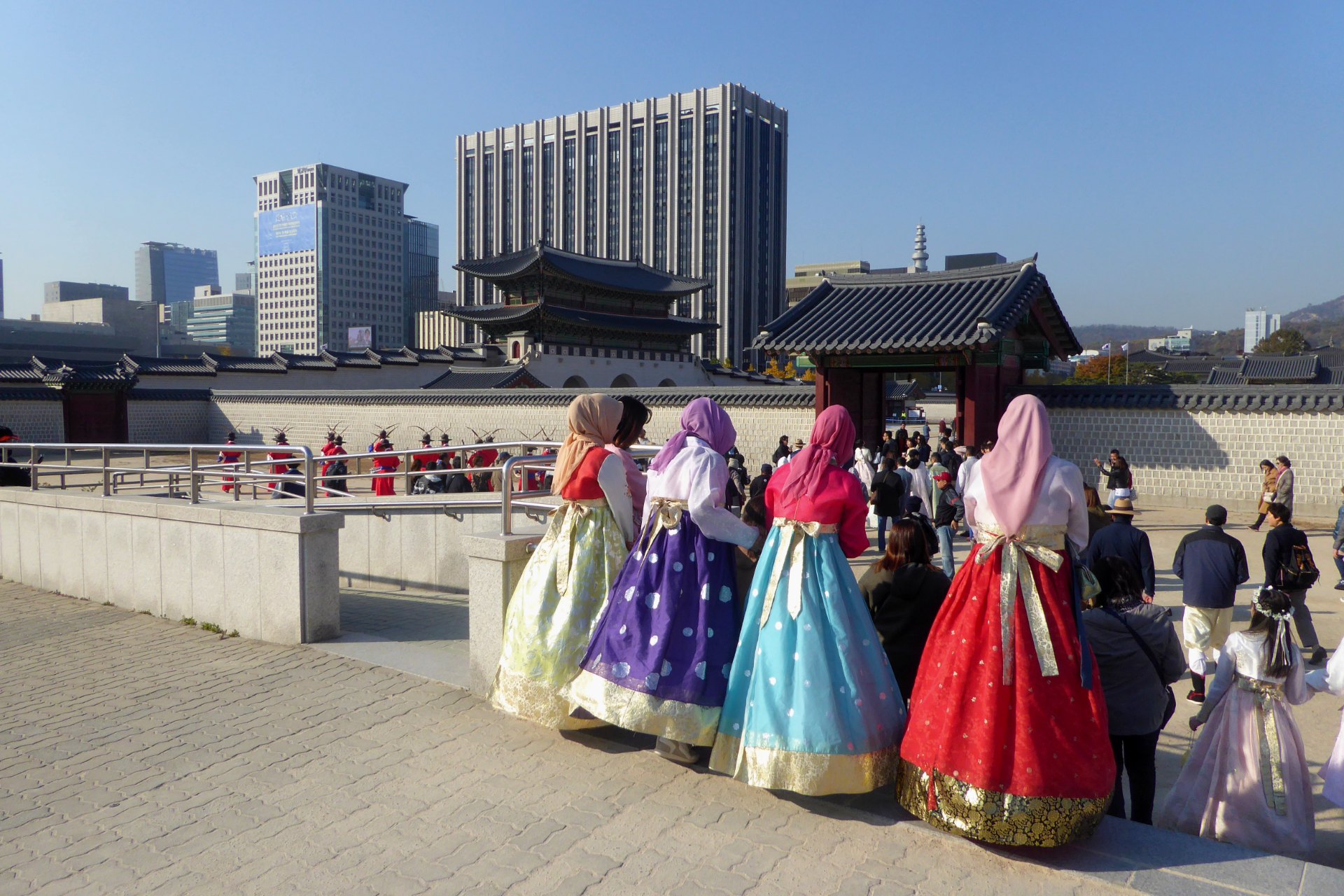
Yet every morning the gates of Gyeongbokgung fill with travelers in rented silk. Here’s the thing: this was never a discount—it’s a policy that turns dressing up into the official way of visiting. You walk the same stone courtyards in the clothes the buildings were designed around, and the national heritage agency opens the door for free to encourage exactly that. Few countries do anything like it.
“So what does it cost, and where do I start?” This guide assembles the 2026 version: real rental prices, the precise free-entry rules, and a half-day route from Gyeongbokgung to Bukchon—including the new restriction you shouldn’t learn about from a fine. Let’s get into it.
Contents
1. The free-entry rules, precisely
2. What the rental actually costs
3. The half-day route — Gyeongbokgung to Bukchon
4. Coming in autumn? The night-opening upgrade
5. Frequently asked questions
1. Jeogori Plus Chima or Baji and You’re In! The Free-Entry Rules, Precisely
✔ Major palaces plus Jongmyo Shrine
The deal covers all of Seoul’s major royal palaces and Jongmyo. The dress condition, in practice: a jeogori (jacket) paired with a chima (skirt) or baji (trousers). The modern “fusion” hanbok that rental shops love is accepted. Rent a normal set and you’ll pass without discussion.
| Item | Detail |
|---|---|
| Free entry | major palaces + Jongmyo, for hanbok wearers |
| Standard ticket | Gyeongbokgung ₩3,000 (under-24s and 65+ are free anyway) |
| Closed day | Gyeongbokgung closes on Tuesdays |
| Watch out | Changdeokgung’s Huwon (Secret Garden) needs a separate timed ticket |
Planning a palace day on a Tuesday? Swap Gyeongbokgung for another palace. Some periods still issue a ₩0 ticket at the booth for hanbok wearers — just follow the signs.
✔ Got this far? Then this is your next move. “The Autumn Session Sells Out on Announcement Day” is the step after.
2. ₩15,000–25,000 for Four Hours! What the Rental Actually Costs
✔ The market is transparent
₩10,000–15,000 for two hours of standard hanbok, ₩15,000–25,000 for four. Themed sets modeled on royal robes run ₩25,000–45,000, and designer pieces reach ₩45,000–80,000. Hair styling is usually a ₩5,000–10,000 add-on, and nearly every shop includes a free locker for your clothes and bags.
Three field rules. Go early—popular colors and sizes vanish by late morning. Skip the ₩9,900 bargain racks; you can feel the difference in the fabric, and so can your photos. Wear the flat shoes the shop offers—palace courtyards are gravel and stone, and heels file for divorce within thirty minutes.
3. Before 11 Is the Golden Hour! The Half-Day Route—Gyeongbokgung to Bukchon
✔ Keep the route simple
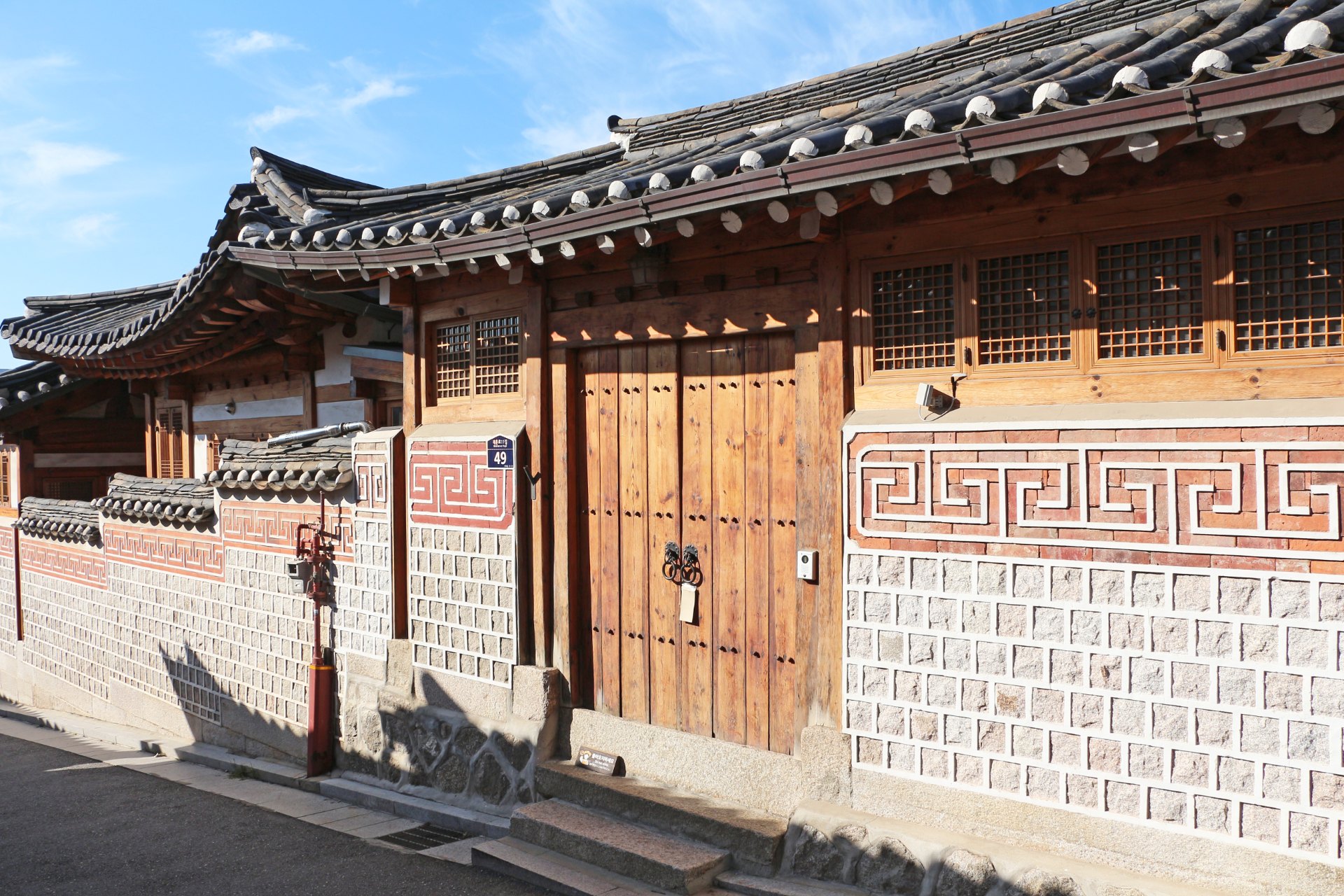
Rent around 9 a.m., enter Gyeongbokgung as it opens. The window before the tour buses land around 11 is your golden hour. Geunjeongjeon hall, the Gyeonghoeru pavilion pond, Hyangwonjeong—the canonical shots take barely two hours.
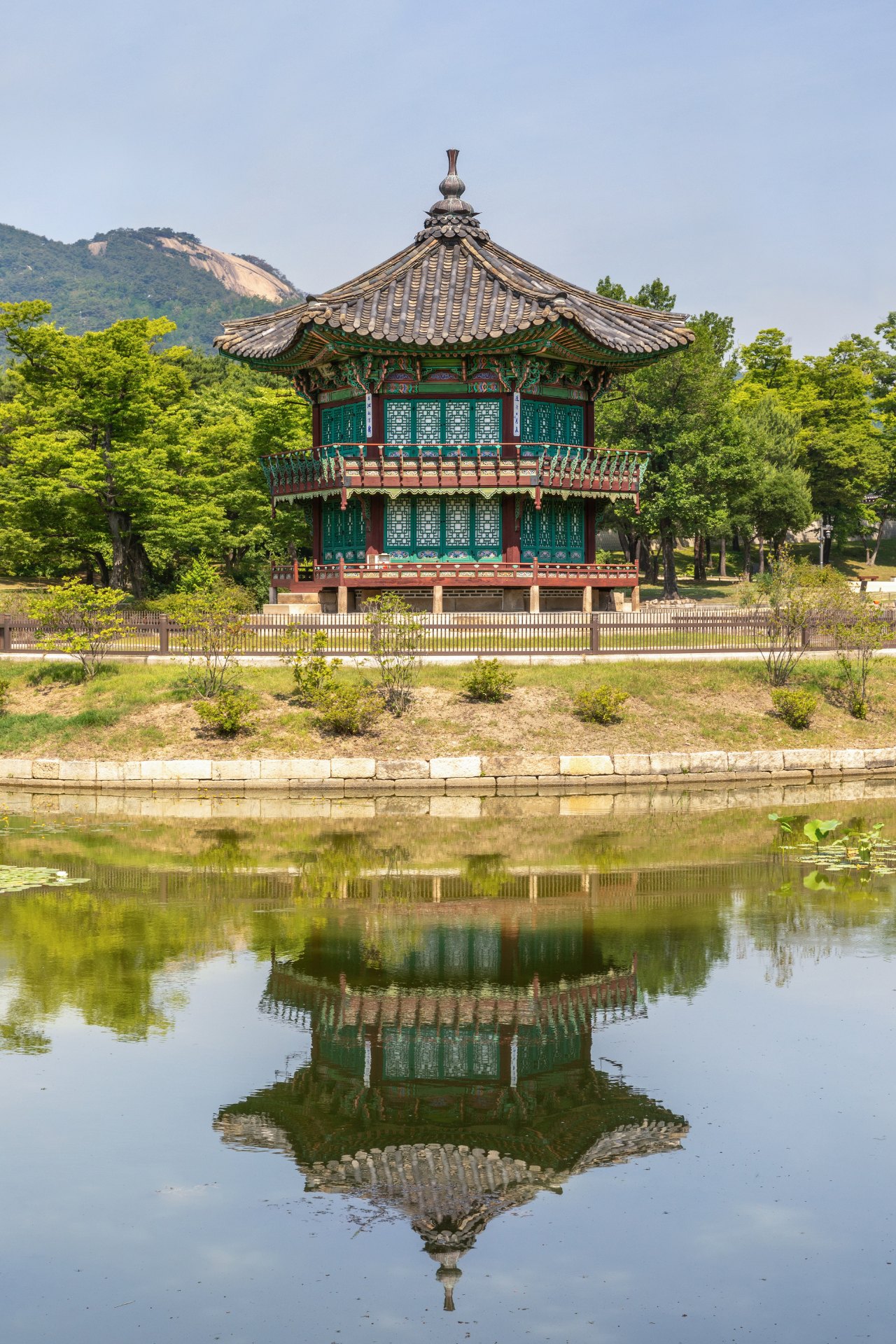
Walk to Bukchon Hanok Village in the afternoon—with one piece of 2026 knowledge in your pocket. Part of Bukchon-ro 11-gil is now a “red zone” where tourists may enter only between 10:00 and 17:00 (in force since March 2025), with fines of roughly ₩100,000 possible. It’s a residential street; keep voices low and lenses considerate, even more than inside the palace.
4. A Lit-Up Geunjeongjeon? Coming in Autumn—the Night-Opening Upgrade
✔ Special night openings in spring and autumn
The spring 2026 session ran 19:00–21:30 (last entry 20:30) at ₩3,000—and hanbok wearers entered free there too. Autumn dates are typically announced around September; if your trip lands in September or October, check the official announcement before locking your itinerary. A lit-up Geunjeongjeon is a different palace from the daytime one. Start at the rental shop at nine!
Around the Chuseok holiday (24–27 September 2026) crowds spike and banks close. See our guide to cards, cash and ATMs before the long weekend.
In short
• Free entry covers the major palaces + Jongmyo; jeogori plus chima/baji qualifies, fusion hanbok included
• Budget ₩15,000–25,000 for four hours of standard hanbok; hair styling adds ₩5,000–10,000
• Gyeongbokgung closes Tuesdays; 9–11 a.m. is the photographer’s window
• Bukchon-ro 11-gil is restricted to 10:00–17:00 since March 2025 — it is a residential street
• Autumn night openings are announced around September; hanbok wearers customarily enter free
On the map — recommended places and Google ratings
Ratings and review counts were checked on Google Maps on September 4, 2026. They change, so tap through for the latest before you go.
- Gyeongbokgung — Google ★4.6 (46,802 reviews)
- Changdeokgung — Google ★4.6 (13,933 reviews)
- Deoksugung — Google ★4.6 (20,388 reviews)
Frequently asked questions
Is palace entry really free in hanbok?
Yes. With a jeogori and a chima or baji — any standard rental set — the major palaces and Jongmyo Shrine waive admission.
Isn’t it a losing deal financially?
Always. The ticket is ₩3,000 and rentals start above ₩10,000. It was never a discount scheme — the experience of walking the palace in hanbok is the product.
Is there hanbok for men?
Yes, every shop stocks men’s sets, and couple packages (₩30,000–50,000) are common.
Will I be comfortable in summer or winter?
Hanbok is layered, so high summer runs hot — hydrate. In winter you can hide warm layers underneath. Spring and autumn are the sweet spots.
Where are the best photo spots?
In Gyeongbokgung: in front of Geunjeongjeon, the Gyeonghoeru pond and Hyangwonjeong. Go at 9–11 a.m. for empty frames or late afternoon for the light. In Bukchon, stay within the 10:00–17:00 window.
Information current as of 17 August 2026. Prices and policies change. Sources: Korea Heritage Service (Royal Palaces and Tombs Center) guidance, official Gyeongbokgung night-opening notices, posted rental-shop prices. Photos: Wikimedia Commons (credited in captions).
This article is based on the official information below. Rules can change, so please check the original before you travel.
· Korea Tourism Organization official site
Information as of 2026-09-01 (official listings and Google Maps as shown at publication). Updated when things change.