- Drinks are ordered by the bottle and shared across the table.
- You pour for others, not for yourself.
- Declining is entirely acceptable if you say so clearly.
Who this is for
- Anyone who’ll be sharing a table with locals in Korea
- People wondering whether “never pour your own” is really a thing
- Non-drinkers who’d rather not spoil the mood
In Korean restaurants, food and drink happen on the same table. You order a bottle and share it rather than ordering a glass each.
A few conventions come with that. None of them are difficult, but not knowing them makes the first ten minutes awkward.
“What if I don’t drink?” Here’s the thing: not drinking is a perfectly normal choice. Nobody needs to push through. Six things to know—let’s get into it.
By the Bottle, for the Table! Ordering
✔ One bottle, shared
Drinks come by the bottle, with glasses for everyone at the table. Refills are ordered the same way.
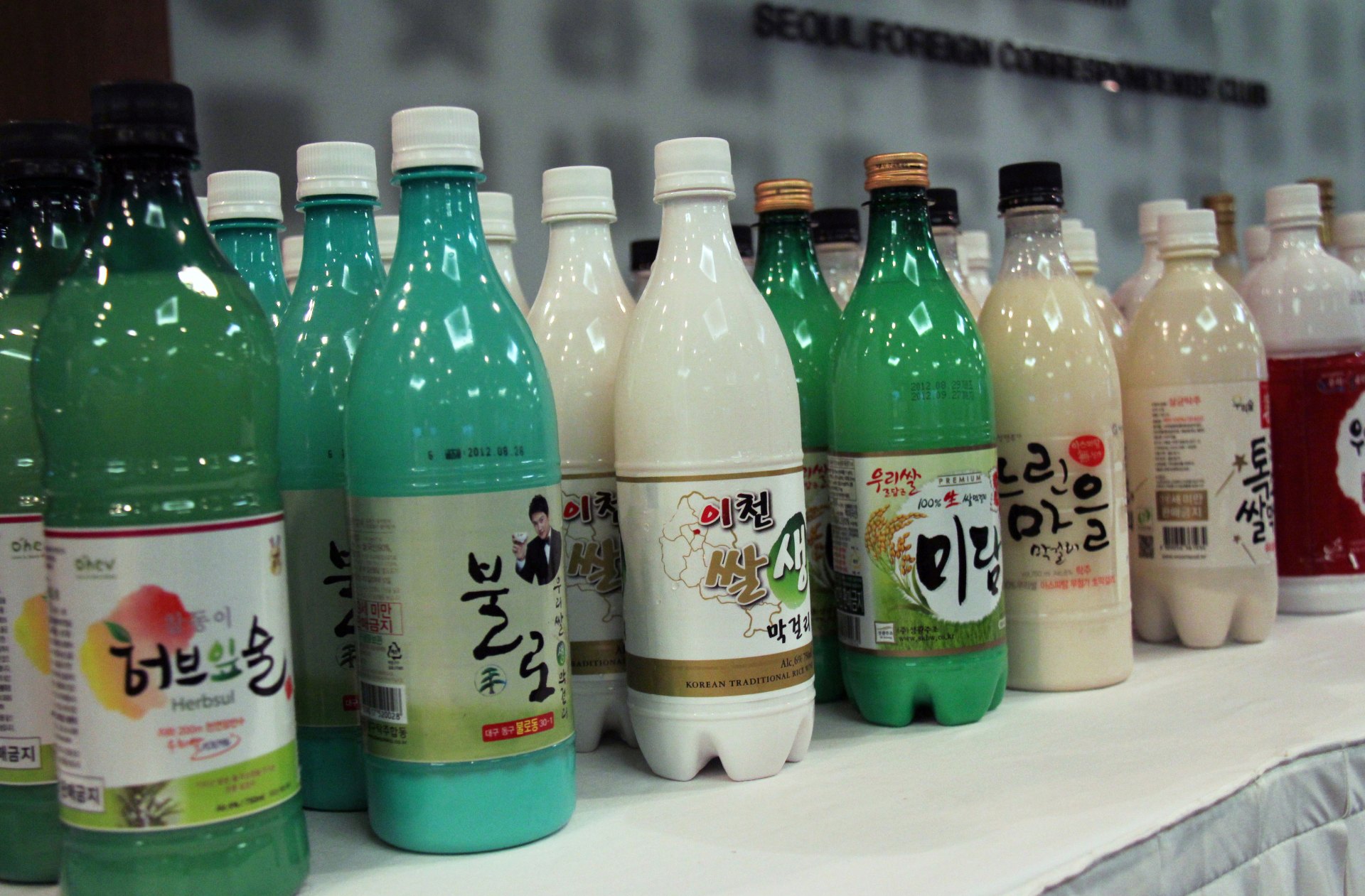
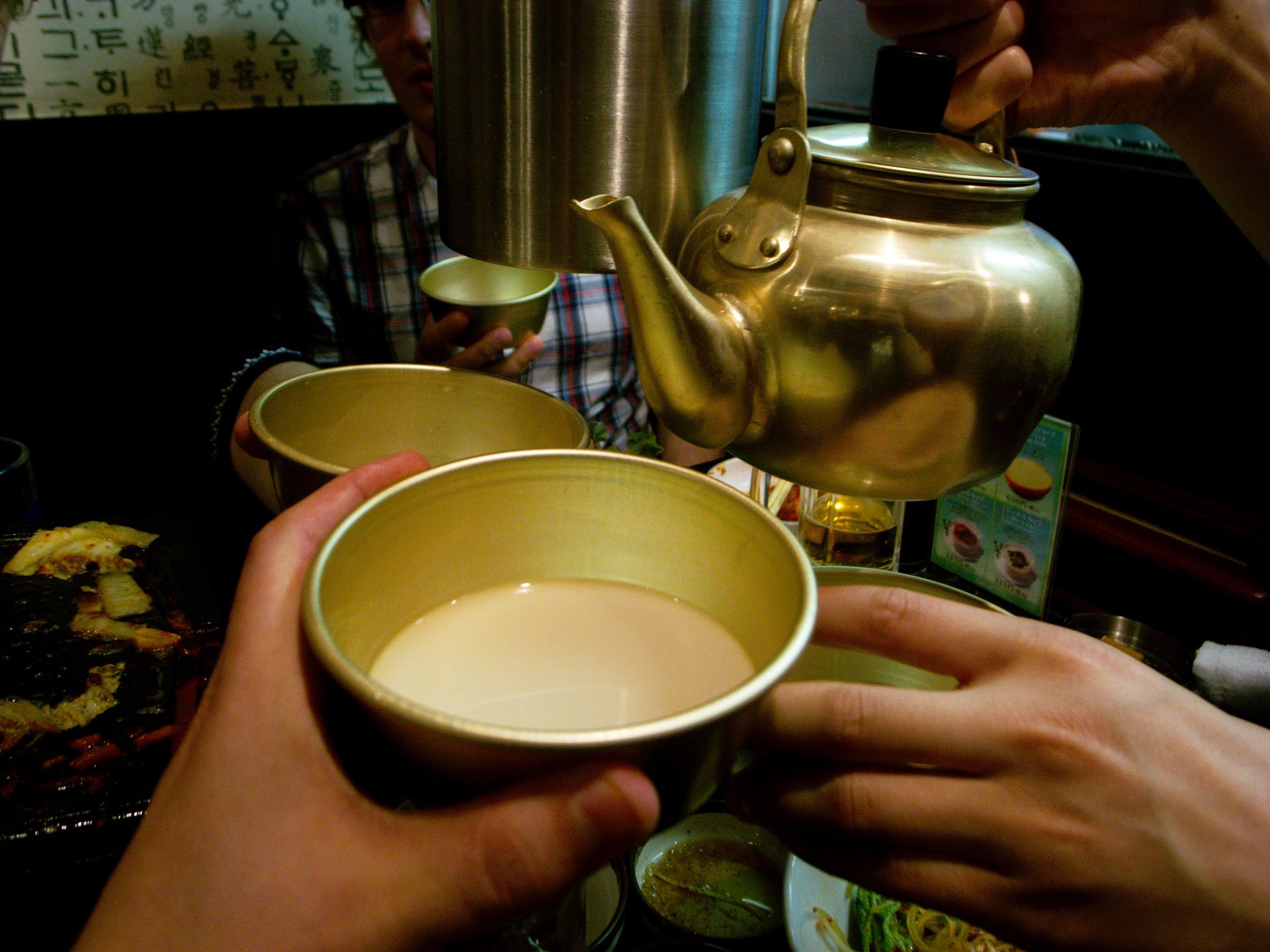
Makgeolli arrives in a bottle or a pot and is poured into small bowls. Shake it before opening so the settled part mixes back in.
Beer comes bottled or draught depending on the place.
Small side dishes appear alongside. They come with the meal and are free in most restaurants; some will refill them.
| Drink | Character | Pairs with |
|---|---|---|
| Soju | Clear, moderate strength | Grilled meat generally |
| Makgeolli | Cloudy fermented rice drink | Savoury pancakes, tofu |
| Beer | Light | Fried food, chicken |
| Soju with beer | Stronger than it tastes | Do not push it |
| Traditional spirits | Distilled or fruit-based | Specialist bars |
| Non-alcoholic | Widely available | Order freely |
✔ This one comes first, in order. Skim “Korean Restaurant Etiquette—10 First-Timer Surprises” and the rest of this page lands better.
Never for Yourself! How Pouring Works
✔ Watch the glass next to you
You generally do not fill your own glass. Someone next to you does it, and you do the same for them when theirs is empty.
Pouring for someone older, use both hands, or one hand with the other touching your forearm. The same when receiving.
Drinking with someone senior, people turn slightly away as they drink. How strictly this is observed varies, but knowing it removes the hesitation.
Visitors are not held to the fine detail. Being pleasant company is enough.
Say So Plainly! Not Drinking
✔ Visitors are very rarely pressed
If you do not drink, say so plainly. Visitors are very rarely pressed.
Non-alcoholic options are increasingly common, and soft drinks or barley tea are available almost everywhere.
Having a little poured and left untouched also works socially.
If alcohol does not agree with you, saying it is for health reasons ends the conversation politely.
Finish With Noodles or Soup! Thinking About Tomorrow
✔ Soju goes down easier than its strength
Soju goes down easily for its strength. Eating alongside and drinking water between rounds is what actually makes the night comfortable.
Finishing with noodles or a soup is a normal habit here, and it does make the next morning better than going home on an empty stomach.
Drinking late means the metro has stopped. Decide how you are getting back before you settle in.
And if you have a long journey or an early flight tomorrow, moderating protects the rest of the trip. Losing a day to one evening rarely balances out.
Finally, you may see people asleep on the pavement. Do not copy them—autumn nights are cold.
FAQ
Can I pour my own?
Convention says no, though visitors are not judged on it.
Can I decline a drink?
Yes. Saying so plainly is enough.
How do I drink makgeolli?
Shake before opening and pour into the small bowl provided.
Are the side dishes charged?
In most restaurants they come with the meal at no cost.
Is there an age limit?
Yes, at places serving alcohol. ID may be requested.
Information as of 2026-09-23 (official listings and Google Maps as shown at publication). Updated when things change.