The 2026 holiday is Thursday 24 – Saturday 26 September. Chuseok day itself is Friday 25 September; with Sunday 27 it makes a four-day break, and Monday 28 September is not a substitute holiday. Chuseok 2027 falls on Wednesday 15 September, with the holiday running Tuesday 14 – Thursday 16 September.
The sequence — dates announced, a pre-sale that needs Korean ID, leftover seats on general sale, then cancellations — is still a useful guide for 2027. We’ll update this page when KORAIL announces the 2027 sale dates.
- The customary sequence: dates announced in late August → a two-day pre-sale in early September (home…
- 1. Fish the leftovers and cancellations — the third and fourth steps above.
- The foreigner-only KORAIL PASS is a powerful tool, but holiday-period restrictions have applied in some years.
Who this is for
- Anyone who’s already planned Busan or Gyeongju over the Chuseok holiday
- People bounced by KORAIL’s pre-sale with no idea what comes next
- Anyone wondering whether the answer is just to stay in Seoul
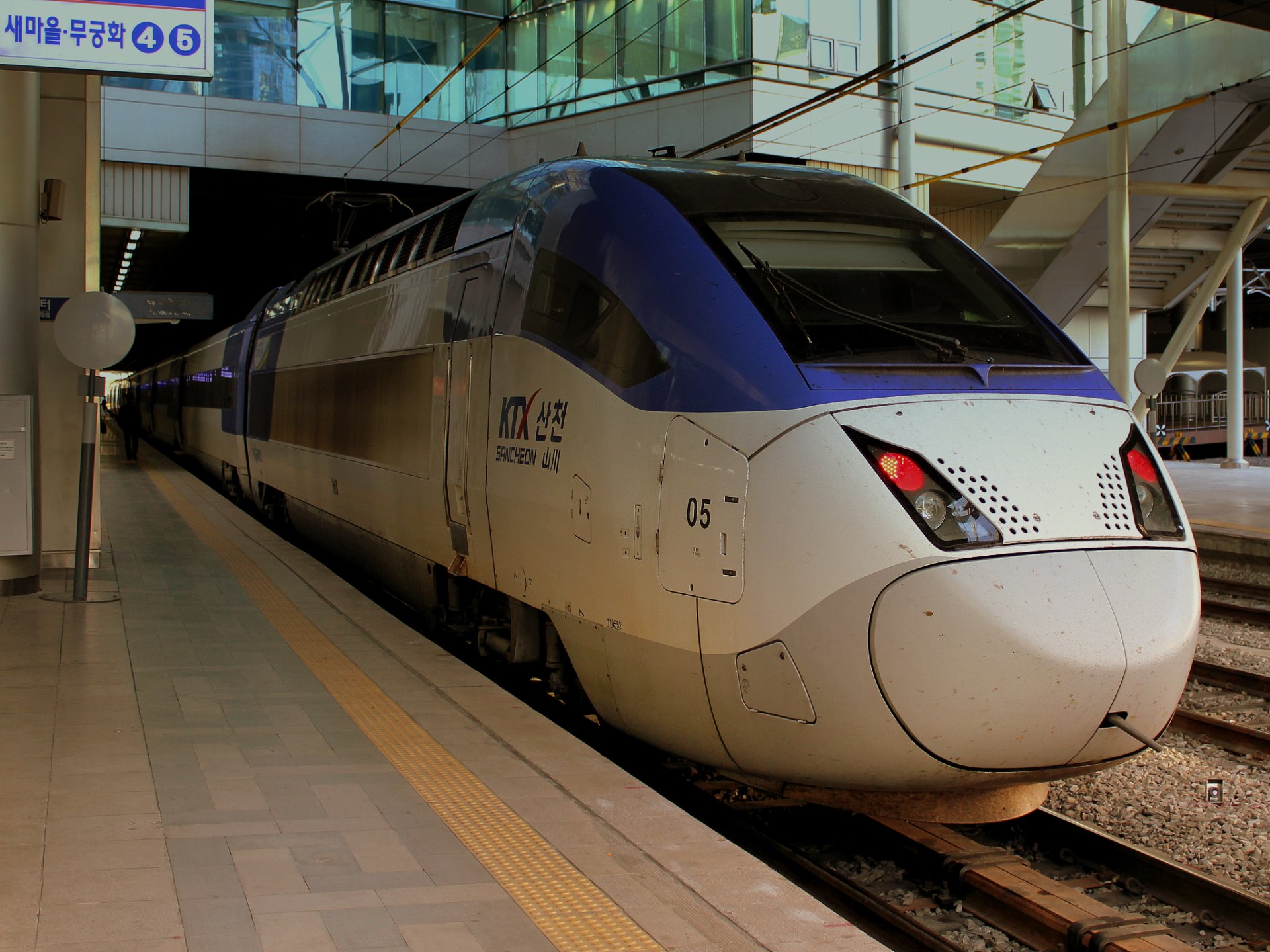
Over Chuseok (24–27 September 2026), tens of millions of Koreans move at once, and KTX seats become the object of a national scramble. Here’s the honest part first: the main event—the pre-sale—is effectively closed to foreign travellers, because it requires Korean identity verification.
That isn’t checkmate. After the pre-sale come leftover seats on general sale, then waves of cancellations in the final days, plus everything that isn’t a train. Know the mechanics and the holiday remains navigable.
“So what should a visitor actually aim for?” This guide lays out the sales timeline and the four routes that work for visitors. The 2026 booking dates were officially announced by KORAIL on 14 August—the table below is the confirmed schedule. Let’s get into it.
Contents
1. First, understand how the tickets vanish
2. The four traveler routes
3. The KORAIL PASS variable
4. If you still want the provinces — pick your dates like a local
5. Frequently asked questions
1. The Main Event Lasts Two Days? First, Understand How the Tickets Vanish
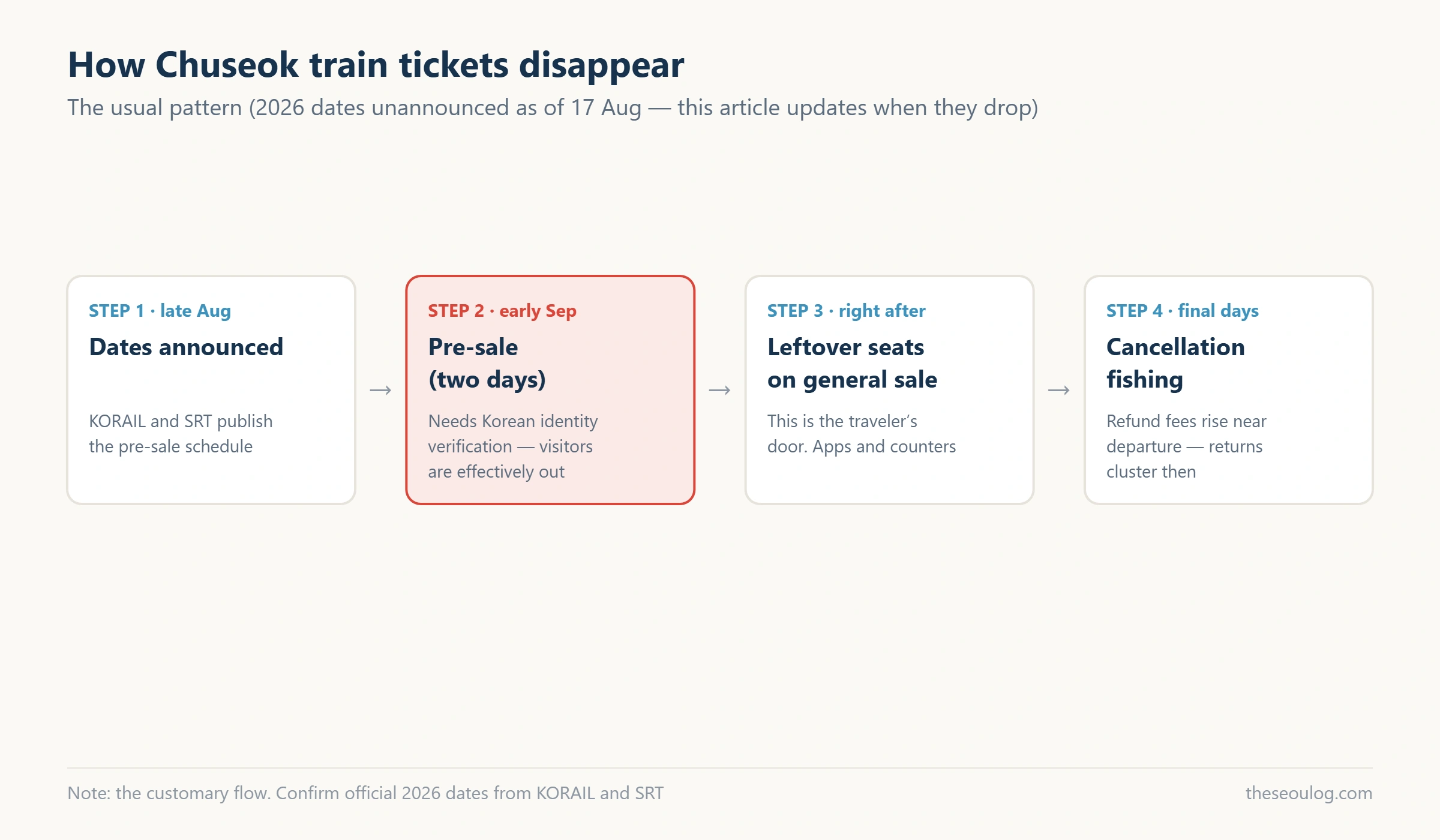
✔ The sequence runs like this
Dates announced in late August → a two-day pre-sale in early September (homecoming crowds, Korean ID required) → unsold seats move to general sale immediately after. From that point, no Korean phone number is needed—KORAIL’s English site, the apps and station counters all sell normally. Then, close to departure, refund fees step up and cancellations get dumped back into the pool: a genuine second chance.
✔ There’s another way to do this. Read it against “Suwon Hwaseong Is 30–40 Minutes From Seoul and Under ₩10,000 for a Half Day” and you’ll see which fits you.
2. Your Window Opens 11 September at 15:00! The Four Traveller Routes
| Stage | Schedule (2026, confirmed) | What it means for travelers |
|---|---|---|
| Priority booking (reduced mobility) | Sep 3–4 | Eligible passengers only |
| Advance booking (Korean ID required) | Sep 7–11, 07:00–13:00, by route | Foreign travelers effectively excluded |
| Leftover seats on general sale | From Sep 11, 15:00 | ★Your window opens — website, app, station counters |
| Payment deadlines | Sep 15 & 18 | Unpaid seats return as cancellations |
| Holiday travel period | Sep 23–27 | Last-minute cancellations appear days before departure |
✔ Four routes, most realistic first
1. Fish the leftovers and cancellations—the third and fourth steps above. Even when reserved seats are gone, KTX often sells standing/non-reserved tickets. 2. Express buses—an order of magnitude more departures than rail, so last-minute seats survive; the price is holiday traffic, with Seoul–Busan sometimes stretching past eight hours. 3. Travel against the current—the crush is outbound from Seoul; inbound routes in the first half of the holiday run light. Arrive from the provinces and spend the holiday in Seoul, and the scramble simply isn’t your problem. 4. Don’t move at all—holiday Seoul is empty and the palaces are free.
What staying looks like in practice: our Chuseok open/closed map. Frankly, it is the best option on this list.
3. Restricted over Holidays? The KORAIL PASS Variable
✔ Check the fine print before you buy
The foreigner-only KORAIL PASS is a powerful tool, but holiday-period restrictions have applied in some years. Before buying one for Chuseok week, check which days and trains it covers. If it works, your holiday mobility problem largely dissolves.
And a reassurance: airport rail and buses between Incheon/Gimpo and the city run essentially as normal, and Seoul’s subways and buses keep their holiday schedules. Only travel between cities clogs.
4. Out on the 25th, Back on the 28th? If You Still Want the Provinces, Pick Your Dates Like a Local
✔ Congestion moves in waves, not a flood
Outbound from Seoul peaks the day before and the first day (23–24 September); inbound peaks the last day (27 September). Slip the waves—leave on the afternoon of the 25th, return on the 28th or later—and the same route drops several difficulty levels.
Bottom line: the dates are out. Leftover seats go on general sale from 11 September at 15:00, and the payment deadlines of 15 and 18 September push unpaid seats back into the pool as cancellations. Until then, do the one thing that matters—fix your destination and your off-peak dates now. The tickets fall to the people who know the mechanics.
In short
• The pre-sale (Korean ID required) is closed to visitors — your doors are the general sale and late cancellations
• Express buses: far more departures, easier last-minute seats, guaranteed traffic
• Congestion is directional: outbound peaks 23–24 Sep, inbound peaks 27 Sep
• KORAIL PASS: check holiday restrictions before buying
• The strongest option is staying in Seoul — the city empties and palaces open free
Frequently asked questions
When do 2026 bookings open?
Announced by KORAIL on 14 August. Advance booking (Korean ID required) runs 7–11 September; leftover seats go on general sale from 11 September at 15:00; the holiday travel period is 23–27 September. The table in the article is the confirmed schedule.
Can foreigners join the pre-sale?
Effectively no — it requires Korean identity verification. The general sale afterward and cancellation returns are the realistic entry points.
Where do I buy bus tickets?
At express bus terminal counters, same-day, or via booking apps. During the holiday, sheer frequency is what keeps seats available.
Is renting a car sensible?
Possible, with an International Driving Permit (Geneva Convention type) — and a full acceptance of holiday expressway traffic.
Does city transport in Seoul suffer?
No. Subways, buses and airport rail run on holiday schedules throughout. Only intercity travel jams.
Information current as of 17 August 2026; booking dates will be added when announced. Sources: customary KORAIL/SRT announcement practice, past holiday transport plans. Photos: Wikimedia Commons.
This article is based on the official information below. Rules can change, so please check the original before you travel.
· KORAIL (Korea Railroad) official site
Information as of 2026-09-02 (official listings and Google Maps as shown at publication). Updated when things change.