- Honestly, for a visitor the differences are marginal.
- Here’s the part most tourists miss.
- Most stores have a small seating counter and a ramyeon cooking machine: buy any packet of instant no…
Who this is for
- Anyone who sees a 1+1 tag, thinks “nice,” and buys one
- People weighing the hotel breakfast against the store downstairs
- Anyone who wants properly boiled ramyeon for under ₩3,000 at 1 a.m.
A Korean convenience store isn’t a simplified version of the ones you know. It runs on different rules.
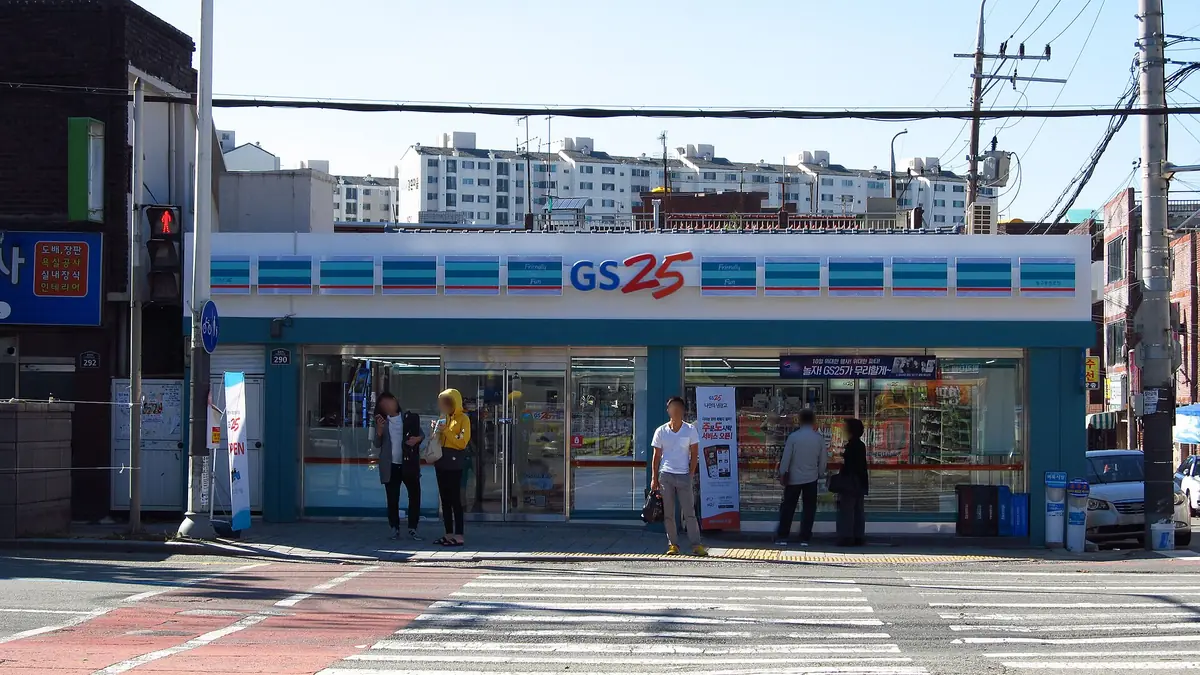
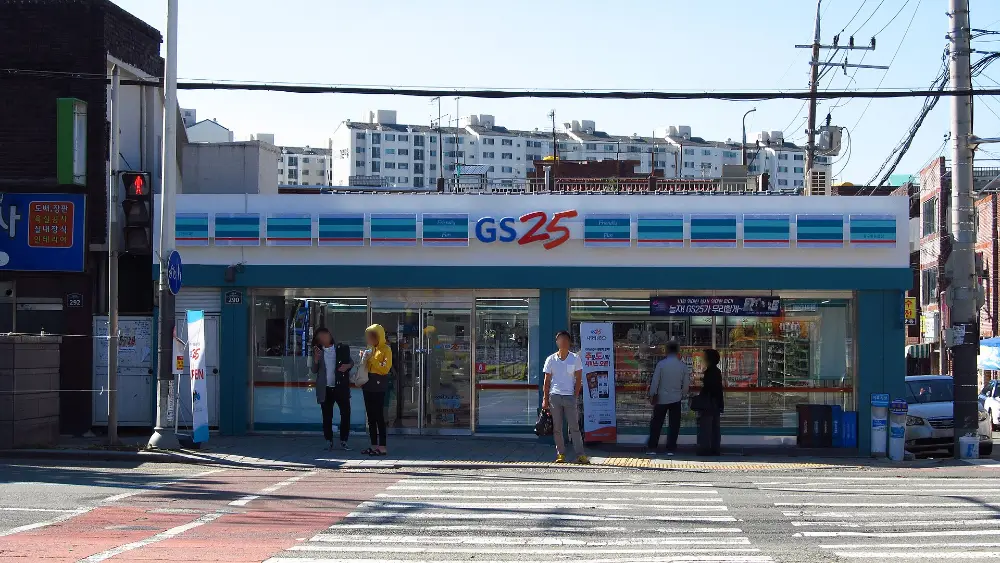
It looks familiar and behaves differently. Rice balls are an afterthought; hot lunchboxes are excellent. There’s rarely a restroom, but there’s seating and a noodle-boiling machine. Service is minimal, and in exchange there’s a permanent buy-one-get-one economy running on the shelves.
“So what do I actually need to know?” Here’s the thing: grading it against your home standard costs you money. Learning what differs is faster than cataloguing what’s missing. Seoulog lined up only the differences—let’s get into it.
Table of Contents
The Chains, in One Table—Does It Matter Which One?
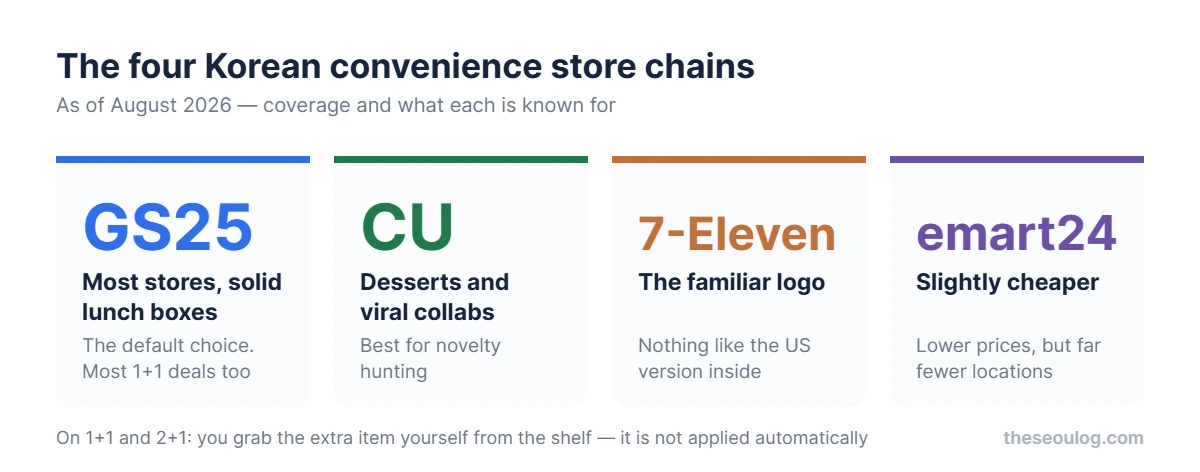
| Chain | Known for | Verdict |
|---|---|---|
| GS25 | Most stores, solid lunch boxes | The default |
| CU | Desserts, viral collab products | Best for novelty hunting |
| 7-Eleven | The familiar logo | Nothing like the US version |
| emart24 | Slightly cheaper | Fewer locations |
✔ Walk into whichever one is closest
Honestly, for a visitor the differences are marginal. Walk into whichever one is closest—the part worth your attention is the next section.
✔ Here’s the question that comes next. “The Olive Young Korea Guide Where the Passport Matters More Than the Basket” picks up right where this leaves off.
The 1+1 System: Free Stuff Hiding in Plain Sight! Buy One and You Paid Double
✔ Here’s the part most tourists miss
Shelf tags marked “1+1” mean buy one, get an identical one free—you just grab the second item yourself and bring both to the register. “2+1” means buy two, get a third free. Drinks, snacks and energy drinks always have something on promotion.
The catch: cashiers won’t remind you. Buy one item that was on 1+1 and you simply paid double. Check the shelf tag before the register, every time. Banana milk and canned coffee are perennial 1+1 candidates, and at ₩2,000 a bottle the savings are real over four days.
Under ₩3,000 in Four Minutes? The Ramyeon Machine Is Your Best Late-Night Meal
✔ Four minutes, under ₩3,000 all-in
Most stores have a small seating counter and a ramyeon cooking machine: buy any packet of instant noodles, dump the noodles and soup powder into the paper bowl provided, set it on the machine, and it auto-dispenses water and boils it.
This is freshly boiled ramyeon, a different food from pour-over instant cups. Locals add a ₩1,000 egg or a cheese slice from the fridge. After a late night out, this beats half the tourist-district restaurants, and I say that with a straight face.
A Full Meal for Under $5! What to Actually Buy
- Dosirak lunch boxes (₩4,500–6,500): rice, protein, sides. A full meal for under $5
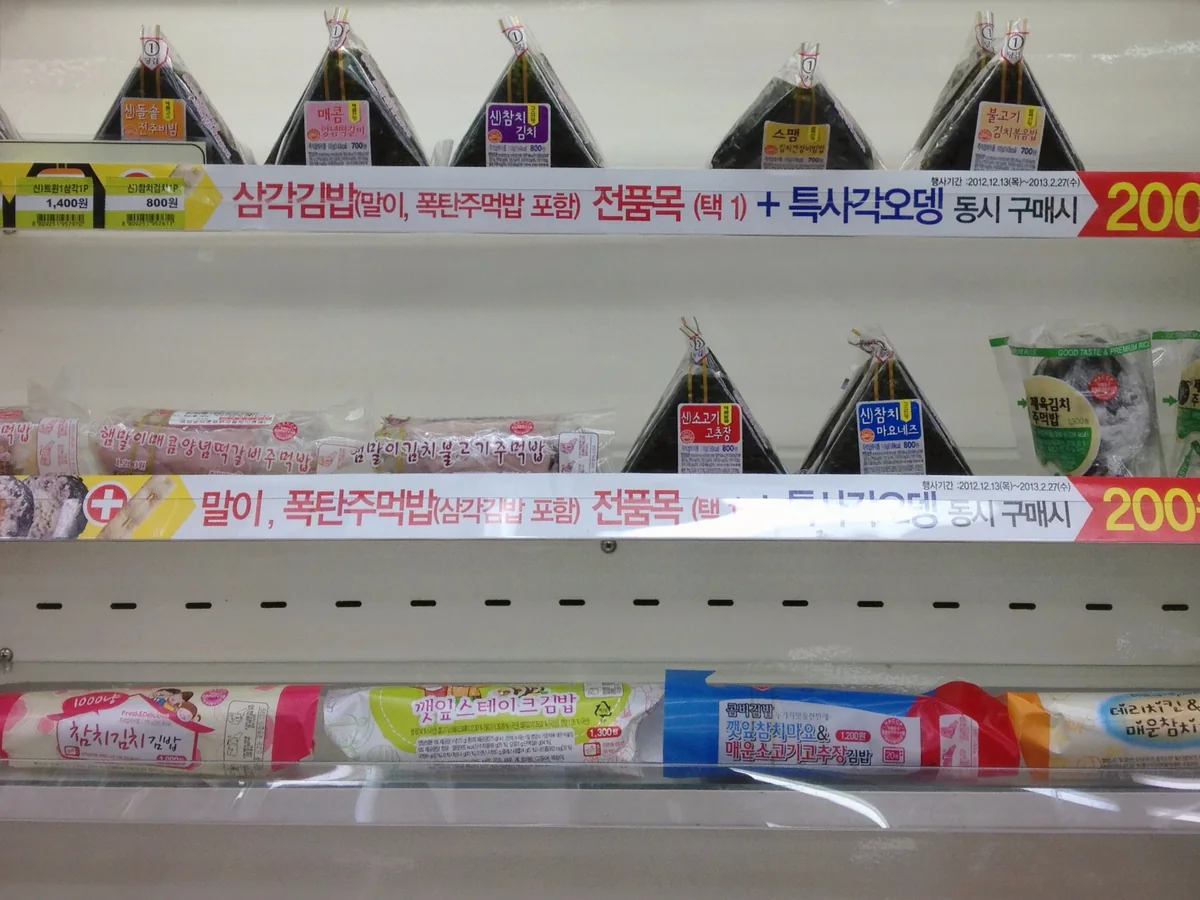
- Samgak-kimbap (triangle rice wraps, ₩1,300–1,700): follow the numbered peel instructions on the wrapper
- Banana milk: the yellow dumpy bottle. A national institution, not a gimmick
- Instant coffee sticks (Maxim) to take home — the office fuel of an entire country
Payment: tap any credit card or your T-money. Bags cost ₩100–500 and you’ll need to ask (“bong-tu ju-se-yo”). There’s no tipping, no tax added at the register.
It Tops Up Your T-money Too? It’s Not Just Food
✔ Half of it has nothing to do with eating
Half of what a Korean convenience store does has nothing to do with eating, and travellers miss most of it.
- T-money top-ups. Hand the card to the cashier, say the amount, pay. One catch that trips people up: top-ups are cash only — you can’t reload a transit card with a credit card here. Keep some ₩10,000 notes for this. (More on which card to get in the transit card comparison.)
- ATMs. Most branches have one, but foreign-card support varies by machine, not by chain. Look for the “Global” sticker on the front panel; if it isn’t there, walk to the next store rather than fighting the menu.
- Buying alcohol or cigarettes. You’ll be asked for ID, and a foreign driver’s license won’t do — it has to be your passport. Leave it in the hotel safe and you’re not buying beer that night.
- Microwave, hot water, seating. Free, no purchase gymnastics required beyond buying the food. Bus your own trash into the sorted bins on the way out.
Add it up across a trip and the convenience store is doing the work of a café, a bank and a transit kiosk. It’s a big part of why a Seoul trip costs less than people expect.
No Restrooms! The Honest Downsides
✔ Wordless isn’t rude—it’s normal
Don’t expect restrooms (there are none), warm hospitality (transactions are efficient and wordless—that’s normal, not rude), or the artisanal quality of Japanese konbini desserts. Fried chicken by the register varies wildly by store.
But as a breakfast strategy, here’s my recommendation: skip the $15–20 hotel breakfast entirely. A dosirak and banana milk downstairs costs $6, tastes like actual Korea, and funds a barbecue dinner by day three. That trade is the easiest money you’ll save on this trip.
Convenience stores abroad tell you what a society handles outside the home. Seating and a noodle machine in a Seoul branch are not accidents. Duck into one on your first night and see for yourself.
Frequently asked questions
How does the 1+1 deal actually work?
If a shelf tag says 1+1, take a second identical item to the register and the second one is free. 2+1 means buy two, get the third free. Staff will not point this out, so bringing one item to the counter simply costs you money. Drinks, snacks and energy drinks almost always have something on promotion — check the tag before you pick anything up.
What is the ramyeon machine and how do I use it?
Buy a packet of instant noodles, tip the noodles and seasoning into the paper bowl, put it in the machine and press the button. Water and heat are automatic and four minutes later you have a properly boiled bowl of noodles for under ₩3,000. Locals add an egg or a slice of cheese from the same store.
Does it matter which chain I walk into?
Not at traveller volumes. GS25 has the most branches and strong own-brand lunchboxes, CU leans into desserts and collaboration products, and emart24 competes on price — but the differences are noise for a short trip. Use whichever one is in front of you.
Can I top up my transit card at a convenience store?
Yes. Hand the card over, say the amount, pay. The catch is that top-ups are cash only — you cannot reload a T-money card with a credit card. Keep a few ₩10,000 notes on you for this.
Can I buy alcohol or cigarettes?
Yes, with ID. For foreign visitors that means your actual passport — a foreign driver license will not be accepted. If it is in the hotel safe, you are not buying beer that night.
What should I not expect from a Korean convenience store?
Restrooms, mainly — most branches do not have one. Prepared hot food and desserts are also more basic than in Japan, and staff typically scan your items in silence, which reads as unfriendly but is simply the norm. In exchange you get the ramyeon machine, genuine 1+1 savings and a branch on almost every corner.
This article is based on the official information below. Rules can change, so please check the original before you travel.
· Korea Tourism Organization official site
Information as of 2026-08-19 (official listings and Google Maps as shown at publication). Updated when things change.