- Nearly every cafe works the same way: order and pay at the counter first, take the vibrating buzzer,…
- Long stays are the point.
- The budget tier is the sleeper hit — a $1.
Who this is for
- Anyone who froze when asked “for here or to go?”
- People who tried sharing one latte in a busy cafe and felt the side-eye
- Anyone who went looking for an 8 a.m. coffee and found every indie cafe shut
Korean cafes are closer to selling seats than selling drinks.
Sitting for hours is assumed, outlets are free, and time limits barely exist. In exchange, one drink per person is the unwritten rule and you clear your own tray. The line between what’s provided and what’s your job is drawn in a different place than you’re used to.
“So where exactly is that line?” Walk in without knowing and you’ll be puzzled twice—once by how generous it feels, once by how indifferent. Let’s get into it.
Table of Contents
If You’ve Used a Shake Shack Buzzer, You Know It! The Ordering Flow
✔ Nearly every cafe works the same way
Order and pay at the counter first, take the vibrating buzzer, pick up your drink when it goes off, bus your own tray to the return station (반납구) when you leave. If you’ve used a Shake Shack buzzer, you already know the system.
You’ll always be asked “for here or to go?”—and here’s the part that surprises Americans: dine-in means a ceramic mug or glass, by law. Korea restricts disposable cups for seated customers, so asking for a paper cup “for here” gets refused at many shops. It’s regulation, not attitude.
No Korean needed: “iced americano” is practically a Korean word, and pointing at the menu works everywhere.
✔ If that wasn’t enough detail. “Seoul Coffee Is a Question of Neighborhood” goes further in.
Long Stays Are the Point, No Tipping Ever! Seven Rules That Differ From the US
- Long stays are the point. Students and remote workers camp for hours. No guilt, no side-eye
- One drink per person is the unspoken deal — two people sharing one latte in a busy cafe reads as freeloading
- Outlets and Wi-Fi are near-universal. Password’s on the receipt or the wall
- Water is self-serve from a station, free
- Pastry over cake: salt bread, bagels, and scones are the current holy trinity
- Closing times swing wildly — indie cafes wrap by 8–9pm, chains run past 11pm
- No tipping. Ever. There isn’t even a jar
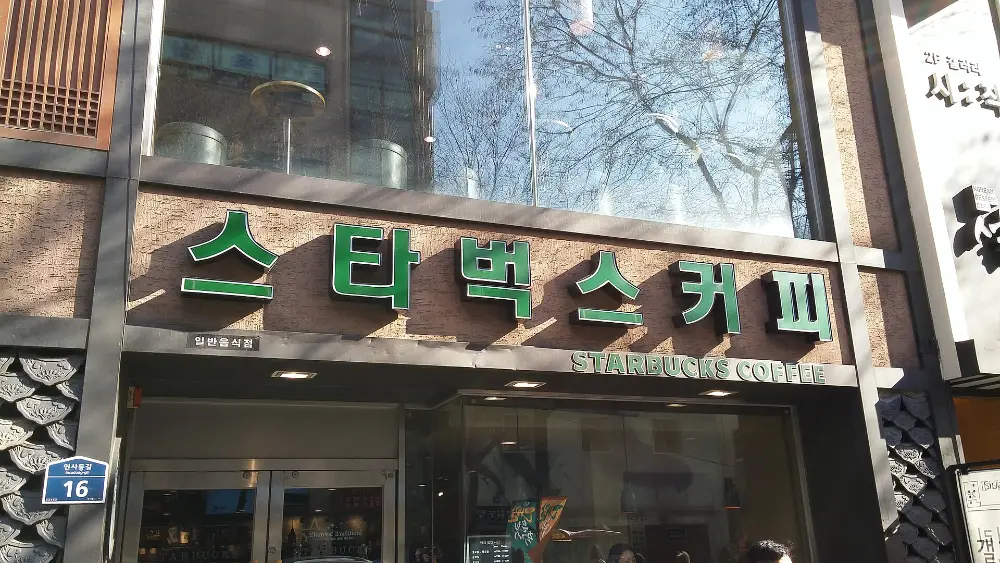
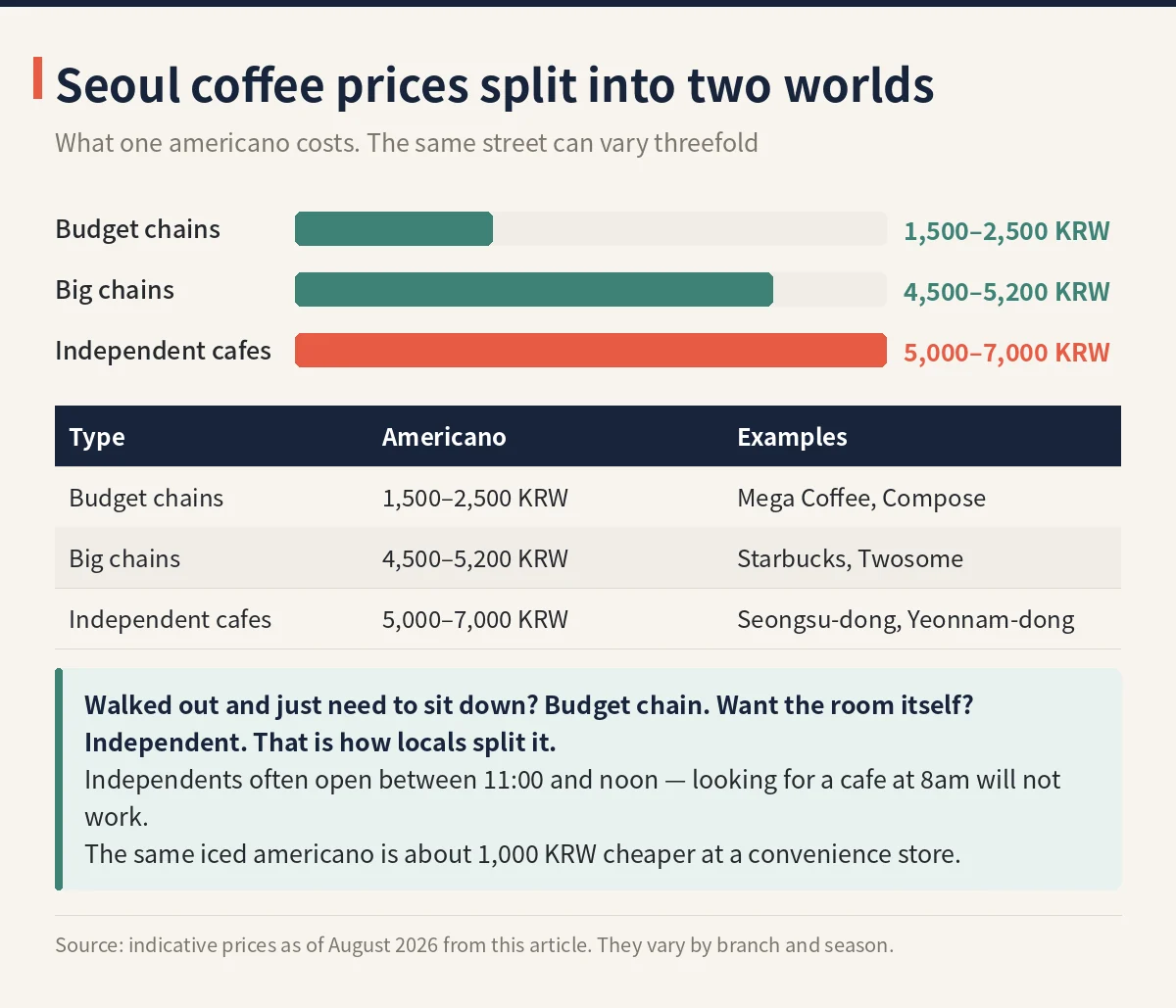
A Threefold Spread on the Same Americano! The Two-Tier Price System
| Tier | Americano | Examples |
|---|---|---|
| Budget chains | ₩1,500–2,500 ($1.10–1.80) | Mega Coffee, Compose |
| Major chains | ₩4,500–5,200 ($3.20–3.70) | Starbucks, Twosome Place |
| Indie cafes | ₩5,000–7,000 ($3.60–5) | Seongsu, Yeonnam hotspots |
✔ The budget tier is the sleeper hit
A $1.50 americano the size of a US large, perfectly drinkable. Locals use Mega Coffee for function and indie cafes for atmosphere. Copy that split: tired feet get the cheap giant coffee, afternoons get the pretty room.
No-Kids Zones and Empty Mornings! Two Things That Catch Visitors Out
✔ Some cafes don’t admit children
“No kids zones” are a real and much-argued-about fixture here, and they’re almost never announced online—just a small sticker at the door. If you’re travelling with a toddler, glance at the entrance before you settle in, or default to a chain. The big franchises don’t do this.
Mornings are thin. Independent cafes mostly open at 11am or noon, so the 8am coffee you were counting on isn’t there. Before 10am you’re choosing between the big chains and the budget brands — one more reason to know how to find the nearest one on Naver Map, since Google Maps won’t route you there.
And a habit worth noticing: people leave a laptop or a bag on the table when they go to the bathroom, and it’s still there when they come back. You’ll see it constantly. I’m not telling you to test it with your passport—but it tells you something about the room you’re sitting in.
If you just want something cold and cheap between sights, the convenience store next door sells the same iced americano in a cup for about a thousand won less.
One Cafe Stop a Day, as Infrastructure! Are the Instagram Cafes Worth It?
✔ Calibrate expectations for the viral cafes
Honest answer: the heavily-designed ones usually serve mediocre drinks at indie prices. Go for the space and the photos—they can be spectacular—but know you’re paying for architecture, not coffee.
What I’d actually recommend: build one cafe stop into every day of your itinerary, not as an indulgence but as infrastructure. Seoul tourism is heavy on walking, August is heavy on heat, and the cafe break is how this city paces itself. Pick one cafe district—Seongsu, Yeonnam, or Ikseon—and wander in wherever looks good. That beats any checklist.
Cafe customs track how a city spends time. Seoul lets you keep a table for hours because Seoul lives a large share of its life outside the home. Take the buzzer and borrow a seat!
Frequently asked questions
How do I order at a Korean cafe?
Order and pay at the counter first, take the vibrating buzzer, collect your drink when it goes off, and bus your own tray to the return station (반납구) on the way out. If you have used a Shake Shack buzzer, you already know the system.
Why does dine-in mean a ceramic mug?
Korean regulations restrict disposable cups for seated customers, so a dine-in order arrives in a mug or glass. Asking for a paper cup “for here” gets refused at many shops. It is regulation, not attitude.
How long can I sit with one drink?
As long as you like. Time limits are rare and people work on laptops for hours without anyone minding. The one convention to respect is one drink per person — two people sharing a single coffee in a busy cafe reads as rude.
What does coffee cost in Seoul?
The market is split in two. Budget chains such as Mega Coffee and Compose sell an americano for ₩1,500–2,500 in a cup the size of a US large. Starbucks and Twosome sit at ₩4,500–5,200, and the well-known independents in Seongsu or Yeonnam charge ₩5,000–7,000. Locals use the budget chains for function and independents for atmosphere.
Can I get coffee early in the morning?
Not from independents — most open at 11am or noon. Before 10am you are choosing between the big franchises and the budget brands, so plan your first coffee around a chain.
Are children allowed in Korean cafes?
Usually, but “no kids zones” are a real fixture here and almost never announced online — just a small sticker at the door. Travelling with a toddler, glance at the entrance before you settle in, or default to a large chain, which never operates this policy.
This article is based on the official information below. Rules can change, so please check the original before you travel.
· Korea Tourism Organization official site
Information as of 2026-08-21 (official listings and Google Maps as shown at publication). Updated when things change.