- T-money is Korea’s standard transit card, accepted on subways and buses nationwide.
- WOWPASS is a foreigner-focused card that combines a currency exchange kiosk, a prepaid spending card…
- The Climate Card (기후동행카드, gihu donghaeng kadeu) is Seoul’s unlimited-ride pass, and it now comes in …
Who this is for
- Anyone who can’t stop googling “T-money or WOWPASS?”
- People who’ve tried to top up at a convenience store and been turned away
- Anyone planning to criss-cross central Seoul for three days or more
Every Seoul trip hits the same question early: “Which transit card do I buy?” Here’s the thing—you can’t pick by price. The fare is practically identical whichever card you tap.
What separates them is how you load money and get it back. T-money takes cash only. WOWPASS lets you load by card and doubles as a currency exchange. The Climate Card is a flat-rate unlimited pass, but only inside a set area.
“So what do I actually decide on?” Not which is cheapest, but three things: how long you’re staying, how much you’ll ride, and how much cash you’re willing to carry. Seoulog ran the numbers by length of stay—find your trip below and go from there.
- 1. Subway 1,550 KRW! T-money Basics and the 2026 Fares
- 2. Skip the Money Changer? WOWPASS Puts Exchange and Prepaid in One Card
- 3. Unlimited Rides for 20,000 KRW a Week! The Climate Card Now Sells to Tourists
- 4. Still Being Recommended Somewhere? The Korea Tour Card Is Discontinued
- 5. Which Ride Is Break-Even? The Stay-Length Simulation
- 6. So Which One? The Verdict by Traveler Type
1. Subway 1,550 KRW! T-money Basics and the 2026 Fares
✔ Start with the basic card
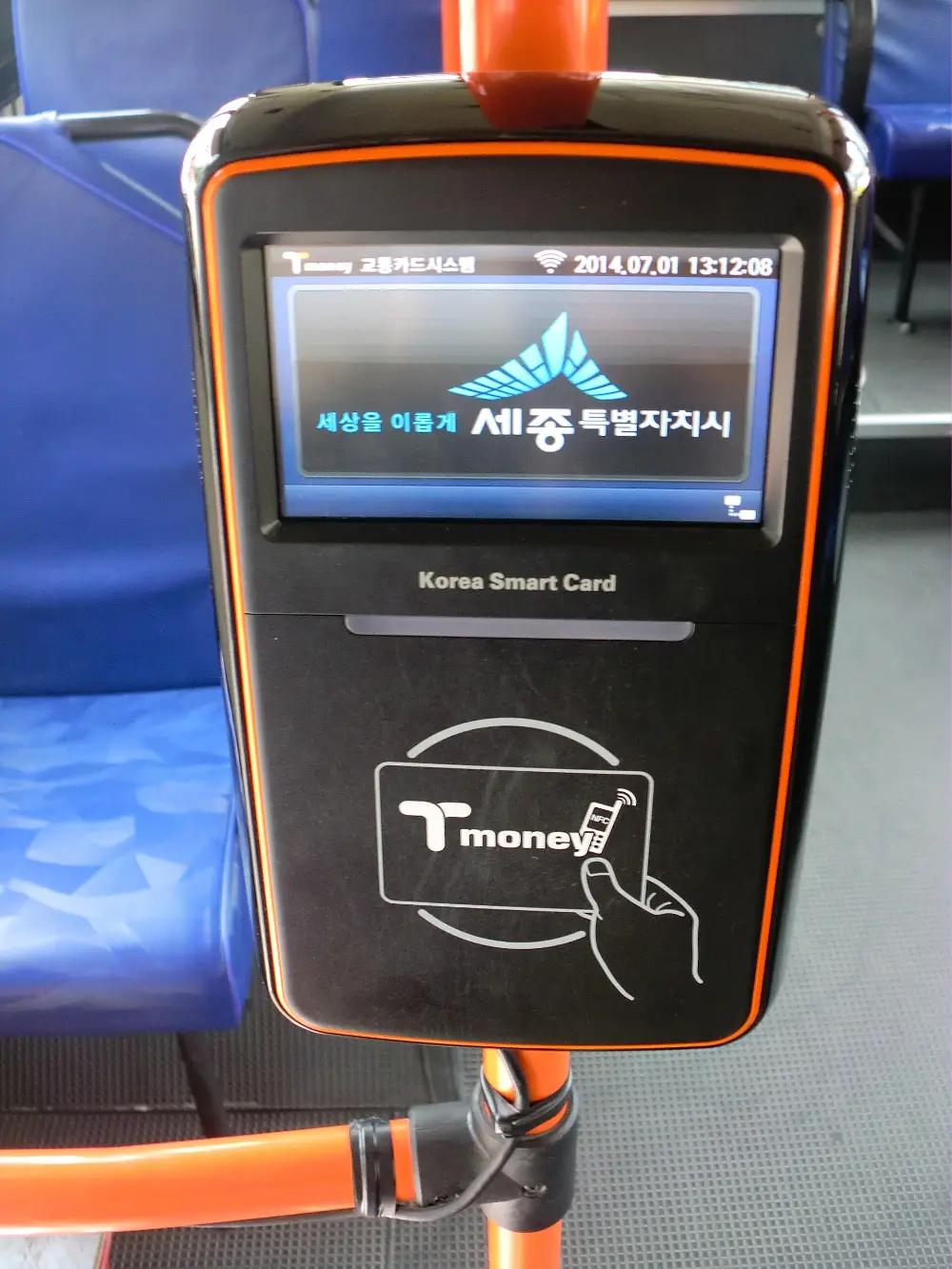
T-money is Korea’s standard transit card, good on subways and buses nationwide. The card itself costs 3,000–4,000 KRW (about $2.20–2.90) at convenience stores (CU, GS25) and station vending machines, and that fee doesn’t come back. Think of it as the price of admission.
Fares with the card: 1,550 KRW (~$1.10) per subway ride and 1,500 KRW (~$1.08) per city bus. Transfers within 30 minutes are discounted—60 minutes between 9 p.m. and 7 a.m. One condition: tap off when you get out. Forget the exit tap on a bus and the discount disappears, so this is the one thing to take home.
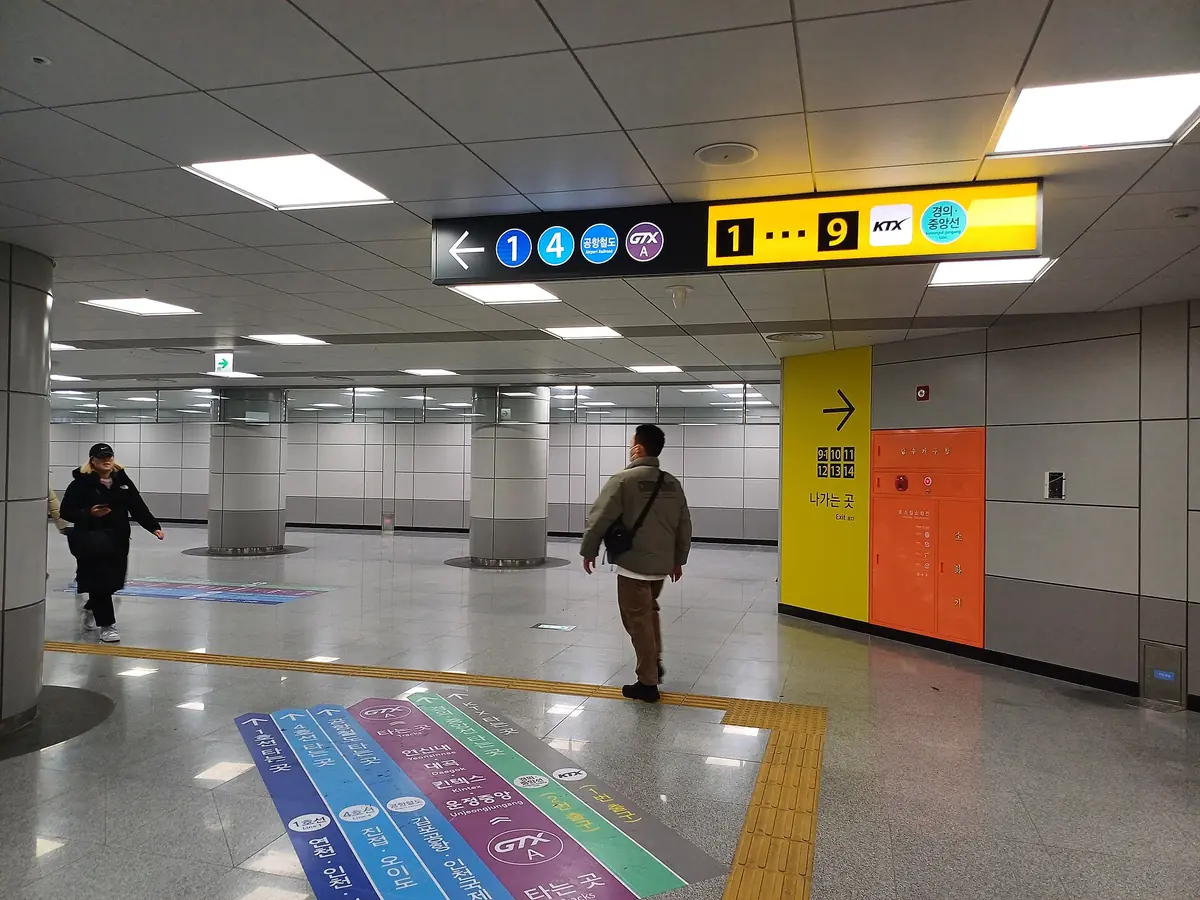
Topping up is where people get stuck. Convenience stores take cash only. The good news is that newer vending machines on subway lines 1–8 increasingly accept foreign-issued Visa and Mastercard, so you’re no longer forced to carry won for every recharge.
Refunds cost a 500 KRW fee. Balances under 20,000 KRW can be refunded at a convenience-store till; anything larger means a T-money Town counter, with limits that vary by location. Here’s the easy answer: spend it down. Check the balance on your last morning and use it up at a convenience store—that’s the clean ending.
✔ This isn’t the only answer. “Apple Pay T-money for Visitors” is the other option worth weighing.
2. Skip the Money Changer? WOWPASS Puts Exchange and Prepaid in One Card
✔ Three functions, one card
WOWPASS bundles a currency exchange kiosk, a prepaid spending card and T-money into a single piece of plastic, built for foreign visitors. Feed foreign cash—US dollars included—into a WOWPASS machine at the airport or a major station and it loads as won on the spot. The time you’d spend hunting for a money changer simply vanishes.
Issuance costs 5,000 KRW (~$3.60), or 4,500 KRW if you reserve ahead through the app. The rate tracks close to Seoul’s best street-level money changers, and there’s no separate exchange fee.
One trap, though. The T-money function on the back holds a separate balance. Money on the WOWPASS spending side can’t be moved across—the transit side needs its own cash top-up at a subway machine or convenience store. Spending balance for shops, T-money balance for rides; first-timers get caught here more than anywhere.
3. Unlimited Rides for 20,000 KRW a Week! The Climate Card Now Sells to Tourists
✔ Seoul’s unlimited-ride pass
The Climate Card (기후동행카드, gihu donghaeng kadeu) now comes in short-term versions built for tourists: 1-day 5,000 / 2-day 8,000 / 3-day 10,000 / 5-day 15,000 / 7-day 20,000 KRW (roughly $3.60 / $5.80 / $7.20 / $10.80 / $14.40). You can see it in the numbers—the longer the pass, the cheaper each day gets.
Add a one-time 3,000 KRW (~$2.20) card fee. You buy it at station vending machines, mostly with cash, though machines that take foreign-issued cards are gradually appearing. There’s a 30-day pass at 62,000 KRW too, but a short trip won’t earn that back.
4. Still Being Recommended Somewhere? The Korea Tour Card Is Discontinued
✔ Watch the date on what you read
The tourist-oriented “Korea Tour Card,” once the standard recommendation, is now listed as discontinued in current local guides. The awkward part is that plenty of older blog posts still say “buy this one.” Check the date before you follow any of them.
Its successor, a tourist-design T-money, works exactly like regular T-money. The only question is whether the shop has one in stock.
5. Which Ride Is Break-Even? The Stay-Length Simulation
✔ We assumed 3–4 rides a day
That’s a normal sightseeing pace. Rides are counted at 1,550 KRW each, and since the card fee is about 3,000 KRW either way, it’s left out of the comparison.
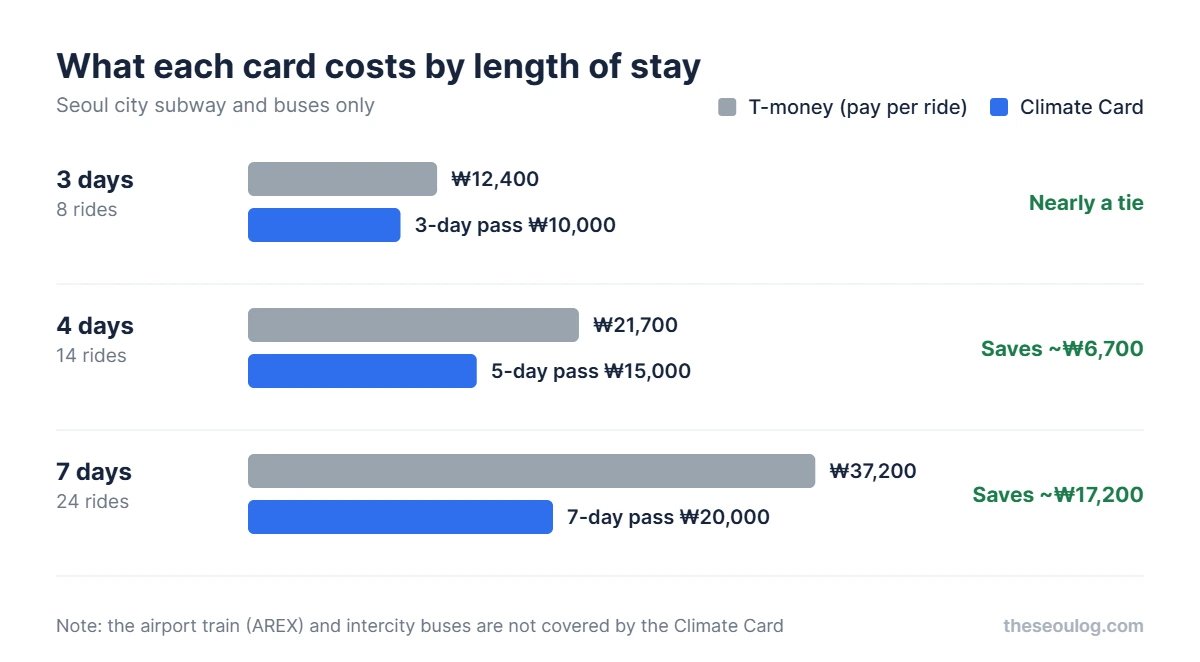
| Stay | Rides | T-money | Climate Card pass | Verdict |
| 3 days / 2 nights | 8 | ~12,400 KRW (~$8.90) | 3-day pass 10,000 KRW (~$7.20) | Close call. With airport legs or side trips, T-money wins |
| 4 days / 3 nights | 14 | ~21,700 KRW (~$15.60) | 5-day pass 15,000 KRW (~$10.80) | Climate Card saves ~6,700 KRW (~$4.80) |
| 7 days / 6 nights | 24 | ~37,200 KRW (~$26.80) | 7-day pass 20,000 KRW (~$14.40) | Climate Card saves ~17,200 KRW (~$12.40) |
The break-even points are easy to remember: 7 rides on the 3-day pass, 13 on the 7-day. If your trip is Seoul-centred, the Climate Card pulls ahead the moment you stay longer than three days. Flip it round: a light-moving 2–3 night trip doesn’t need the pass at all.
Getting from the airport into the city is covered in the Incheon-to-Seoul comparison, and finding your route once you’re tapping in is in the map app guide.
6. So Which One? The Verdict by Traveler Type
✔ Decide by the kind of trip you’re taking
A light-transit 2–3 night stay, or any itinerary with day trips outside Seoul: plain T-money is all you need, because it works everywhere. Want to skip the currency-exchange errand as well? WOWPASS, with T-money built in.
Riding three or more times a day and staying inside Seoul? The Climate Card short-term pass is the cheapest option, hands down. Pair it with a small T-money balance just for the airport train—that two-card combo is the one I’d hand a friend. It sounds fiddly, but in practice it’s “T-money for the two airport legs, Climate Card for everything else.” Not hard.
One honest caveat: the Climate Card only pays off if you actually ride that much. Plenty of visitors buy the pass, then walk everywhere because Seoul neighbourhoods are dense—and the pass money goes to waste. If you’re a walker, or your hotel sits in the middle of everything, don’t buy it.
- 2026 base fares: subway 1,550 KRW (~$1.10), bus 1,500 KRW (~$1.08)
- Short stay or trips outside Seoul → one T-money (or WOWPASS) card
- Seoul-only, 3+ rides a day → Climate Card tourist pass + small T-money for the airport
- Want exchange and transit combined → WOWPASS (5,000 KRW to issue)
- Korea Tour Card is discontinued; keep T-money balances under 20,000 KRW for easy refunds
Still torn at the airport? Grab a plain T-money at the convenience store and go. It’s never the wrong answer—at worst it costs you a few dollars against the perfect pick, and you’ll have spent zero holiday minutes doing card maths.
A transit card is hard to switch mid-trip. Choose again in the second half of your stay and you’ve already lost the balance and the fees. Settle on one card before you fly—this page is here for exactly that.
Frequently asked questions
Which card should I actually buy?
For a three-day trip T-money and the Climate Card come out nearly the same. From four days up, if you are mostly moving around central Seoul, the Climate Card wins; if your trip includes airport runs or day trips outside the city, stay with T-money.
What does the Climate Card cost?
1-day 5,000 / 2-day 8,000 / 3-day 10,000 / 5-day 15,000 / 7-day 20,000 KRW, plus a one-time 3,000 KRW card fee. You buy it at station vending machines, and payment is primarily cash.
Does the Climate Card cover the airport train?
No. AREX and intercity buses are outside its coverage. Getting that wrong throws off the whole calculation, so plan airport transfers on T-money or a separate ticket.
What is the T-money base fare?
About ₩1,550 on card, with distance added on top. Changing lines inside the fare gates costs nothing extra, and subway-to-bus transfers are discounted if you tap within 30 minutes of getting off.
How is WOWPASS different?
It combines a currency exchange kiosk, a prepaid spending card and T-money in one piece of plastic. Feed foreign cash into a WOWPASS machine at the airport or a major station and it loads as won instantly. Issuance costs 5,000 KRW, or 4,500 KRW if you reserve through the app first.
Can I still get the Korea Tour Card?
No, it has been discontinued. Older articles still mention it, but there is no reason to factor it into your decision now.
Climate Card vs T-money: which is cheaper?
Do the arithmetic on rides. T-money charges about ₩1,550 per subway ride. A 3-day Climate Card is ₩10,000 plus the one-time ₩3,000 card, so it breaks even at roughly nine rides — three a day. The 5-day pass (₩15,000 + ₩3,000) needs about twelve rides, the 7-day (₩20,000 + ₩3,000) about fifteen. If you ride the subway or city buses three or more times a day inside Seoul, the Climate Card is cheaper; if you take the airport train or day trips outside the city, those are on T-money anyway.
Can the Climate Card be used as T-money?
No. It is a separate card that only covers Seoul subway lines within the city, Seoul city buses and Ttareungyi bikes. It cannot pay for the AREX airport train, Gyeonggi buses, taxis or shops. Most visitors carry both: a Climate Card for daily rides and a T-money card for everything else.
Sources: Seoul Metropolitan Government (Climate Card) / T-money official site / WOWPASS official service guide / The Korea Herald (June 2025 fare-hike coverage) / 2026 local guides (Korea Travel Lab, Ask Korea Travel, Korea Locally)
This article is based on the official information below. Rules can change, so please check the original before you travel.
· HiKorea (Korea Immigration Service)
Information as of 2026-08-11 (official listings and Google Maps as shown at publication). Updated when things change.