- 17 Okga-ro, Gangneung, Gangwon State. According to the notice on the door it opens at 11am and closes at 6pm.
- The pour-overs are Ethiopia Aricha G1, Ethiopia Abaya Geisha G1, Kenya Rukira AA and Tanzania Moshi AA, each at 7,000 won.
- There are only 2 reviews on Google Maps, so the sample falls far short of this site’s standard (★4.5 with 100 reviews).

Who wrote this
- Visited in person on Okga-ro in Gangneung in September 2026; every photo here was taken on the spot.
- Prices and the bean list come from photos of the on-site menu board, with the address checked on Google Maps on 2026-09-19.
- With only 2 reviews on Google Maps, the sample falls far short of this site’s standard (★4.5 with 100 reviews), and that is stated rather than glossed over.
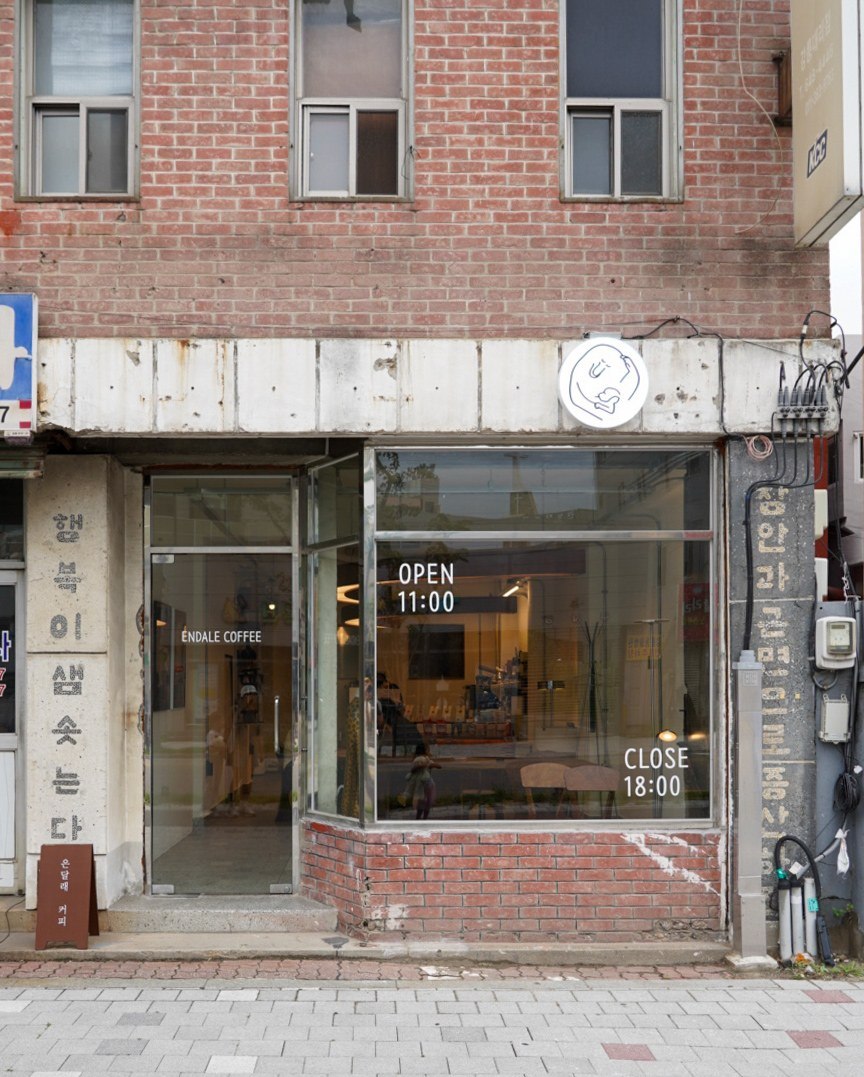
Okga-ro, Gangneung. A single pane of glass on the ground floor of an old building, with a small round sign above it. The glass door carries OPEN 11:00 and CLOSE 18:00.
The name is Eundalle, but the menu board reads endale coffee. Endale is a word that turns up often in Ethiopian personal names.
Step inside and the reason becomes visible. Photographs of coffee farms hang on the wall, a jebena patterned in the Ethiopian style sits on a shelf, and a giraffe figure stands in one corner.
The pour-over menu runs to four lines, and two of them are Ethiopian. Nobody has to explain where the owner went to learn coffee; the menu board says it.
The shop — ground floor on Okga-ro, open at 11, closed at 6
The address is 17 Okga-ro, Gangneung, Gangwon State, over on the old-town side of the city, where a quiet lane has picked up a single cafe. Google Maps has neither a phone number nor opening hours registered yet.
The notice taped to the glass door is the only source for the hours: OPEN 11:00 / CLOSE 18:00. It shuts at 6pm, so an evening coffee is not on the table. Further down the menu board there is a line that appears to read “closed Sundays”, but it falls on a fold, so this article will not state it as fact.
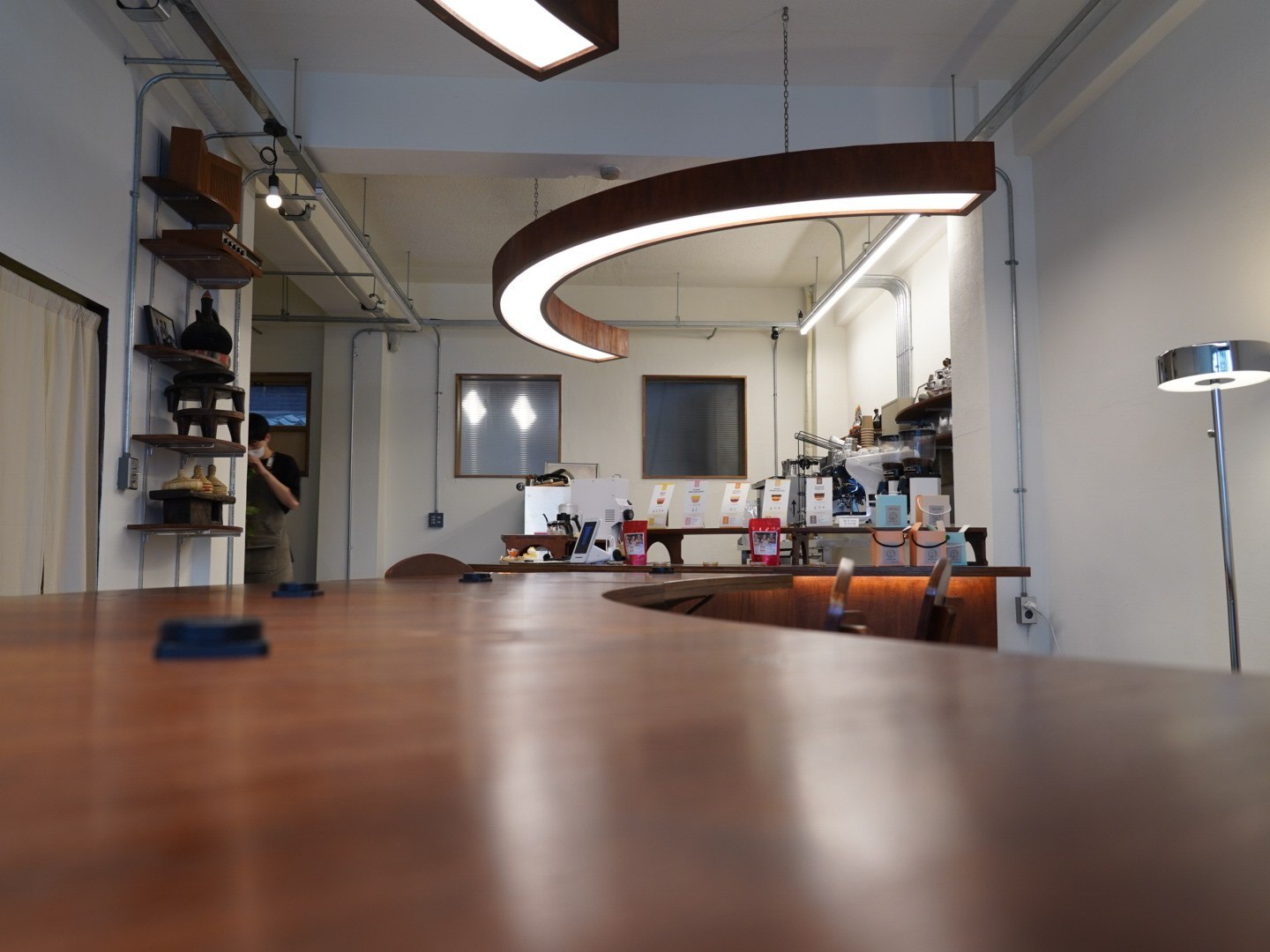
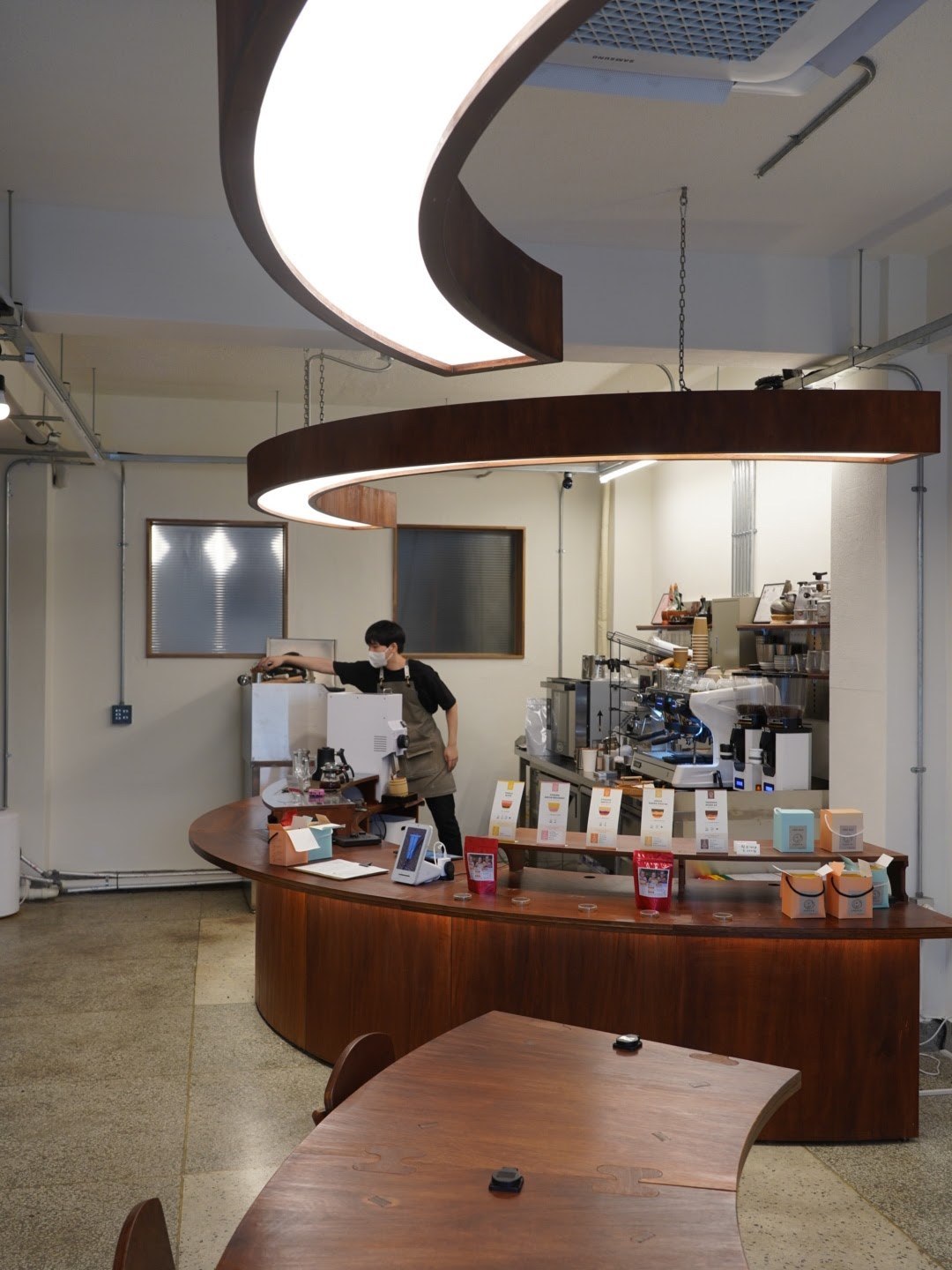
Inside it is wide and uncrowded. The tables are set well apart, and a long curved light fitting runs across the ceiling. The music is low enough that you hear a cup being set down.
| Item | Details |
|---|---|
| Address | 17 Okga-ro, Gangneung, Gangwon State |
| Hours | 11:00~18:00 (per the notice on the glass door) |
| Pour-over | Ethiopia Aricha G1 · Ethiopia Abaya Geisha G1 · Kenya Rukira AA · Tanzania Moshi AA — 7,000 won each |
| Note on the brew | “This is a soft, clean pour-over. If you prefer it stronger, please do tell us” (menu board wording) |
| Coffee | Eundalle latte · Eundalle single-origin latte [Ethiopia Koke Honey] · Africano · single-origin Africano · flat white · espresso · Einspänner latte · Spanish condensed-milk latte · vanilla bean latte — 3,500~4,800 won |
| Non-coffee | Grapefruit ade and grapefruit tea / lemon ade and lemon tea at 5,000 won each · rooibos bilberry and Serenity tea at 4,000 won each |
| Dessert | Corn tart (SOLD OUT on the day of the visit) |
| Rating | 2 reviews on Google Maps — far below this site’s 100-review standard, disclosed in the article |
Ethiopia — in the name, on the shelf, on the menu board
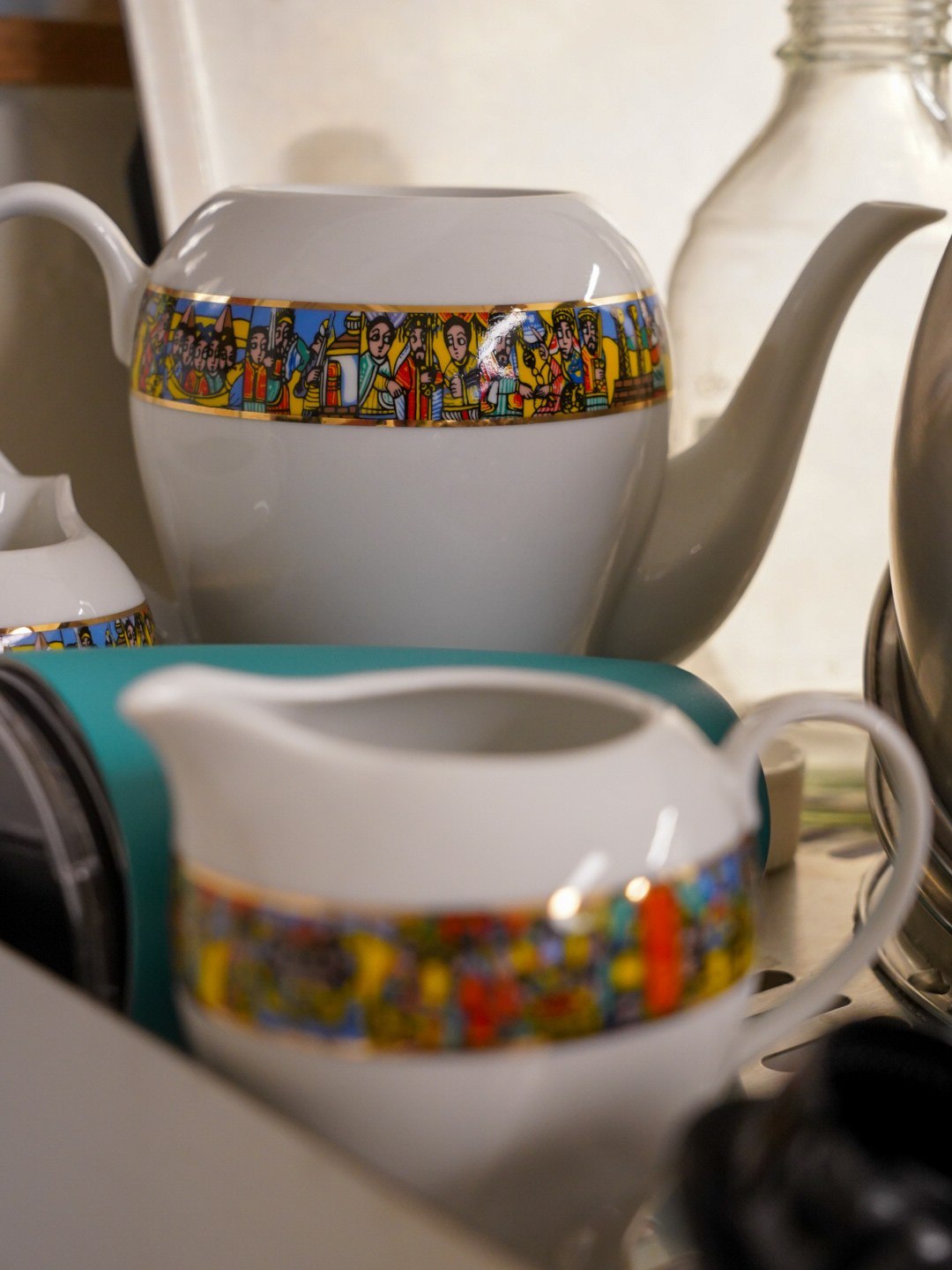
On the shelf sit a jebena and cups patterned in the Ethiopian style, with strong bands of colour running around the neck and the handle — the shape of the vessels used in an Ethiopian coffee ceremony.
Photographs of coffee farms and cherries hang on the wall, with a long-necked giraffe figure standing beside them. It reads less like an interior styled to an African theme and more like someone who went there setting down what they brought back.
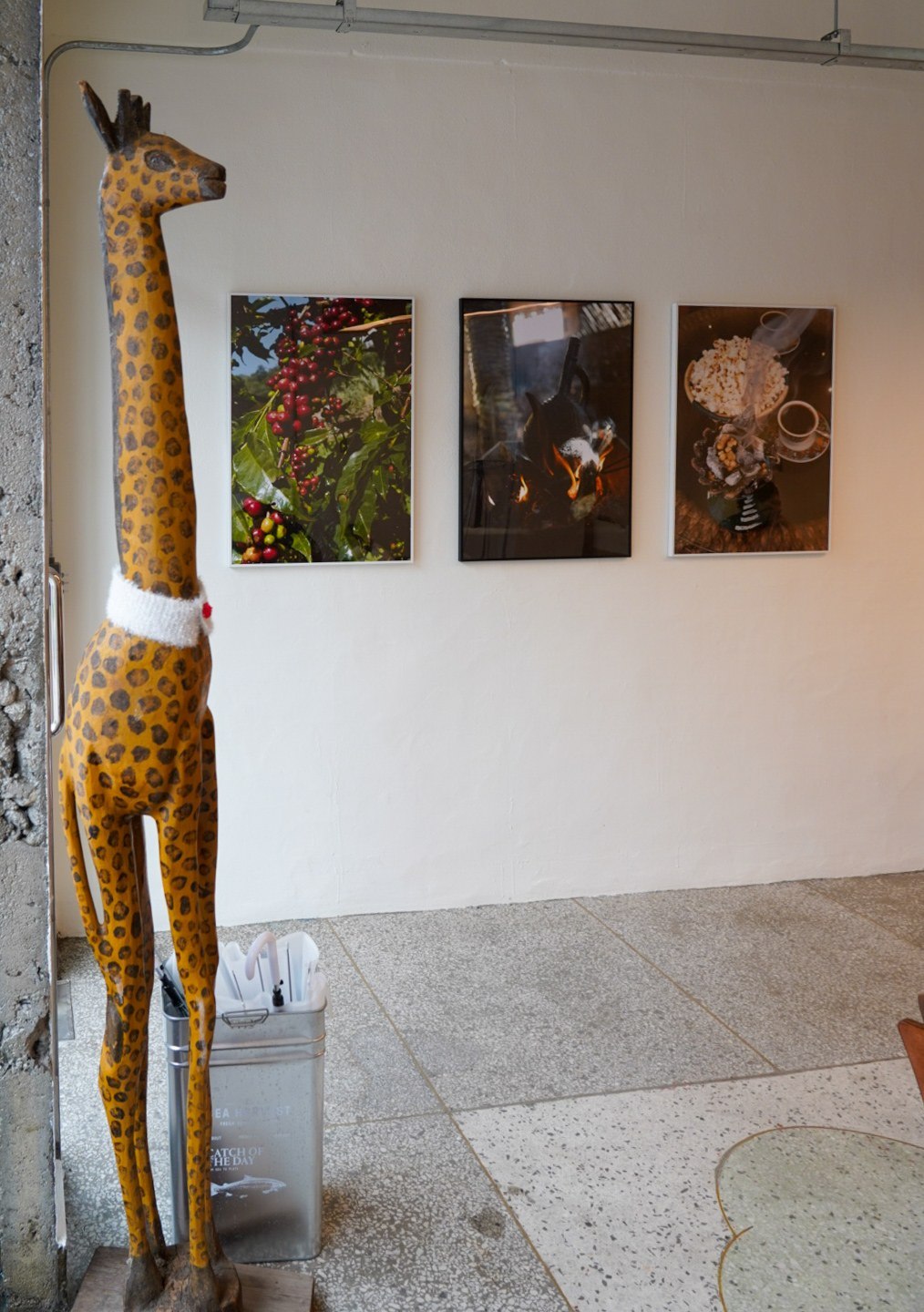
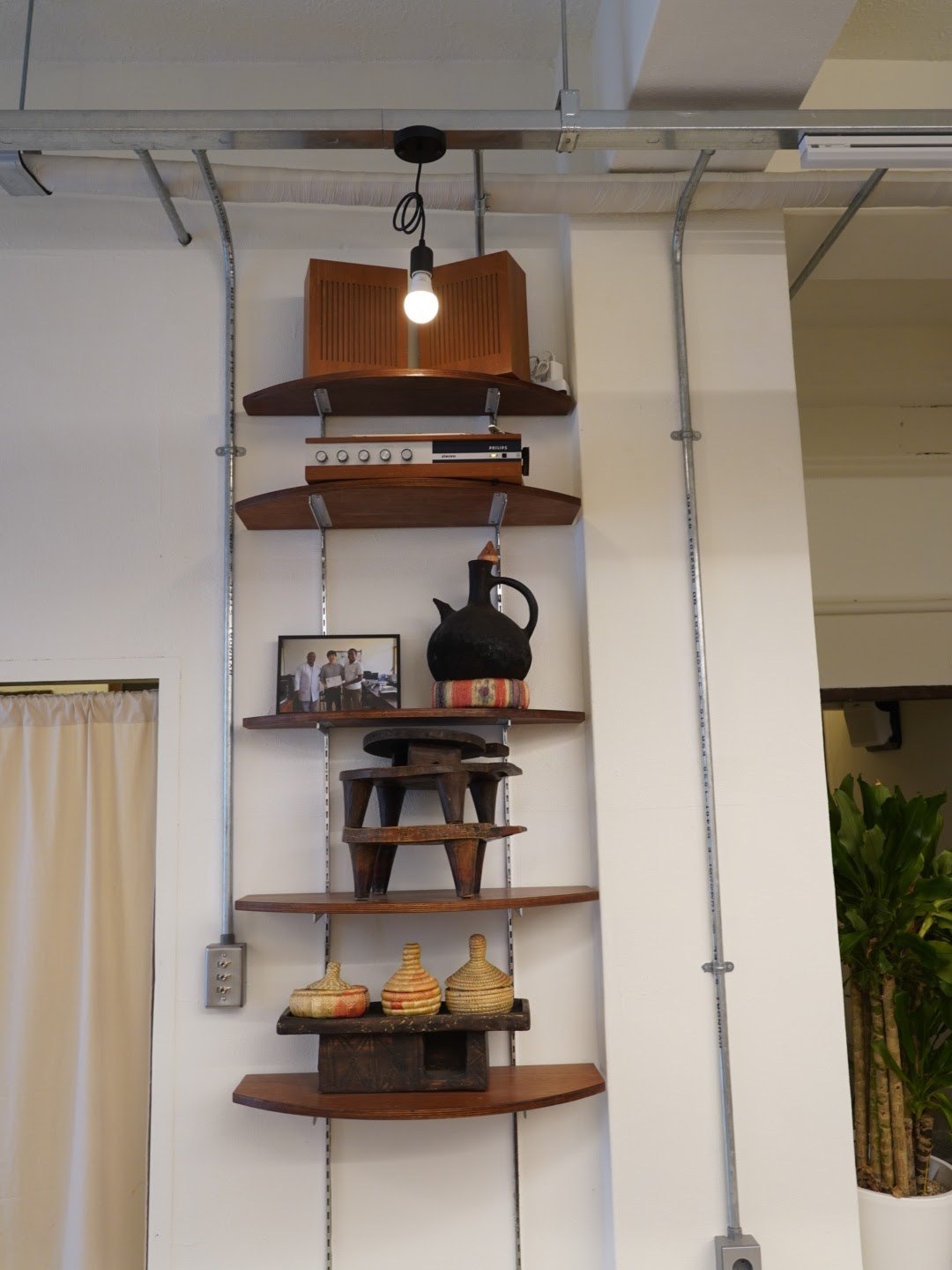
Four pour-overs at 7,000 won each — the bean list is the character of the place
The pour-over column on the menu board runs to four lines. Copied out, they read as follows.
- Ethiopia Aricha G1 — 7,000 won
- Ethiopia Abaya Geisha G1 — 7,000 won
- Kenya Rukira AA — 7,000 won
- Tanzania Moshi AA — 7,000 won
All four are East African. And underneath, in small type, one more line: “This is a soft, clean pour-over. If you prefer it stronger, please do tell us.”
That single line states the shop’s position exactly. The default is a light, clear extraction, and if you want it strong you are expected to ask. Saying which way you lean when you order makes it easier for everyone.
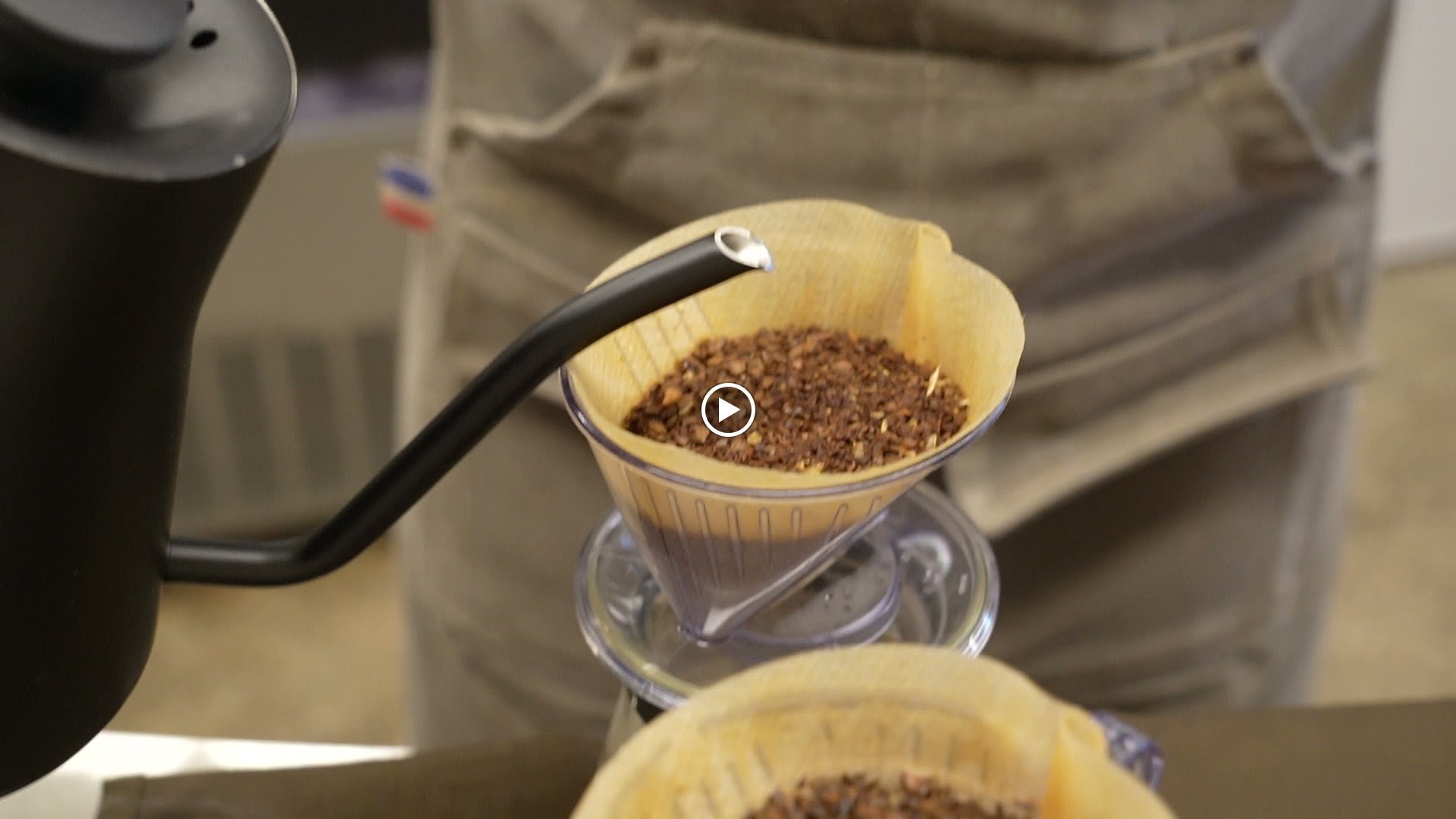
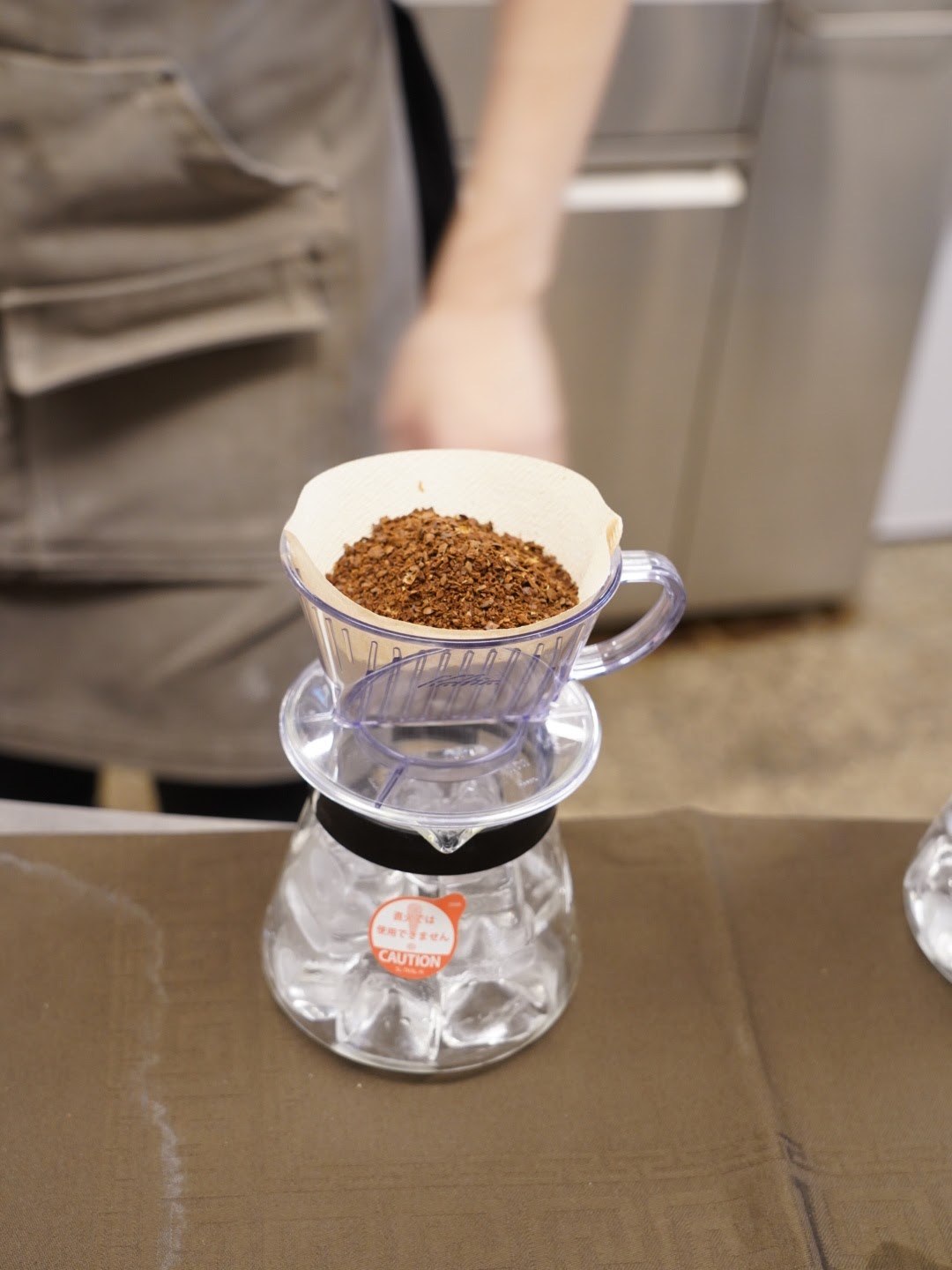
Each cup is brewed individually. The beans are ground into the dripper and wetted from the centre with the kettle. Aroma rises during the bloom — florals and citrus on the Aricha, brighter and lighter on the Geisha.
In the cup the colour is pale. If you are used to coffee brewed strong, the first taste can read as thin. But the acidity comes alive as it cools, so rather than finishing it hot, it is better to leave it a moment and go back for another sip.
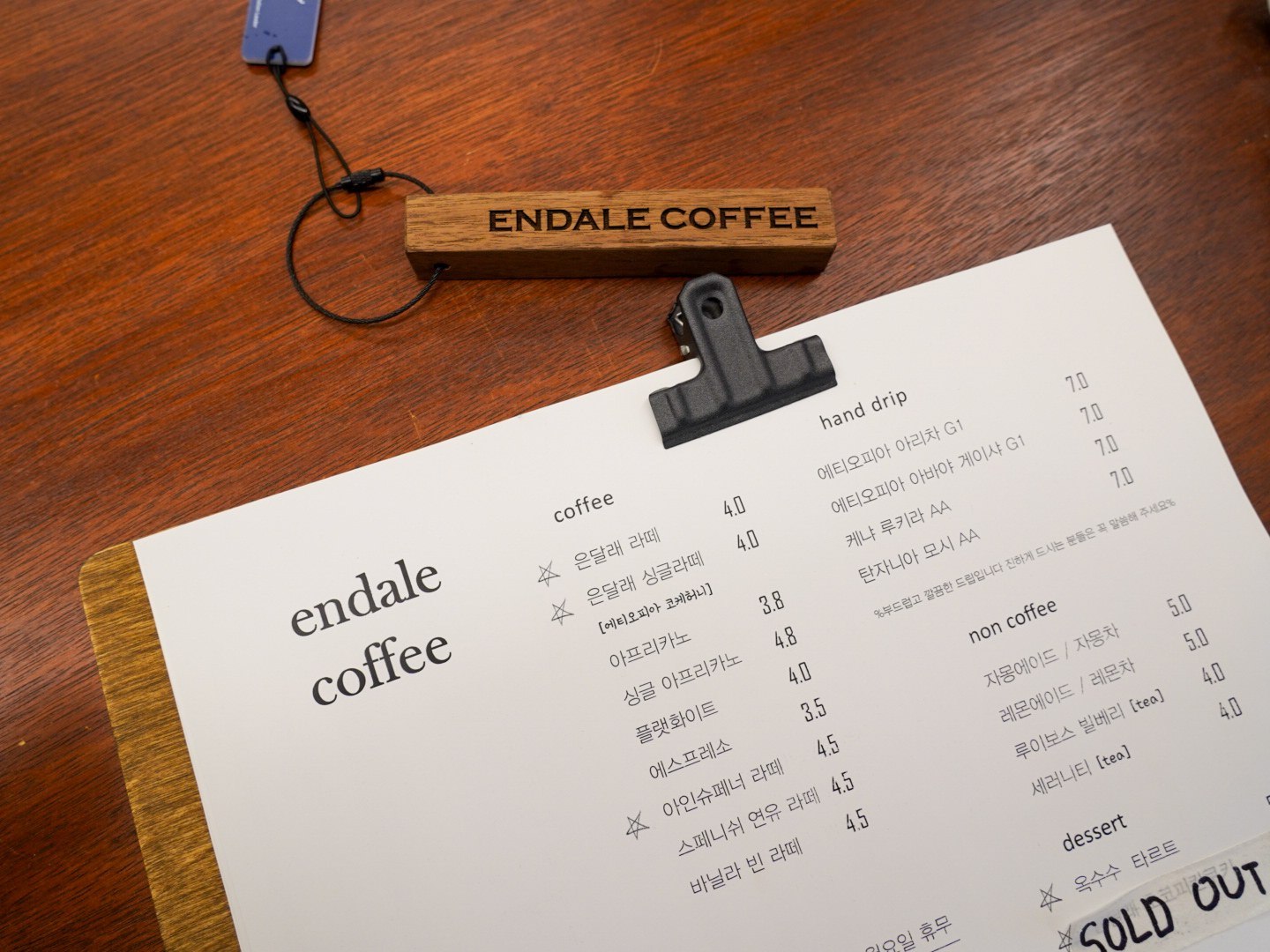
Espresso drinks — 3,500~4,800 won
The coffee column runs to nine lines: Eundalle latte, Eundalle single-origin latte (Ethiopia Koke Honey), Africano, single-origin Africano, flat white, espresso, Einspänner latte, Spanish condensed-milk latte, vanilla bean latte.
Prices fall between 3,500 and 4,800 won. Our photo of the menu board was taken at an angle, and in places the items and the figures are hard to line up row by row, so this article gives the range rather than individual prices.
Two lines carrying the shop’s own name stand out: the Eundalle latte and the Eundalle single-origin latte. The single-origin one names its bean in square brackets — [Ethiopia Koke Honey]. Not many cafes write down which bean goes into the latte.
On the non-coffee side, grapefruit ade and grapefruit tea, lemon ade and lemon tea are 5,000 won each, with rooibos bilberry and Serenity tea at 4,000 won each. The dessert column lists a corn tart, but on the day of the visit it carried a SOLD OUT sticker.
Map and practicalities — getting there, hours, and the rating
Address 17 Okga-ro, Gangneung, Gangwon State
Hours 11:00~18:00 (per the notice on the glass door) · no phone number registered on Google Maps
Being in Gangneung’s old town, it walks well with Gangneung Jungang Market or Wolhwa-geori. There appears to be no dedicated parking, so a nearby public car park or arriving on foot is the better plan.
The rating gets stated plainly. This site uses Google Maps ★4.5 with 100 or more reviews as its recommendation standard. As of September 2026, Eundalle Gangneung has only 2 reviews on Google Maps. The stars sit high, but the sample is nowhere near the standard.
Reviews take time to accumulate at a small cafe that has just opened. So this article rests on the menu board rather than the stars. All four pour-over lines are East African, the intended direction of the brew is written out on paper and posted up, and even the bean used in the latte is named. If you are after a specialty cup in Gangneung, those three things alone are reason enough to stop in.
FAQ
What time does it open?
Per the notice on the glass door, it opens at 11am and closes at 6pm. No opening hours are registered on Google Maps.
Which beans are available as pour-over?
Ethiopia Aricha G1, Ethiopia Abaya Geisha G1, Kenya Rukira AA and Tanzania Moshi AA — four in all, at 7,000 won each.
What if I want it brewed stronger?
The menu board says: “This is a soft, clean pour-over. If you prefer it stronger, please do tell us.” Just say how you like it when you order.
Why is it called Eundalle?
The menu board writes it as endale coffee. Endale is a name used in Ethiopia, and the shop keeps Ethiopian vessels and photographs of coffee farms on display.
How much is the coffee?
Pour-over is 7,000 won a cup. Espresso drinks fall between 3,500 and 4,800 won, but our photo of the menu board was taken at an angle and the figures could not be matched to items with confidence, so this article gives only the range.
- Google Maps — Eundalle Gangneung (address and rating; checked 2026-09-19)
- Photo of the on-site menu board (taken 2026-09; the source for the prices and bean list in this article)
- On-site photo — the opening hours notice on the glass door (taken 2026-09)
- Gangneung City Culture and Tourism — Gangneung travel guide
- Gangwon State official tourism guide
Prices and the bean list come from photos of the on-site menu board taken in September 2026. Address and rating were verified on Google Maps on 2026-09-19.