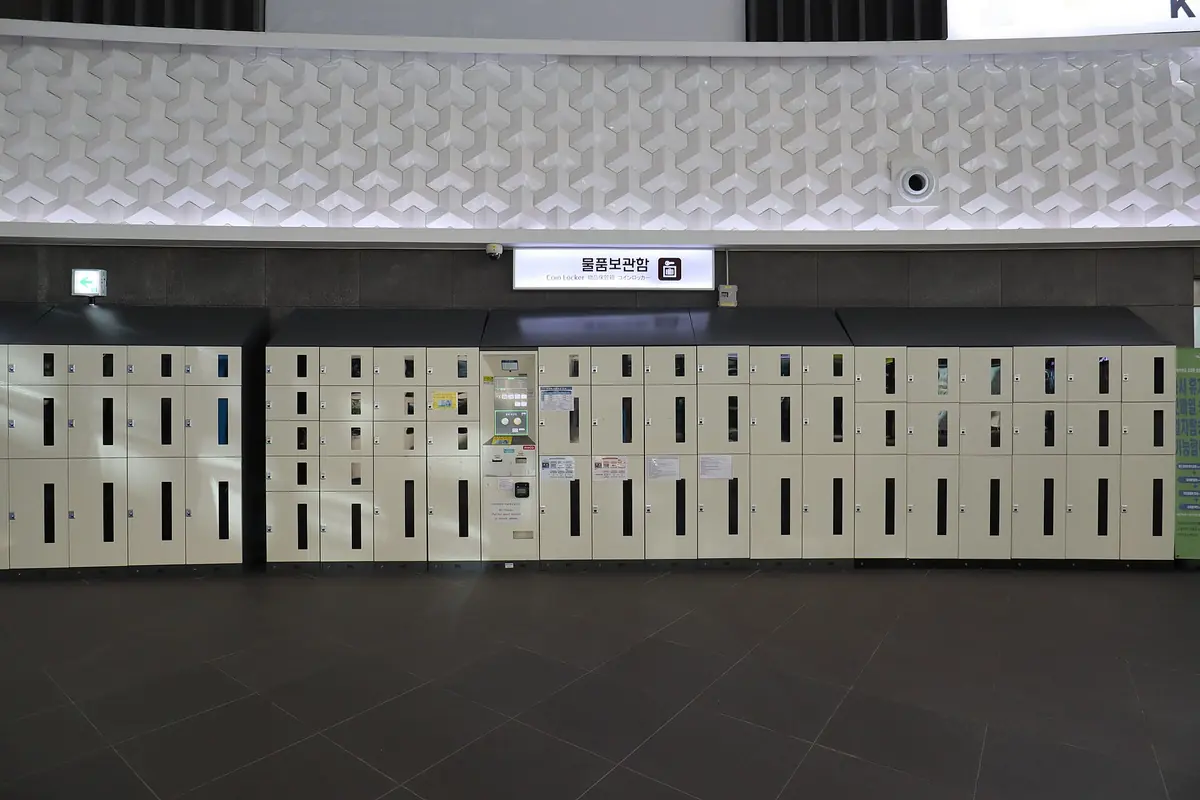
- Coming from the US, the locker part may be the surprise — most American transit systems removed lock…
- On the touchscreen kiosk, switch to English and tap “Store” Pick an open locker size, load your bag …
- Holding bags before check-in and after checkout is standard, usually free, at virtually every Seoul hotel.
Who this is for
- Anyone landing at 9 a.m. with a 3 p.m. check-in and a suitcase
- People on a late-evening flight who don’t want to drag a bag to their last dinner
- Families who’d rather send the luggage ahead and go straight to sightseeing
Your hotel will hold your bags. But a trip contains two windows the hotel doesn’t cover.
The hours before check-in on arrival day, and the hours after check-out on departure day. Together they add up to most of a working day, and how you handle them determines what your first and last days are worth.
“So where does the suitcase go?” Here’s the thing: Seoul is unusually good at this. Station lockers are dense enough that the city assumes you’ll drop your bag and keep moving. Let’s get into it.
Table of Contents
- Hotel First, Lockers Second! Your Four Options
- From ₩2,000 for a Few Hours! Subway Lockers (T-Locker), Step by Step
- Usually Free—but Mind the Hostel Lobby! Hotel and Guesthouse Storage
- Send the Suitcase Ahead for ₩20,000? Staffed Storage and Luggage Delivery
- Never Write Off Your Final Day! The Last-Day Routine That Works
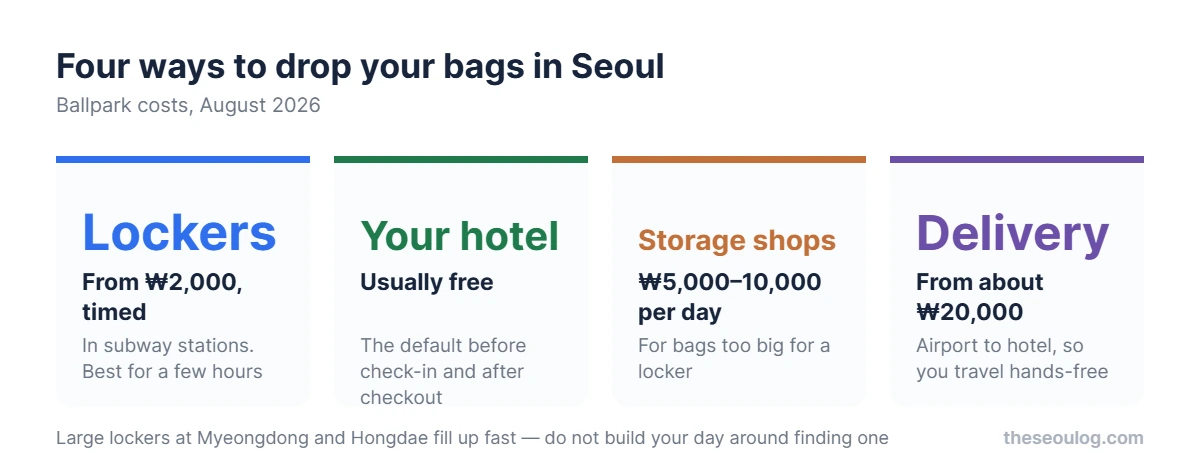
Hotel First, Lockers Second! Your Four Options
| Option | Ballpark cost | Best for |
|---|---|---|
| Subway lockers | from ₩2,000 (~$1.50), timed | A few hours, self-serve |
| Hotel front desk | usually free | Before check-in / after checkout |
| Staffed storage shops | ₩5,000–10,000/day | Oversized bags |
| Airport⇄hotel delivery | from ~₩20,000 | Traveling hands-free |
✔ Coming from the US, the lockers may be the surprise
Most American transit systems removed lockers decades ago. Seoul kept them, modernized them, and they’re everywhere.
✔ This one comes first, in order. Skim “Incheon Airport to Seoul by Train, Bus or Taxi” and the rest of this page lands better.
From ₩2,000 for a Few Hours! Subway Lockers (T-Locker), Step by Step
- On the touchscreen kiosk, switch to English and tap “Store”
- Pick an open locker size, load your bag
- Set a PIN or tap your T-money card to lock
- Pay by credit card, T-money, or cash depending on the machine
✔ Pricing is time-based
A small locker runs ₩2,000–3,000 for a few hours; even a jumbo locker is around ₩10,000 for a full day—roughly what a single airport luggage cart costs back home. Exact rates vary by station, and the screen shows them upfront.
One practical warning: large lockers at Myeongdong and Hongik University stations fill up by early afternoon on weekends. Claim one in the morning, or use a neighboring station (Euljiro 1-ga, Hapjeong)—it’s a few minutes’ difference.
Usually Free—but Mind the Hostel Lobby! Hotel and Guesthouse Storage
✔ Standard, and usually free
Holding bags before check-in and after checkout is routine at virtually every Seoul hotel. “Can you keep my luggage?” works everywhere.
The caveat is budget guesthouses and unstaffed hostels, where “storage” can mean an unlocked corner of the lobby. Take valuables with you—travel insurance rarely covers items left in shared spaces.
Send the Suitcase Ahead for ₩20,000? Staffed Storage and Luggage Delivery
✔ Oversized bags go to the staffed shops
Myeongdong and Dongdaemun have staffed storage shops for bags that won’t fit lockers, at ₩5,000–10,000 a day. Check closing hours—after they lock up, your bag stays overnight.
The option most visitors don’t know exists: same-day luggage delivery between the airport and your hotel, from around ₩20,000 per bag. Drop your suitcase at the service counter on arrival and it meets you at the hotel that evening. For families or anyone connecting straight to sightseeing, it beats hauling bags through subway transfer corridors by a wide margin. At current exchange rates it costs less than checking a second bag domestically in the US.
Boarding Pass Before the Train! The Better Last-Day Move—Check In at Seoul Station
✔ Lockers solve the middle of your last day—this solves the whole thing
Read on.
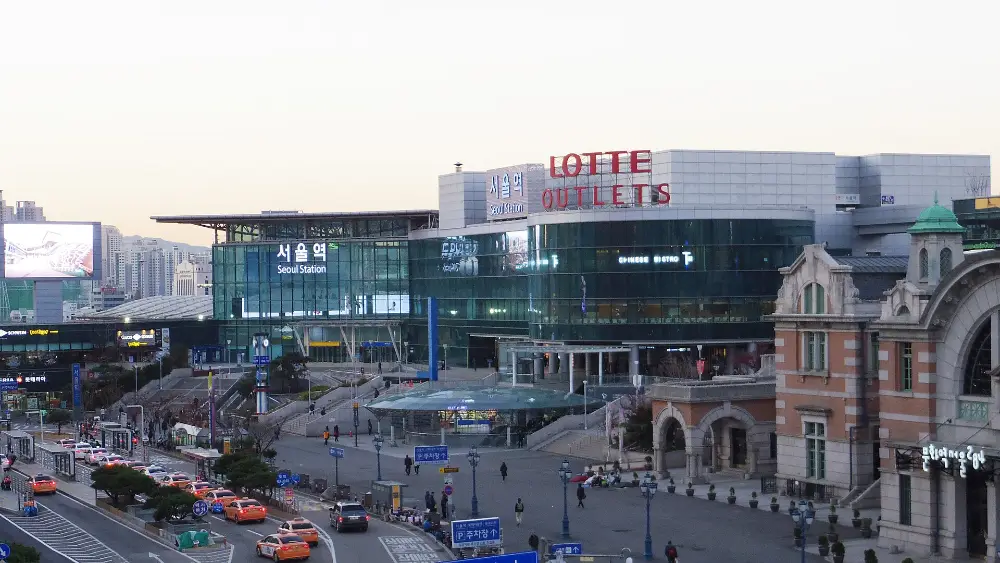
Seoul Station has a city airport terminal in the basement—reopened in August 2026 after a full renovation—where you can check in for your flight, drop your checked bags, and clear immigration before you ever get on the airport train. You walk out of there with a boarding pass and nothing but a daypack, and at Incheon you go straight to the gate area instead of queueing at a counter.
For a late-evening flight that changes the shape of the day completely: no locker, no dragging a suitcase to dinner, no rushing back to the hotel. Two things to check before you count on it, because both vary—which airlines participate, and the check-in cutoff (city terminals close their desks well before the airport does, typically hours ahead of departure). Confirm on the AREX site for your specific flight.
Getting there is trivial: it’s inside Seoul Station, which every line and the airport train already serve — see the subway guide if you’re still finding your way around, and the airport transfer comparison for what the ride out costs from there.
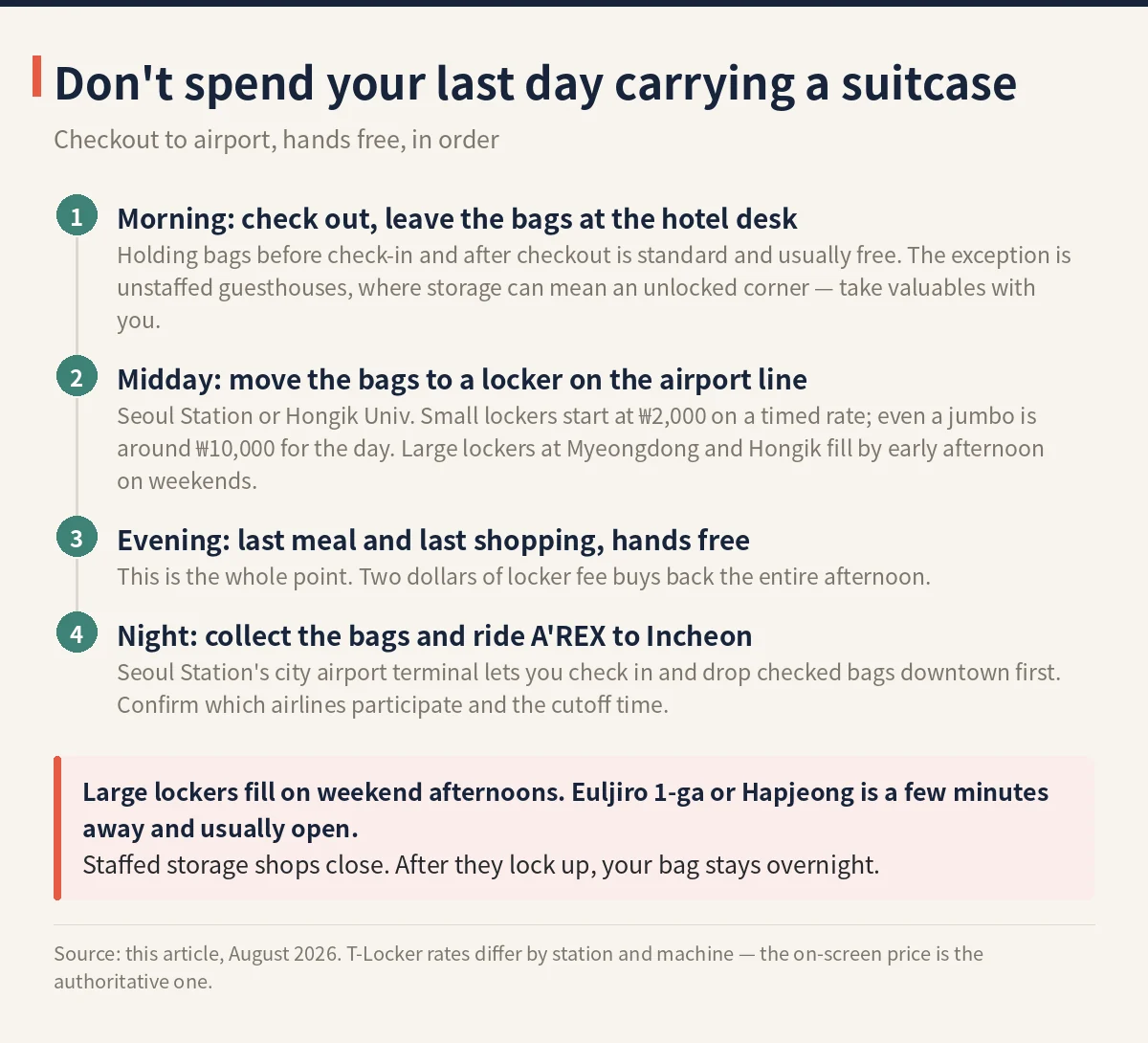
Never Write Off Your Final Day! The Last-Day Routine That Works
- Morning: check out, leave bags at the hotel desk, explore nearby
- Afternoon: collect bags, move them to a locker at an airport-line station (Seoul Station or Hongik Univ.)
- Evening: last meal and shopping hands-free, grab the bags, ride A’REX to Incheon
✔ Some airlines let you check bags downtown
If you fly out of Seoul Station’s city airport terminal network, that’s the move—availability changes by carrier, so verify on your airline’s site close to your date.
The bottom line: never write off your final day because of luggage. Two dollars of locker fee buys back six hours of Seoul, and that’s the cheapest upgrade this city sells.
The quality of a trip is set less by how many sights you reach than by what happens in the hours between them. The longer your hands are empty, the further the same itinerary goes. Drop the bag and keep moving!
Frequently asked questions
How much do subway lockers cost?
Pricing is time-based. A small locker runs about ₩2,000–3,000 for a few hours, and even a jumbo locker is around ₩10,000 for a full day. Rates vary by station and the screen shows them before you commit.
How do the lockers actually work?
Switch the touchscreen to English, tap “Store,” pick an open size and load your bag. Set a PIN or tap your T-money card to lock it, then pay by credit card, T-money or cash — the accepted methods vary by machine.
What if the large lockers are all taken?
Large lockers at Myeongdong and Hongik University stations fill up by early afternoon on weekends. Claim one in the morning, or walk to a neighboring station like Euljiro 1-ga or Hapjeong — it is only a few minutes out of your way.
Do hotels charge to hold bags?
Holding bags before check-in and after checkout is standard and usually free at virtually every hotel and guesthouse. Ask your hotel first and treat lockers as the fallback — that order saves both money and detours.
I do not want to drag a suitcase around on my last day.
Seoul Station has a city airport terminal in the basement, reopened in August 2026 after a renovation. You can check in for your flight, drop your checked bags and clear immigration there, then spend the day with nothing but a daypack.
Can anyone use the city airport terminal?
No — only certain airlines participate, and the check-in desks close well before the airport counters do, typically hours ahead of departure. Both details change, so confirm your specific flight on the AREX site.
Where are the coin lockers at Seoul Station?
There are two separate systems. Inside the KTX/Korail building, coin lockers sit in the main hall between exits 1 and 2, by the exit-2 restrooms and near the McDonald’s toward exit 3: about ₩1,000–3,000 per two hours by size, paid in cash, T-money or card, 05:00–24:00. In the Line 1 subway station the banks near exits 1, 2 and 3 are T-Locker units booked through the app (₩2,200 small / ₩3,300 medium / ₩4,400 large per four hours on weekdays). For oversized bags, the staffed T-Luggage counter on B1 near exit 1 takes anything from about ₩3,000–9,000 per four hours, 09:00–22:00.
Is there luggage storage in Itaewon?
Yes. Itaewon Station on Line 6 has T-Locker banks inside the station, booked in the app like every other subway locker, and the apps Bounce and Stasher list several cafés and shops around the station that hold bags for a flat daily fee from roughly ₩4,000–5,000. If you are leaving the same day, the staffed counters at Seoul Station are only three stops away on Line 4 via Samgakji.
How do I change the T-Locker app to English?
You usually do not need the app for that. The locker bank’s touchscreen has English, Chinese and Japanese buttons on its start screen — tap one, choose Storage, pick a locker, pay with T-money, a Visa or Mastercard, or Samsung/Kakao Pay (no cash), then set a six-digit code or use the QR code to open it later. The app is mainly for checking availability and booking a locker up to two hours ahead; its store listing and interface follow your phone’s language.
This article is based on the official information below. Rules can change, so please check the original before you travel.
· HiKorea (Korea Immigration Service)
Information as of 2026-08-23 (official listings and Google Maps as shown at publication). Updated when things change.