- 4 Taepyeong-ro 401beon-gil, Seogwipo-si, Jeju. Daily 11:00~21:00, listed as open year-round.
- Wang Jeong-chun, an ethnic Chinese from Shandong, started out selling hotteok around 1950; his son Wang Bok-an and grandson Wang Ok-hae have carried it through three generations.
- Google Maps ★3.8 (920 reviews), below this site’s standard (★4.5 with 100 reviews). The reasons for that are set out in the article too.
Who wrote this
- Visited Deokseongwon on Taepyeong-ro 401beon-gil in Seogwipo in September 2026, ordering and eating there.
- Prices come from photos of the in-store menu board taken in September 2026; address and hours were checked on Google Maps on 2026-09-19, and the founding history follows reporting by the Seogwipo Newspaper.
- The Google Maps rating is ★3.8 from 920 reviews, well below this site’s usual standard of ★4.5 with 100 reviews — stated openly in the article.
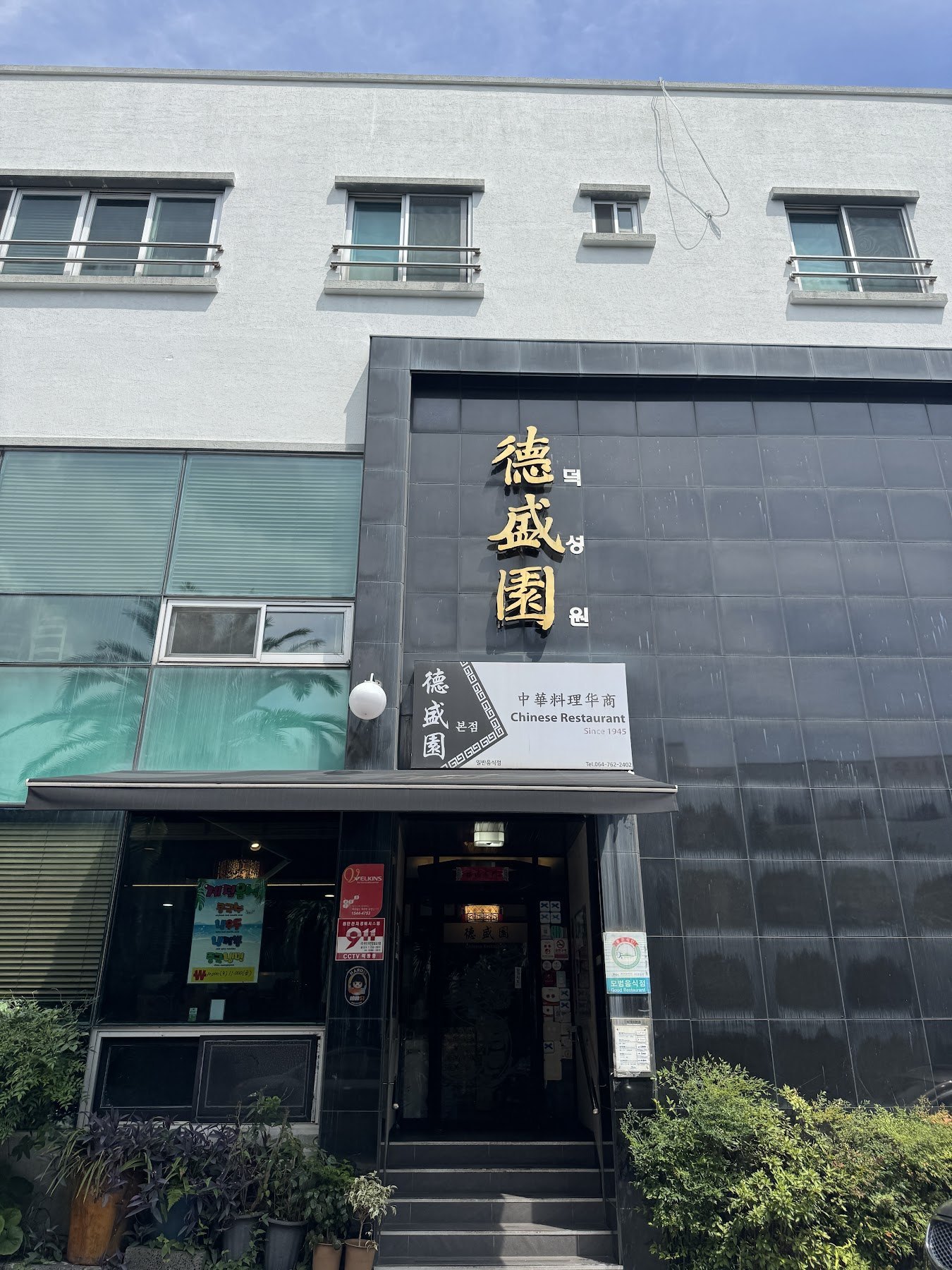
On a back lane off Taepyeong-ro in central Seogwipo, a brush-lettered sign hangs on the second floor of a building clad in black basalt tile. Deokseongwon.
When people name the oldest Chinese restaurant on Jeju, this is the one that always comes up. Except that it did not start as a Chinese restaurant.
According to the Seogwipo Newspaper, Wang Jeong-chun, an ethnic Chinese who had come over from Shandong, began selling hotteok on this spot around 1950. When the army’s 1st Training Centre was established at Moseulpo in January 1951, US forces supplied flour and bought what he baked, and with that money the hotteok stall became a Chinese restaurant.
From the days when a bowl of jjajangmyeon or jjamppong cost 20~30 won through to now, it has passed to his son Wang Bok-an and his grandson Wang Ok-hae, three generations in all. You can walk in without knowing any of that, but knowing it makes the colour of the jjajang sauce look a little different.
The place — from a hotteok stall to three generations on the same spot
The address is 4 Taepyeong-ro 401beon-gil, Seogwipo-si, Jeju. It is right in the middle of central Seogwipo, and in earlier decades the intercity bus terminal and the government offices were close by, so people gathered here. You can still walk to it from town. The phone number is 064-762-2402.
It opens daily from 11am to 9pm. Google Maps shows no weekly closing day. Still, with a place this old it is safer to ring ahead about holidays or unscheduled closures.
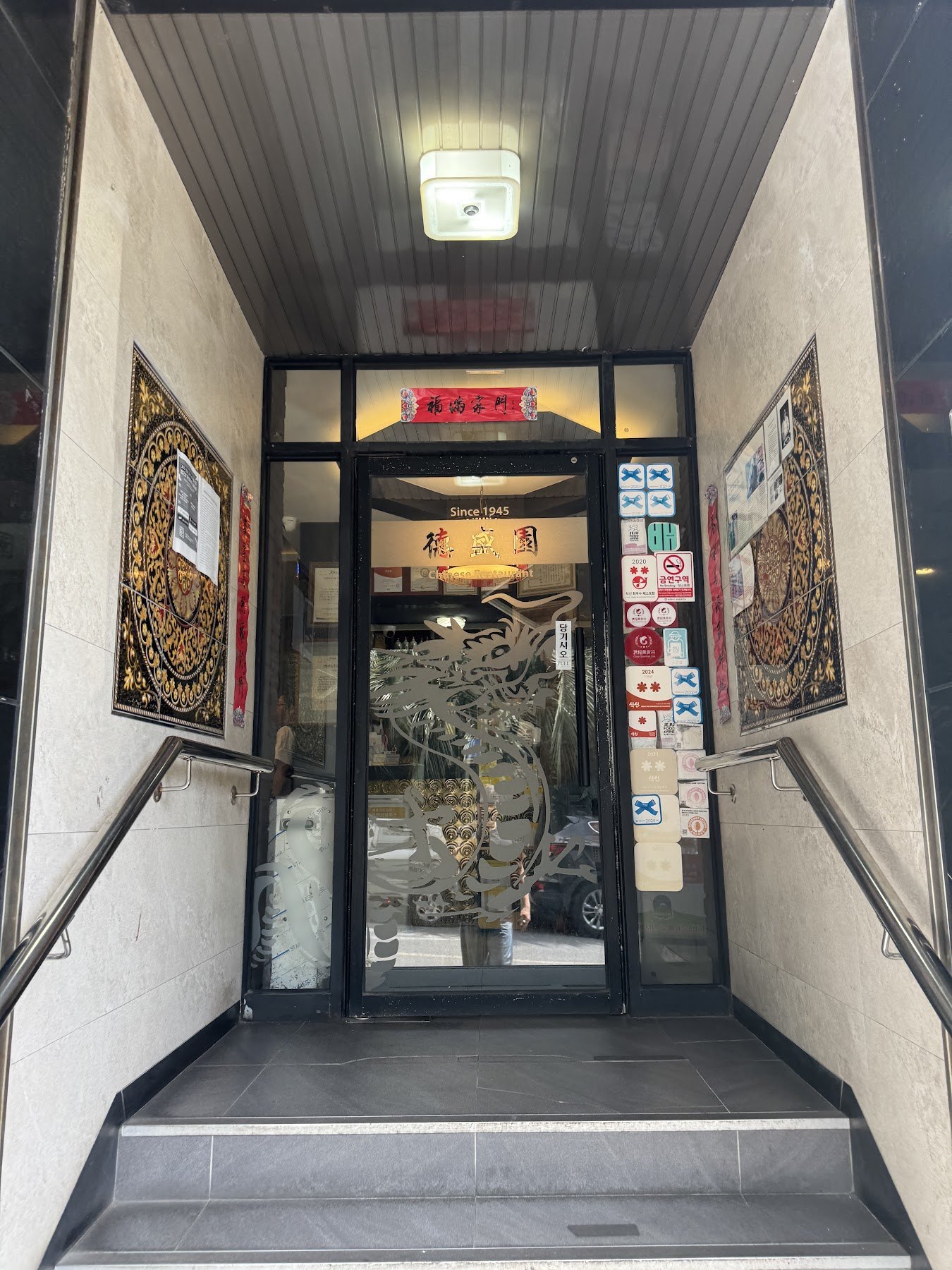
The history as set out by the Seogwipo Newspaper runs like this. Wang Jeong-chun, an ethnic Chinese from Shandong, sold hotteok near this spot around 1950. When the army’s 1st Training Centre moved to Moseulpo in January 1951 the customers multiplied, and the business found its feet once US forces were supplying flour and buying what came out of the oven.
After that the hotteok stall became a Chinese restaurant. A bowl of jjajangmyeon or jjamppong went for 20~30 won, said to be about the same as a bowl of beef gukbap in the neighbourhood. Today it is in its third generation with his son Wang Bok-an (86) and grandson Wang Ok-hae (53). Wang Bok-an says he was the first in the country to put oyster jjamppong and crab jjamppong on a menu (per his interview with the Seogwipo Newspaper).
There is no way to verify that claim, but it is a fact that blue crab jjamppong has a line of its own on the board. That is why, if you had to pick one thing here, your eye goes to that line.
| Item | Details |
|---|---|
| Address | 4 Taepyeong-ro 401beon-gil, Seogwipo-si, Jeju |
| Phone | 064-762-2402 |
| Hours | Daily 11:00~21:00 |
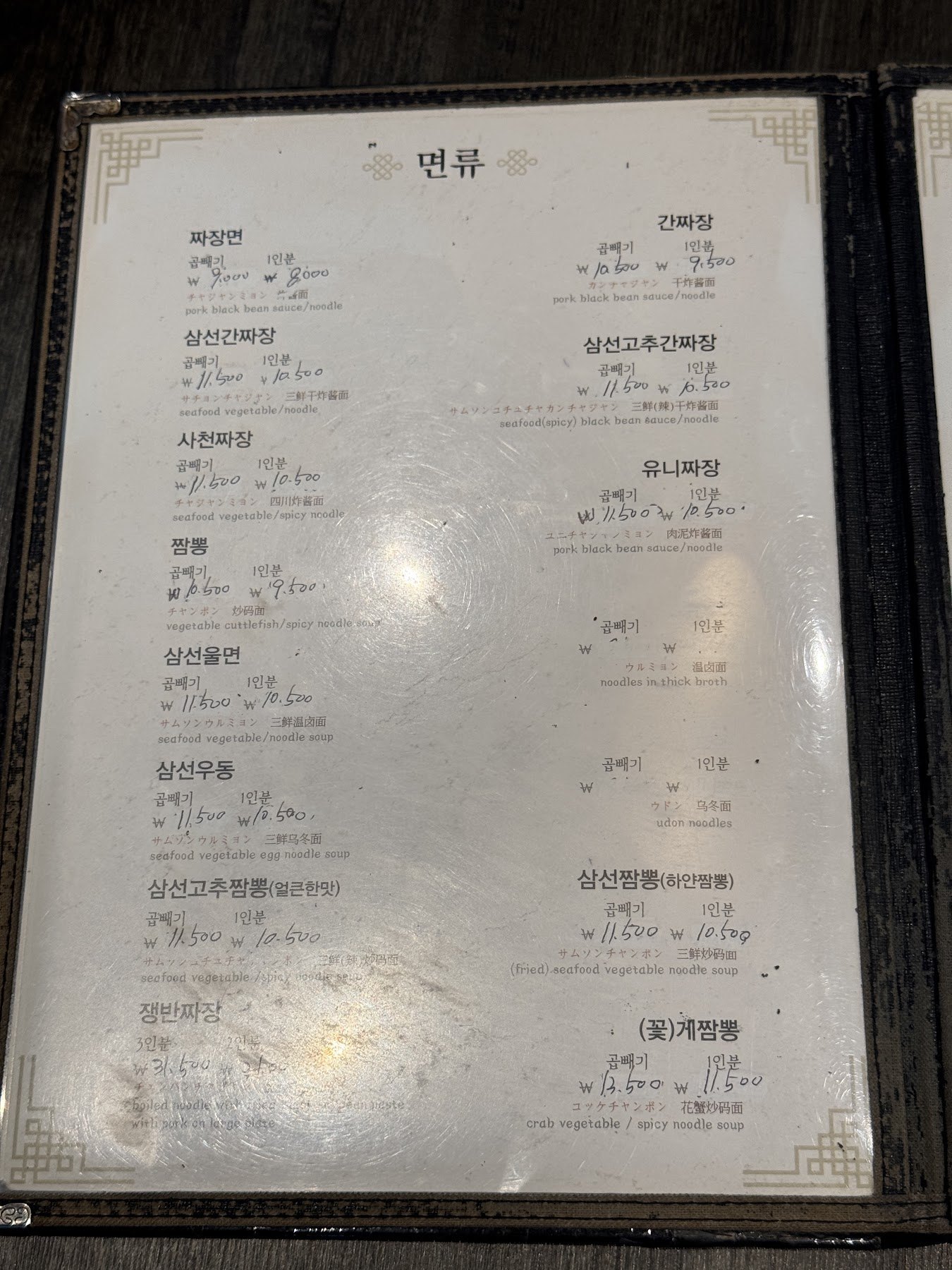
| Jjajang dishes | Jjajangmyeon 8,000 won · ganjjajang 9,500 won · samseon ganjjajang, Sichuan jjajang, yuni jjajang and samseon chilli ganjjajang 10,500 won each (large portion, add 1,000 won) |
| Jjamppong dishes | Jjamppong 9,500 won · samseon chilli jjamppong (hot) and samseon jjamppong (white) 10,500 won each · blue crab jjamppong 11,500 won |
| Other noodles | Samseon ulmyeon and samseon udon 10,500 won each |
| History | Founded by Wang Jeong-chun, an ethnic Chinese from Shandong (began selling hotteok around 1950) → son Wang Bok-an → grandson Wang Ok-hae; three generations |
| Rating | Google Maps ★3.8 (920 reviews) — below this site’s standard (★4.5, 100 reviews); disclosed in the article |
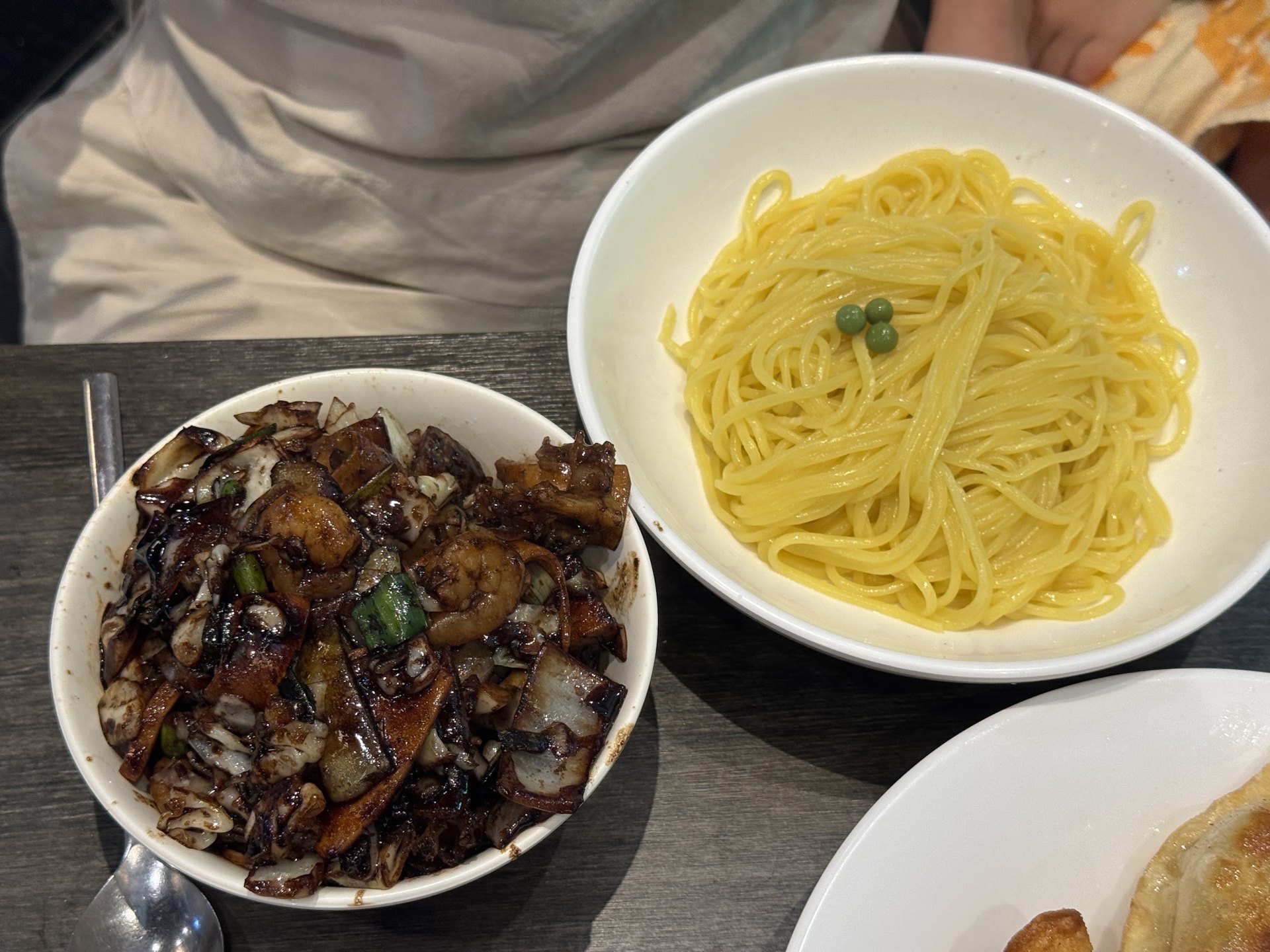
Ganjjajang 9,500 won — sauce and noodles served separately, the orthodox way
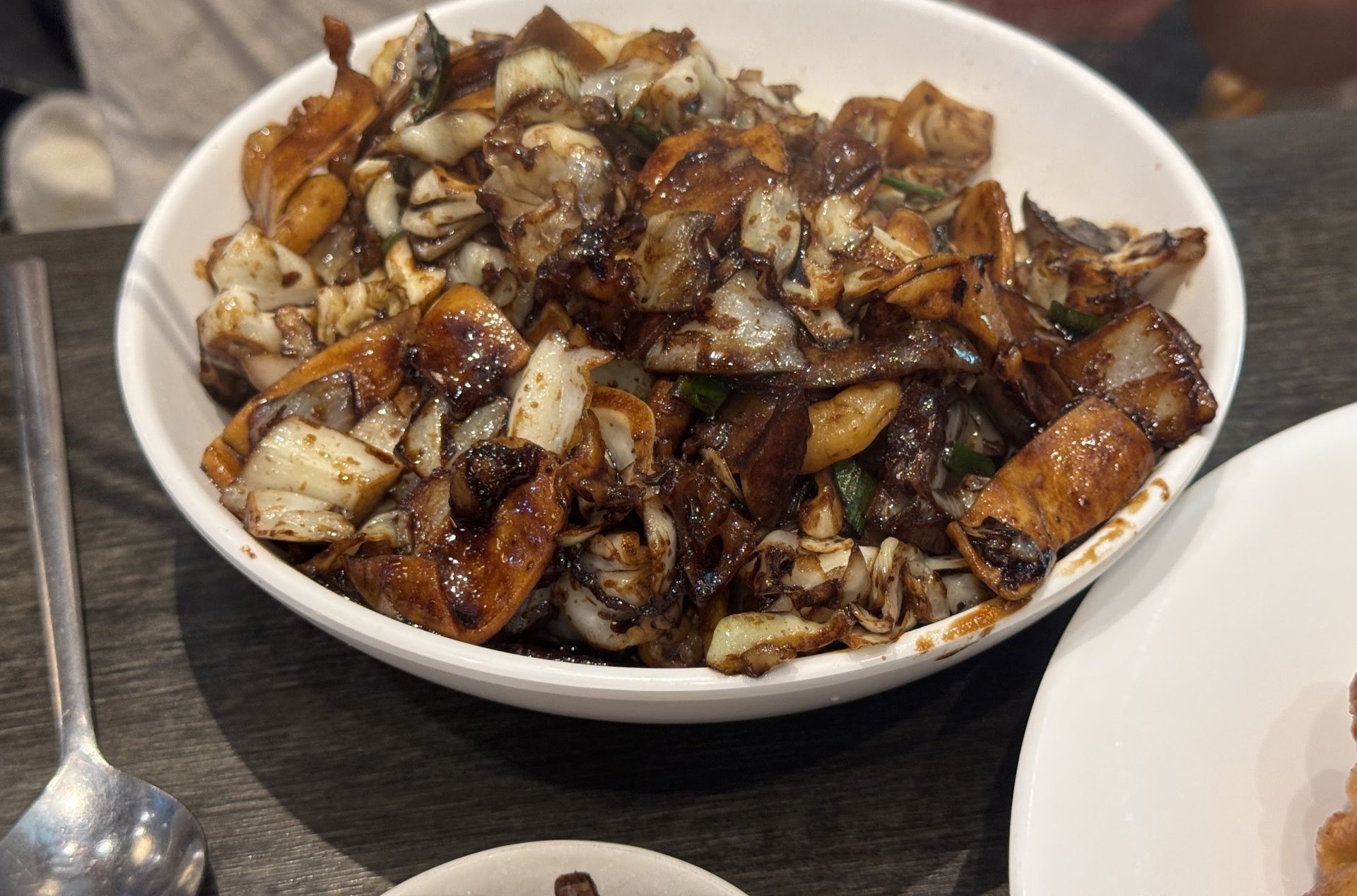
Ganjjajang is 9,500 won for one, 10,500 won for a large portion. It arrives the orthodox way: yellow noodles in one bowl, black sauce in another, kept apart.
The sauce is not thin. Onion, cabbage, courgette and pork go into a glossy jjajang in generous pieces, and because almost no starch slurry is used it sits on the noodles in clumps rather than running. Unlike the sweet-forward jjajang common now, salt and a toasted savour come first.
The noodles are boiled and then lightly oiled so they do not stick. Mix them and the sauce does not coat the noodles so much as lodge between them. When you have finished mixing, little oil is left in the bottom of the bowl.
The jjajang list runs long. Jjajangmyeon 8,000 won, ganjjajang 9,500 won, jjamppong 9,500 won, and samseon ganjjajang, Sichuan jjajang, yuni jjajang and samseon chilli ganjjajang at 10,500 won each. A large portion generally adds 1,000 won.
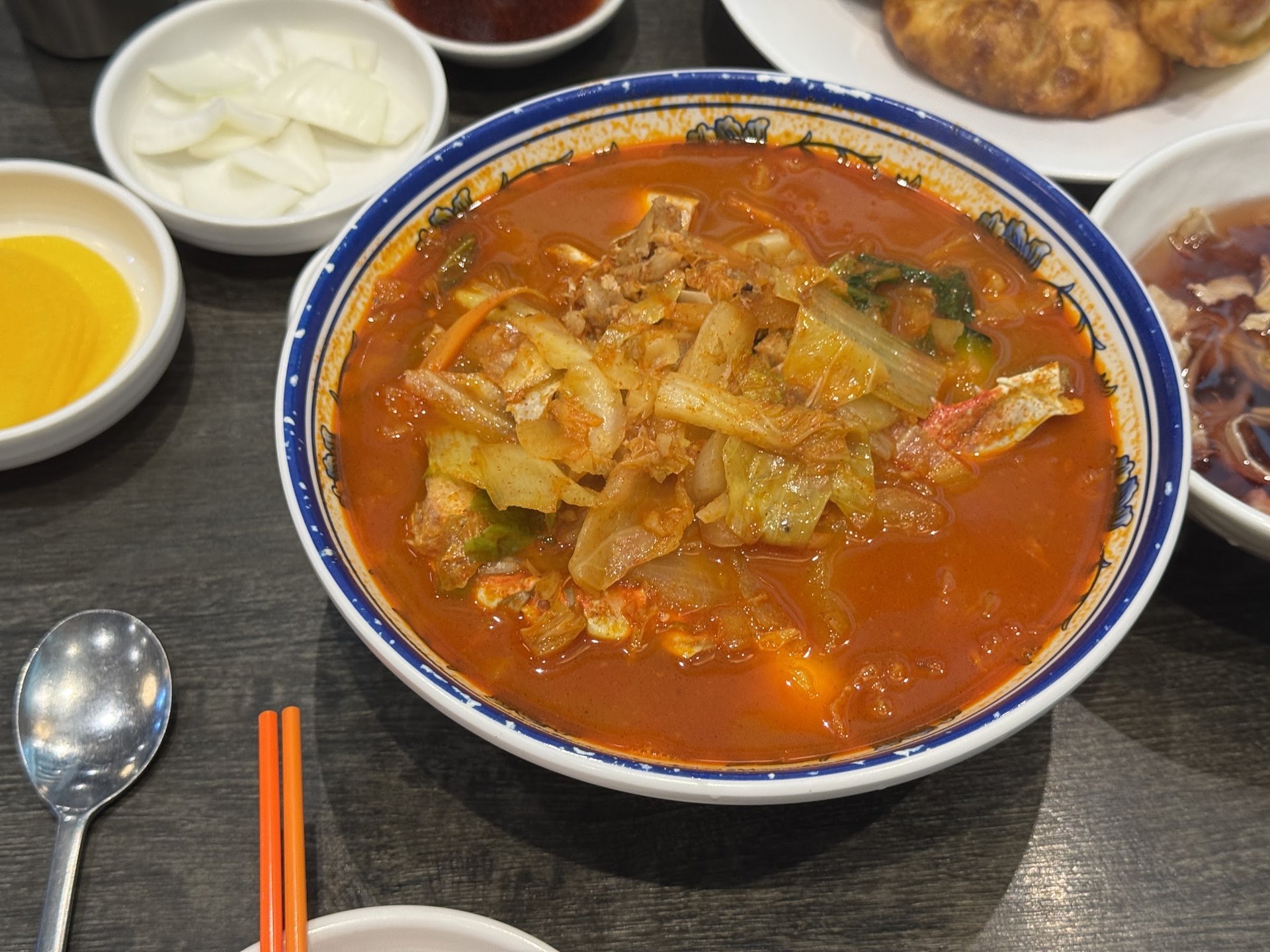
Jjamppong 9,500 won and blue crab jjamppong 11,500 won — the line that made the name
The red-broth side branches out too. Jjamppong 9,500 won, samseon chilli jjamppong (hot) 10,500 won, samseon jjamppong (white) 10,500 won, blue crab jjamppong 11,500 won, samseon ulmyeon 10,500 won, samseon udon 10,500 won. A large portion adds 1,000~2,000 won depending on the dish.
The red broth is closer to orange than scarlet. The heat is not scorched chilli powder but the kind that comes from frying the powder in oil and then pouring the broth over it. Cabbage cut in large pieces carries a sweetness underneath, and squid and prawns sit on top. The first spoonful is mild; by the third your forehead starts to sweat.
On a first visit, the usual move is one bowl of the red jjamppong and one ganjjajang, shared. The two are so different in character that neither swallows the other.
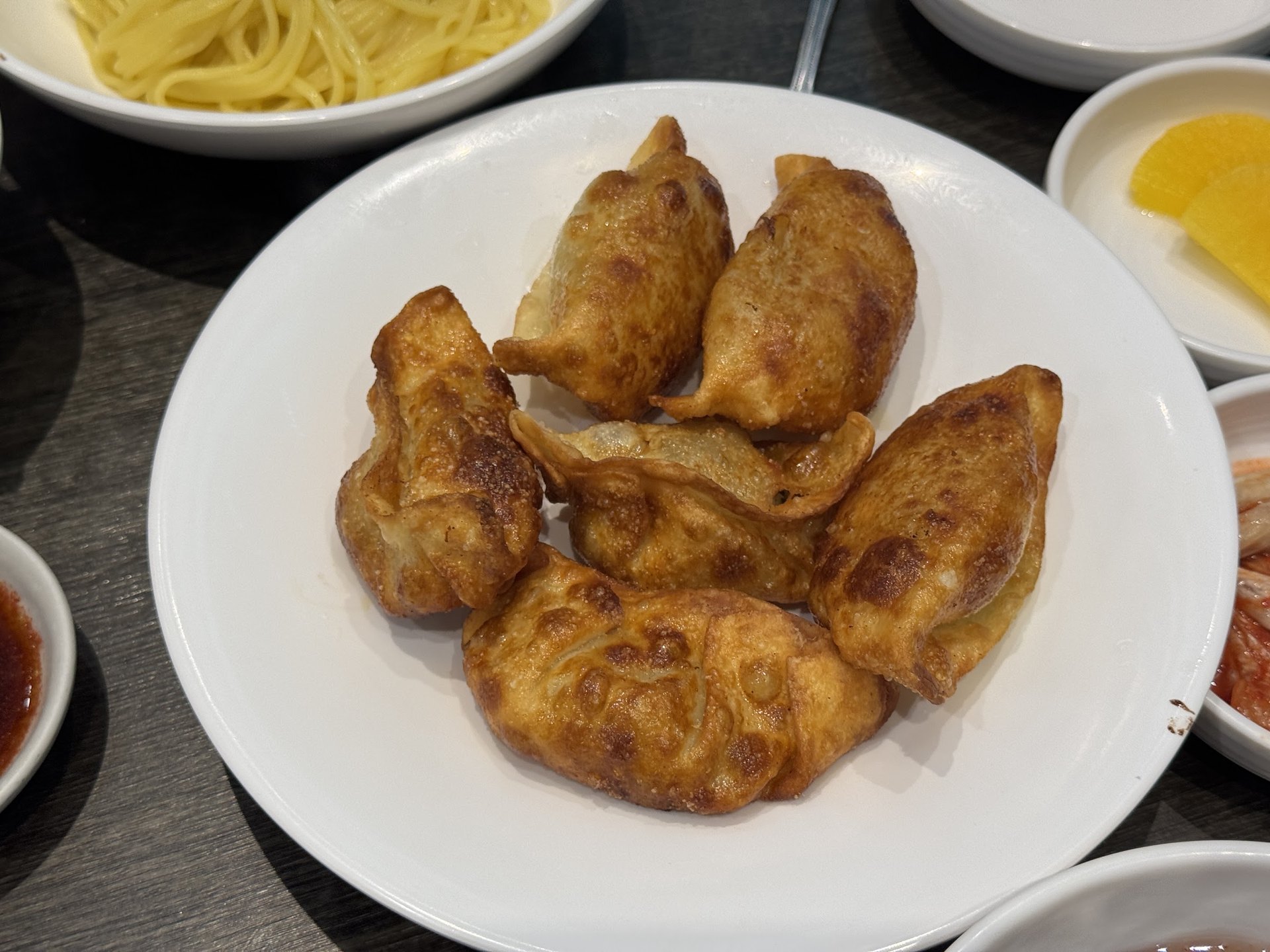
On the side — fried dumplings, tangsuyuk, and what a full table looks like
If leaving with only noodles feels like a loss, add something fried. The fried dumplings arrive five to a plate, fried hard enough in oil that the skins have set brown and crack audibly when you bite. Inside they are packed tight with minced meat and vegetables.
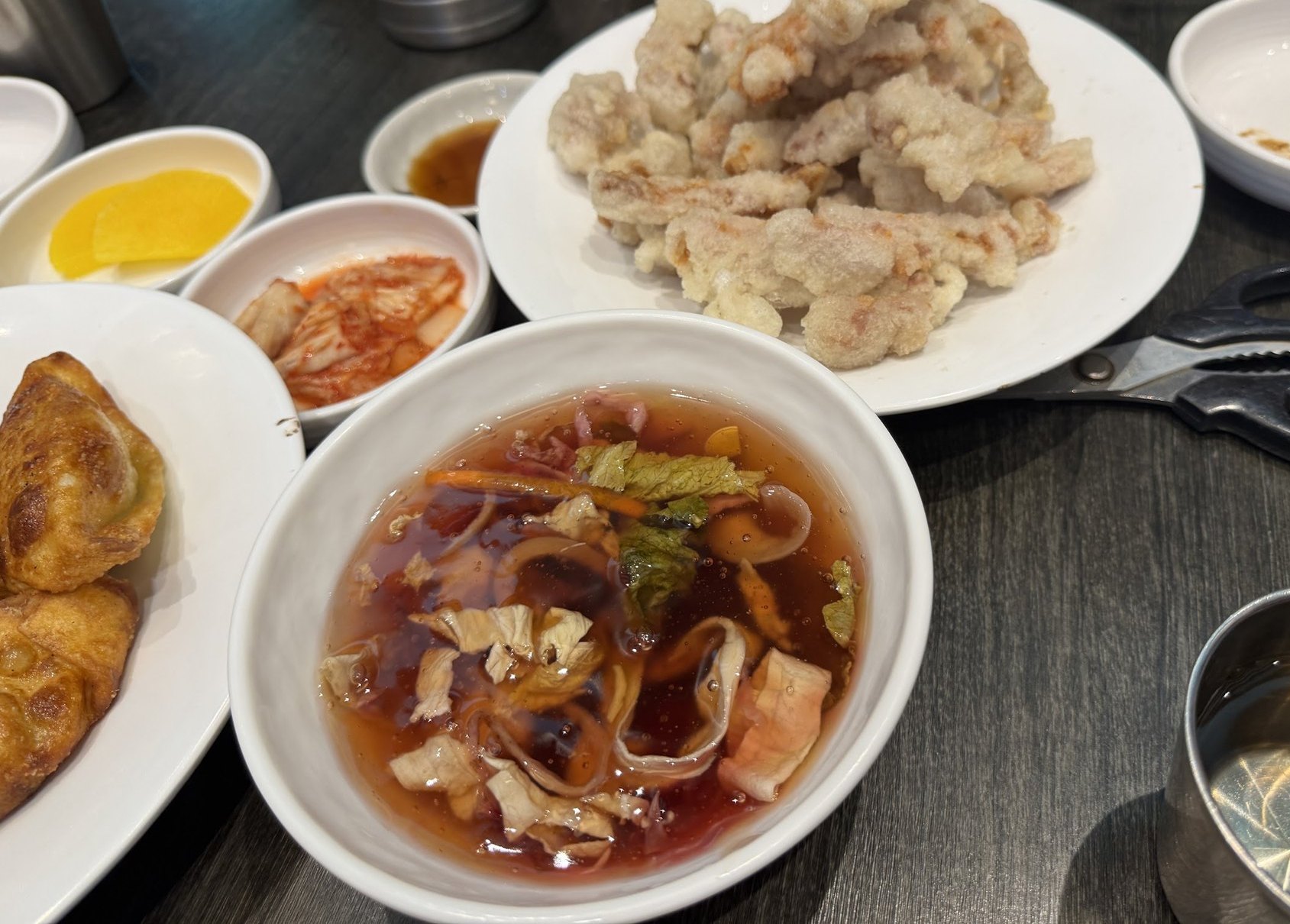
The tangsuyuk comes with the sauce on the side rather than poured over. The batter is pale, almost white, and because the pork is torn into long strips the surface is ridged and uneven. That look means plenty of starch in the batter and a second trip through the fryer. It does not go soggy as it sits.
The sauce is dark, close to soy in colour, with vegetables and wood ear mushrooms in it. Dip and the crunch survives intact; pour and you have about five minutes to finish the plate. Either way is a matter of taste.
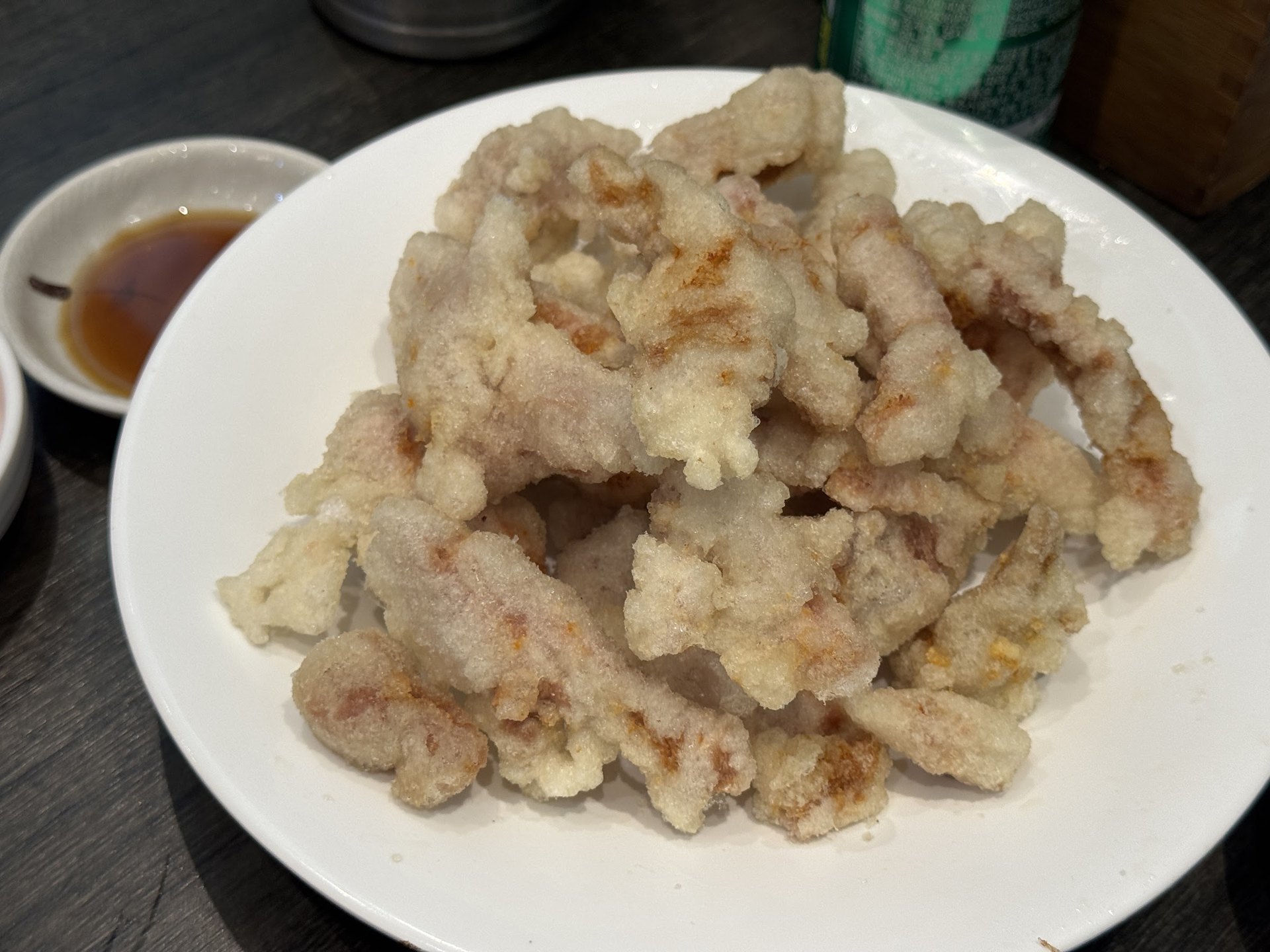
The prices for the fried dumplings and the tangsuyuk are not given in this article. The menu board photographed on the day was the noodle page, and the prices for the cooked dishes could not be confirmed. Numbers that have not been verified are better left unwritten.
Map and practicalities — getting there, hours, and the rating
Address 4 Taepyeong-ro 401beon-gil, Seogwipo-si, Jeju
Phone 064-762-2402
Hours Daily 11:00~21:00
Being in central Seogwipo, it combines easily with Maeil Olle Market or Lee Jung-seop Street. The entrance is a stairway, so if you are with a pushchair or anyone with limited mobility it is worth ringing ahead. Google Maps also carries a booking link.
The rating, stated honestly. This site normally recommends places with ★4.5 and at least 100 reviews on Google Maps. As of September 2026 Deokseongwon has ★3.8 from 920 reviews. The review count is very high, but the star rating falls a long way short of the standard.
The older and better known a place is, the more its rating tends to slide. Many arrive with expectations already high, and frustration over queues and turnover lands straight in the score. This place is no exception.
So it is more accurate to put it this way. If you are looking for the best Chinese food on Jeju, it is hard to say this is the answer. But if you want to eat jjajang and jjamppong from a Hwagyo Chinese restaurant that three generations have run on the same spot since the 1950s, this is the only place in Seogwipo that meets the description.
FAQ
How long has Deokseongwon been here?
Per the Seogwipo Newspaper, Wang Jeong-chun, an ethnic Chinese from Shandong, started selling hotteok around 1950, and the business found its footing after the army’s 1st Training Centre was established at Moseulpo in January 1951, at which point it became a Chinese restaurant. It is now in its third generation.
Is there a closing day?
Google Maps lists only 11:00~21:00 daily, with no weekly closing day shown. For holidays or unscheduled closures it is safer to check on 064-762-2402.
What should I order on a first visit?
For two people, one ganjjajang at 9,500 won and one red-broth jjamppong at 9,500 won, shared, is the most common order. If you want the dish the restaurant made its name on, blue crab jjamppong has its own line at 11,500 won.
How much are the tangsuyuk and the fried dumplings?
They are not given in this article. The menu board photographed on site was the noodle page, so the prices for the cooked dishes could not be confirmed. Not writing down numbers that have not been verified is a rule this site keeps to.
Can I bring a pushchair?
The entrance is a stairway and the dining room is on the second floor. If you are with a pushchair or anyone with limited mobility, it is best to ring ahead.
- Google Maps — Deokseongwon (address, hours, rating; checked 2026-09-19)
- Seogwipo Newspaper — what put Deokseongwon on its feet was the army’s 1st Training Centre at Moseulpo
- Visit Jeju — Deokseongwon
- DiningCode — Deokseongwon
- In-store menu board photos (taken 2026-09; the source for the noodle prices in this article)
Prices are based on photos of the in-store menu board taken in September 2026. Address, hours and rating were checked on Google Maps on 2026-09-19. The founding history follows reporting by the Seogwipo Newspaper.