- Add your flight and a shopping allowance and you get the $600–$1,000+ range.
- A decent mid-range double in Myeongdong now runs $90–$130 a night.
- Solo meals (gukbap soup, bibimbap, kimbap shops): ₩9,000–12,000 ($6.
Who this is for
- Anyone still budgeting on a decade-old idea that Korea is cheap
- People who can’t tell which of hotel, flight or food to trim
- Anyone whose total mysteriously lands $50–100 over, every trip
The idea that Korea is cheap is about a decade out of date.
At August 2026 prices, four days in Seoul runs roughly $600 on a budget and $1,000 mid-range once you’re on the ground. Hotels and restaurants have converged with other developed markets; a bowl of soup is $6.50 to $9 and a latte is $4.
“So what’s still cheap?” Two things, and startlingly so: transit and mobile data. That imbalance is what should shape your budget. Seoulog priced it line by line, plus what to cut and what never to cut—let’s get into it.
Table of Contents
The Quick Table: $355 or $665 on the Ground? (4 Days, per Person)
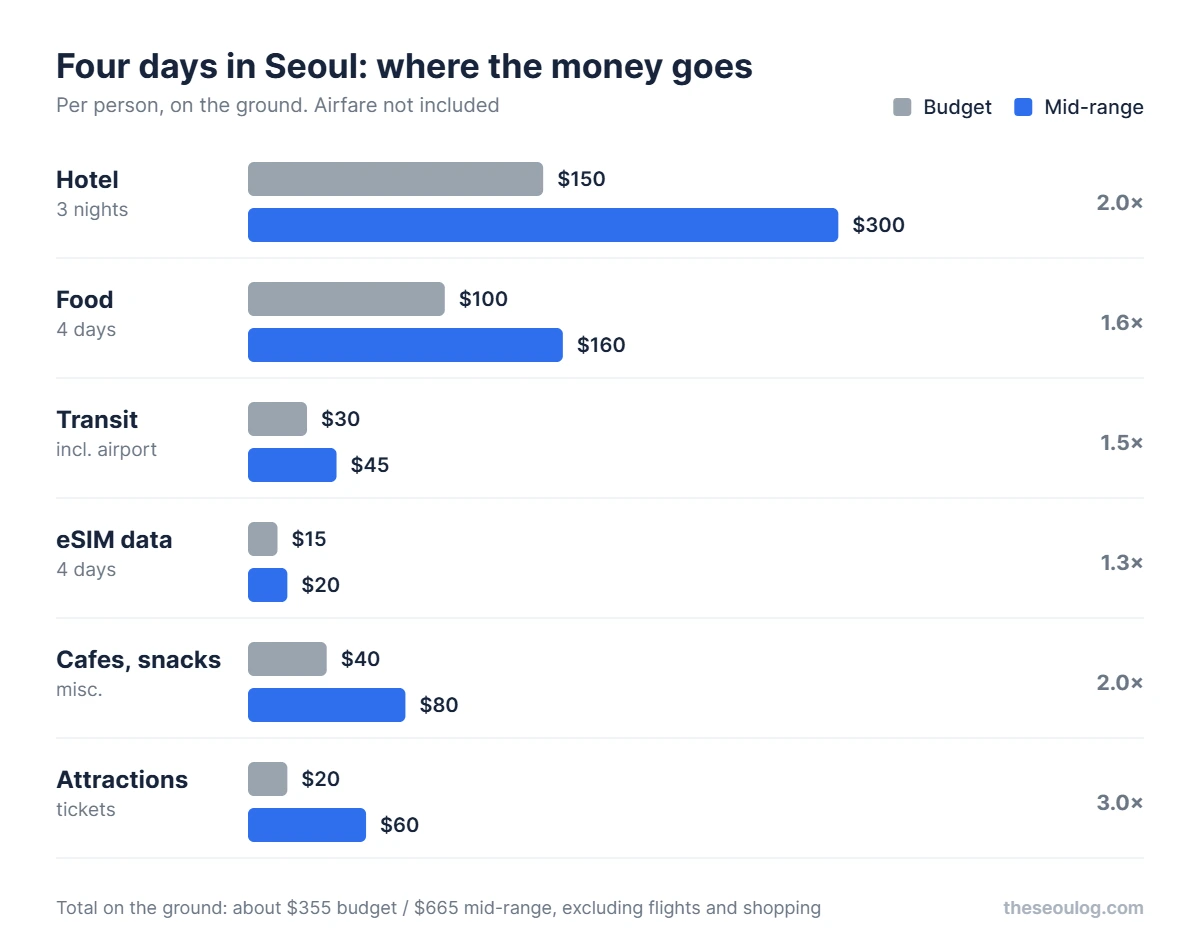
| Item | Budget | Mid-range |
|---|---|---|
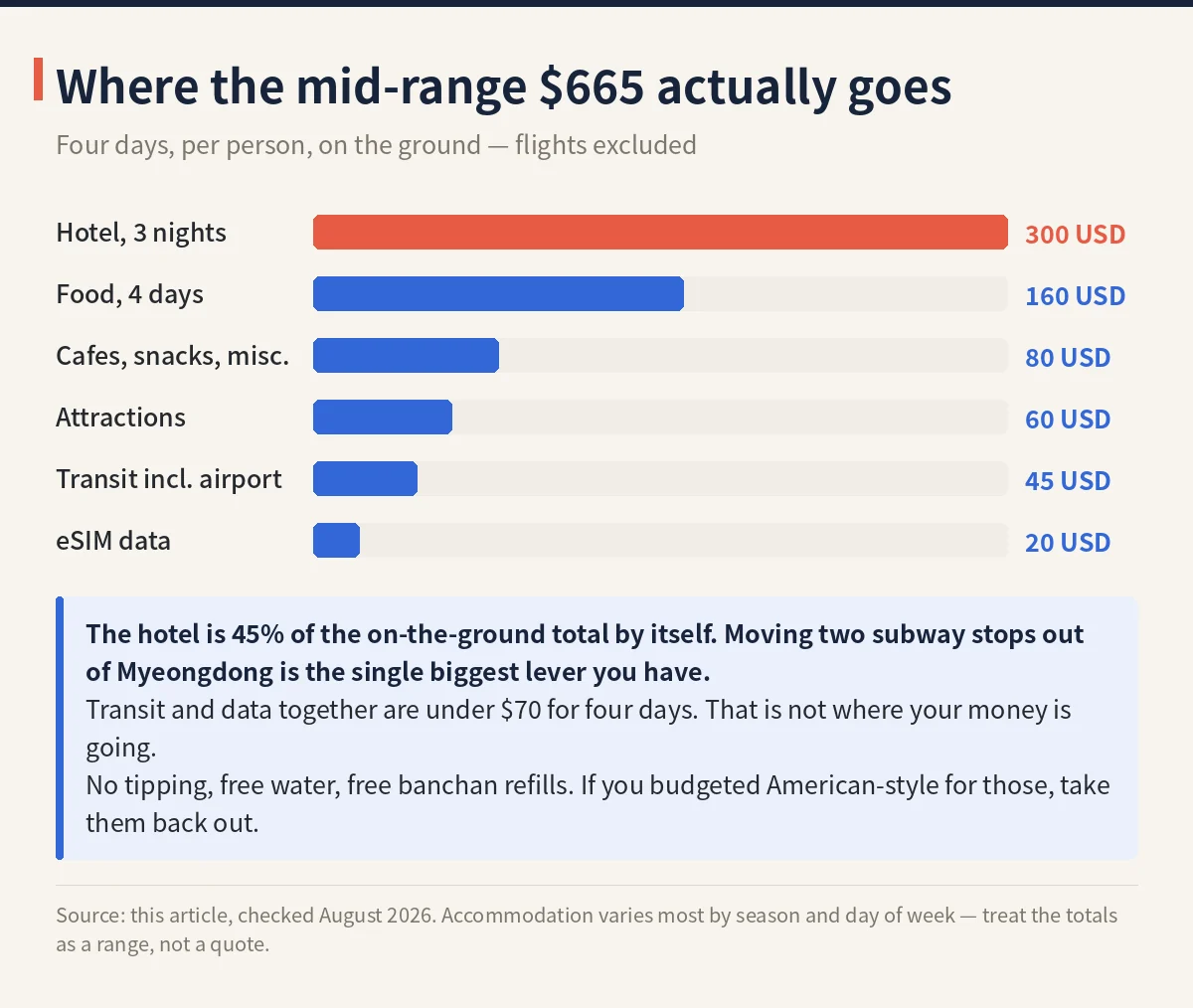
| Hotel, 3 nights | $150 | $300 |
| Food, 4 days | $100 | $160 |
| Transit incl. airport | $30 | $45 |
| eSIM data | $15 | $20 |
| Cafes, snacks, misc. | $40 | $80 |
| Attractions | $20 | $60 |
| Total on the ground | ~$355 | ~$665 |
Add your flight and a shopping allowance and you get the $600–$1,000+ range. Skincare hauls and concert tickets are their own budget line—that one’s on you.
✔ Got this far? Then this is your next move. “Seoul in Four Days Is Built on One District a Day” is the step after.
Hotels: Half Price Two Stops Away? Skip the Myeongdong Premium
✔ Is location worth $40 a night to you?
A decent mid-range double in Myeongdong now runs $90–$130 a night. The same room two or three subway stops away—Dongdaemun, Chungmuro, Euljiro—goes for $50–$75. Seoul’s subway comes every few minutes, so those two stops cost you nothing in practice.
My honest take: pay for location only if you plan to stumble home on foot after midnight. Otherwise that $40-a-night difference buys you a Korean barbecue dinner every single day.
One US-specific note: rooms are smaller than American hotel standards, and twin rooms often mean two narrow beds. Check the room size in square metres before booking—20㎡ is comfortable, 15㎡ is snug.
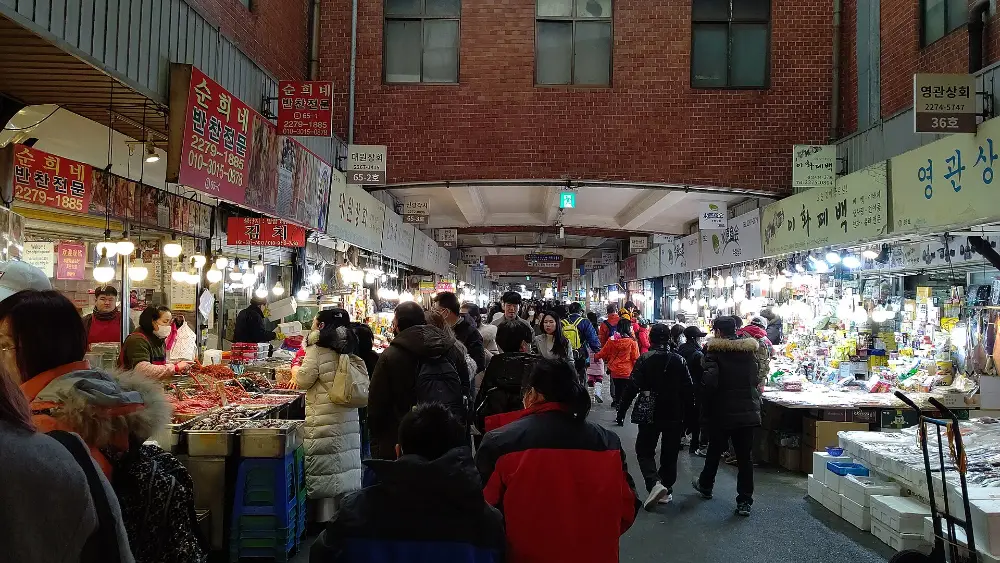
This photo was taken / Wikimedia Commons (CC BY-SA 4.0)
Food: $25–35 a Day! What Meals Actually Cost
- Solo meals (gukbap soup, bibimbap, kimbap shops): ₩9,000–12,000 ($6.50–9)
- Korean BBQ: ₩13,000–17,000 per portion, two-portion minimum at most places
- Cafe latte: ₩5,000–6,000 — yes, Starbucks-level prices
- Convenience store meal: ₩3,000–6,000
✔ The number you see is the number you pay
Two sit-down meals plus a café stop lands around $25–35 a day. And remember: no tipping, and tax is included in the menu price. That quietly makes Seoul 20–25% cheaper than the same sticker prices in the US.
Transit and Data: All Day for Under $7? The Cheap Part
✔ Coming from a US city, this feels like a rounding error
Airport train (all-stop A’REX) into the city: about ₩4,800. Subway rides: around ₩1,550 with a T-money card. You can ride all day for under $7—compare that with $3 for one subway ride back home.
Data: buy an eSIM before you fly. Unlimited plans run $12–20 for a short trip. Airport SIM counters work too, but cost more for the same thing.
The Line Items People Forget: Where $50–100 Quietly Goes
✔ The invisible lines are the ones that move the total
The four categories above cover the visible spending. These are the ones that quietly move the total by fifty or a hundred dollars.
- Say no to won. When you pay by card, the terminal may ask whether to charge in USD instead of KRW. Always decline and pay in won. That “convenience” is dynamic currency conversion, and it adds a few percent on every transaction — over four days of card spending it’s a meal.
- Airport transfers, both ways. Easy to price the arrival and forget the departure. Two people taking a flat-rate taxi in and out are looking at well over ₩150,000 before they’ve bought anything — the airport-to-Seoul comparison shows where that money goes and how to spend a tenth of it.
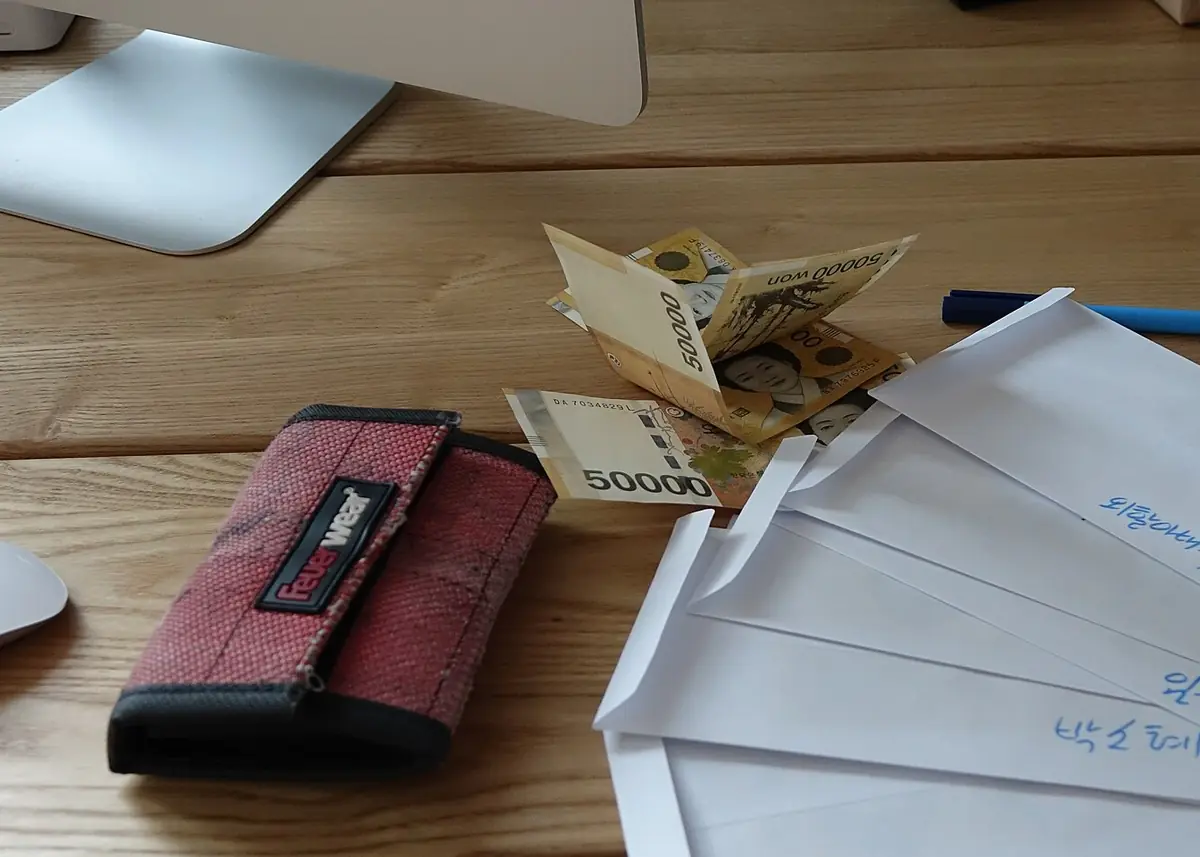
- Cash you can’t avoid. Seoul is close to cashless, but transit card top-ups are cash only, and traditional markets and older restaurants often are too. Budget ₩50,000–100,000 in notes and read the exchange guide before you convert anything at the airport.
- VAT you get back. Purchases of ₩15,000 or more at participating shops qualify for an instant tax refund at the register with your passport — the ₩30,000 threshold still circulating online is the old rule. It’s a real reduction to your shopping budget, not a rounding error — but only if the passport is in your bag.
- What you won’t pay. No tipping, anywhere, ever. Water is free at every restaurant. Side dishes refill for free. If you’ve budgeted American-style for those, take them back out.
What to Cut, What Never to Cut—Which Is Which?
✔ Cut these freely
Hotel location, fancy neighbourhoods, and paid “skip-the-line” tours for palaces (lines are rarely a thing; Gyeongbokgung admission is ₩3,000).
✔ Never cut these
Data and travel insurance. Your phone is your map, translator and taxi app—bad data ruins every other dollar you spent. And Korean hospitals charge foreigners full price out of pocket; an ER visit can hit several hundred dollars. A basic travel policy or your credit card’s built-in coverage is enough, but confirm you have something.
My real advice: decide what this trip is for before you budget it. Eaters should downgrade the hotel. Shoppers should eat kimbap at lunch. Trying to max out everything is how a $1,000 trip becomes a $2,000 one.
Trip budgets are decided by allocation more than by total. Deciding what this trip is for—eating, shopping or seeing—does more for satisfaction than shaving costs everywhere. Settle the allocation before you fly; that’s what this page is for.
Frequently asked questions
How much does four days in Seoul actually cost?
About $600 on a budget and about $1,000 mid-range, on the ground, per person — flights excluded, since those depend entirely on where you fly from. That covers hotel, food, transit, data and attractions at August 2026 prices (₩10,000 ≈ $7.20). Shopping is its own line item.
Is it worth paying to stay in Myeongdong?
Rarely. A mid-range double in Myeongdong costs noticeably more than the same class of room two or three subway stops away in Dongdaemun, Chungmuro or Euljiro, and Seoul trains run every few minutes so the distance barely registers. Check room size in square meters before booking — 20㎡ is comfortable, 15㎡ is snug.
What do meals cost in Seoul?
Solo meals such as gukbap or bibimbap run ₩9,000–12,000 ($6.50–9), Korean BBQ is ₩13,000–17,000 per portion with a two-portion minimum at most places, and a cafe latte is ₩5,000–6,000. Two sit-down meals plus a coffee lands around $25–35 a day. Tax is included in menu prices and there is no tipping, which quietly makes those numbers 20–25% cheaper than the equivalent US sticker price.
How much should I budget for transit and data?
Very little. The all-stop A-REX train from Incheon into the city is about ₩4,800, and subway rides are around ₩1,550 with a T-money card — a full day of riding costs under $7. An unlimited eSIM for a short trip runs $12–20 if you buy it before you fly.
What do people forget to budget for?
Dynamic currency conversion. When a card terminal offers to charge you in dollars, decline and pay in won — the markup is several percent every time. Also remember that T-money top-ups are cash-only, and that the tax refund threshold is ₩15,000, not the ₩30,000 figure still circulating online. You need your passport at the register to get it.
What should I never cut?
Data and travel insurance. Your phone is your map, translator and taxi app, so bad connectivity degrades everything else you paid for. And Korean hospitals bill foreign visitors in full — an ER visit can run into the hundreds of dollars. A basic policy or your credit card coverage is enough, but confirm you have one.
This article is based on the official information below. Rules can change, so please check the original before you travel.
· Korea Tourism Organization official site
Information as of 2026-08-18 (official listings and Google Maps as shown at publication). Updated when things change.